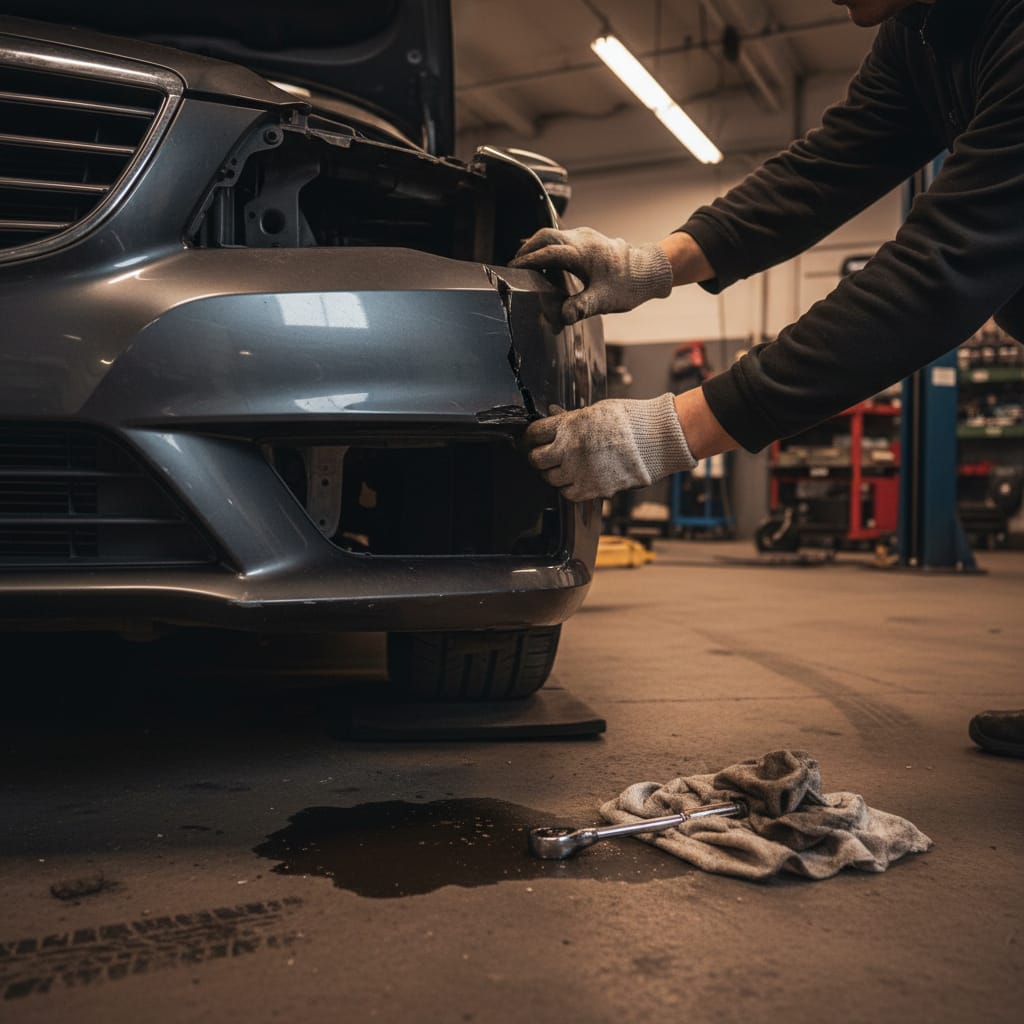
You tapped a parking lot barrier. Or someone backed into you. Now you are standing in your driveway looking at a scuffed bumper and wondering what it will take to fix it. If you need bumper repair and replacement Spring Valley CA drivers can trust, you are in the right place. Before you call any shop, there is one thing worth knowing: your bumper is not a single part. It is three systems stacked together. Which layer got hit tells you exactly what the repair path looks like and how much it should cost.
We have been fixing bumpers at All Auto Repair since 1989. This article walks you through how bumpers work, how to read the damage, and what your rights are if insurance is involved.
Your Bumper Is Three Systems, Not One
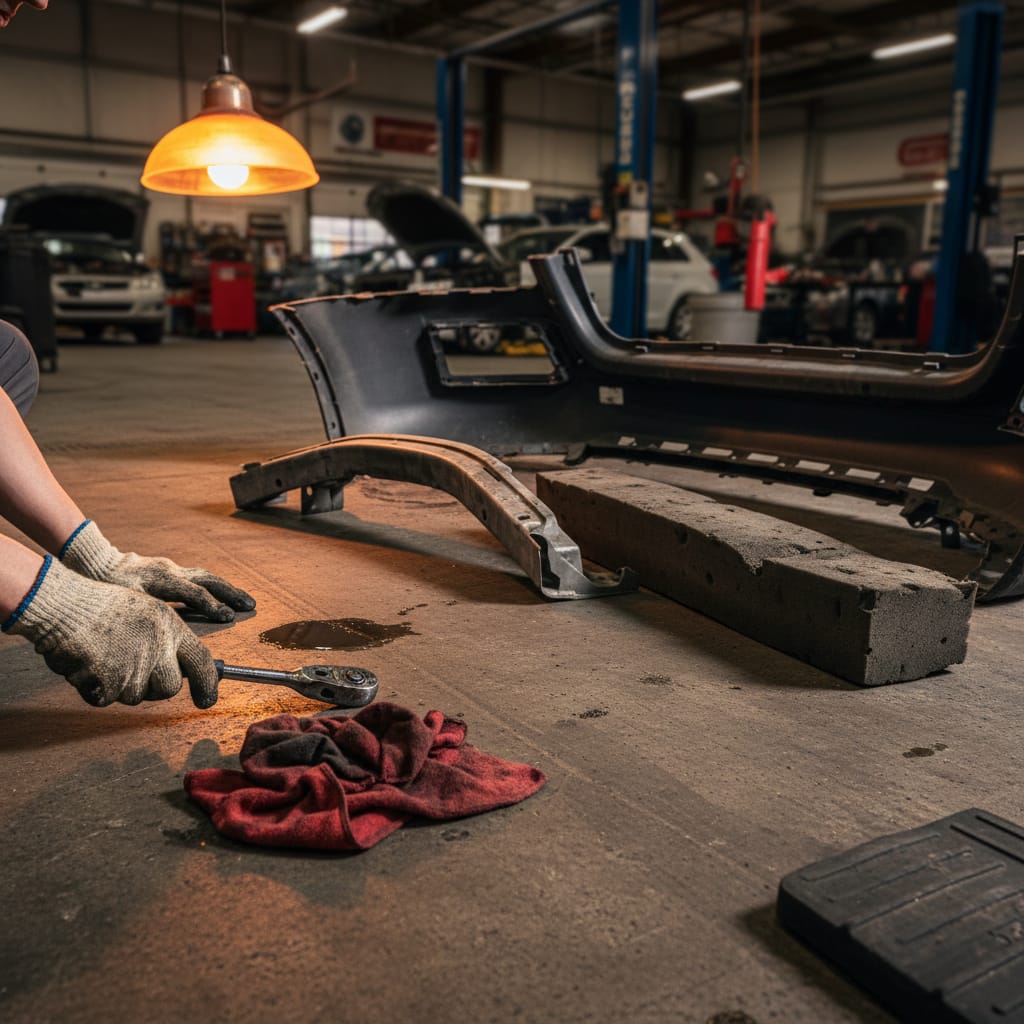
Most drivers assume a bumper is one piece of molded plastic. It is not. Modern bumpers are an engineered stack of three distinct components, and each one has its own job and its own repair rule.
Layer 1: The plastic bumper cover
This is the visible part. It is made from thermoplastic polypropylene, a flexible material designed to absorb minor contact without cracking. Scuffs, scratches, and shallow dents usually stay in this layer. If the cover flexes back to shape and the paint is just scraped, you are probably looking at a repair, not a replacement.
Layer 2: The energy absorber
Directly behind the cover sits an energy absorber. Think of it as a sacrificial foam or plastic honeycomb block. Its entire job is to crush during an impact and protect the structure behind it. Here is the critical part: energy absorbers are single-use. Once that block crushes, it cannot be re-used. It must be replaced. This part is often invisible from outside, which means plenty of drivers walk around with a bumper that looks fine but has no protection left inside.
Layer 3: The reinforcement bar
Behind the absorber is a steel or aluminum reinforcement bar bolted to the vehicle's frame rails. This bar distributes collision forces and plays a direct role in how your airbags and crumple zones behave. If this bar bends, it cannot be straightened. Honda, Nissan, and Toyota all publish OEM bulletins that explicitly prohibit repairing reinforcement bars. They must be replaced. Any shop that tries to straighten one is cutting corners on your safety.
Knowing these three layers changes how you look at bumper damage. A scratch on the cover is a very different job from an impact that reached the absorber or bar.
How to Read the Damage: What Each Layer Looks Like When It's Hit
You do not need to be a technician to get a rough sense of which layer took the hit. Here is what to look for.
Signs the damage stayed in the plastic cover:
- Surface scratches or paint scuffs that do not go deep
- A small crack at the edge of the cover, no wider than a finger
- Minor flex deformation that mostly returned to shape
- No misalignment between the bumper and the surrounding panels
Signs the energy absorber was involved:
- The bumper looks okay from outside but feels soft or spongy when you press it
- After a low-speed hit, the cover has a slight persistent deformation
- The impact speed was above about 5 mph, even in a parking lot
Signs the reinforcement bar was hit:
- The bumper cover has a sharp fold or crease rather than a smooth dent
- The bumper sits visibly lower or higher than the surrounding bodywork
- You can see or feel a hard ridge through the cover
- The vehicle pulled to one side after the impact
If you notice any of those last three signs, have a technician remove the cover and inspect what is underneath. A bumper that looks cosmetically fine can hide a crushed absorber or a bent bar. Driving with a compromised reinforcement bar means you have lost a key layer of crash protection. Our collision repair service includes a full bumper stack inspection at no extra charge.
Repair Options: PDR, Plastic Welding, and Repaint
If the damage stayed in the plastic cover, you have three main repair options. A good shop will tell you which one fits the actual damage.
Paintless dent repair (PDR) on plastic
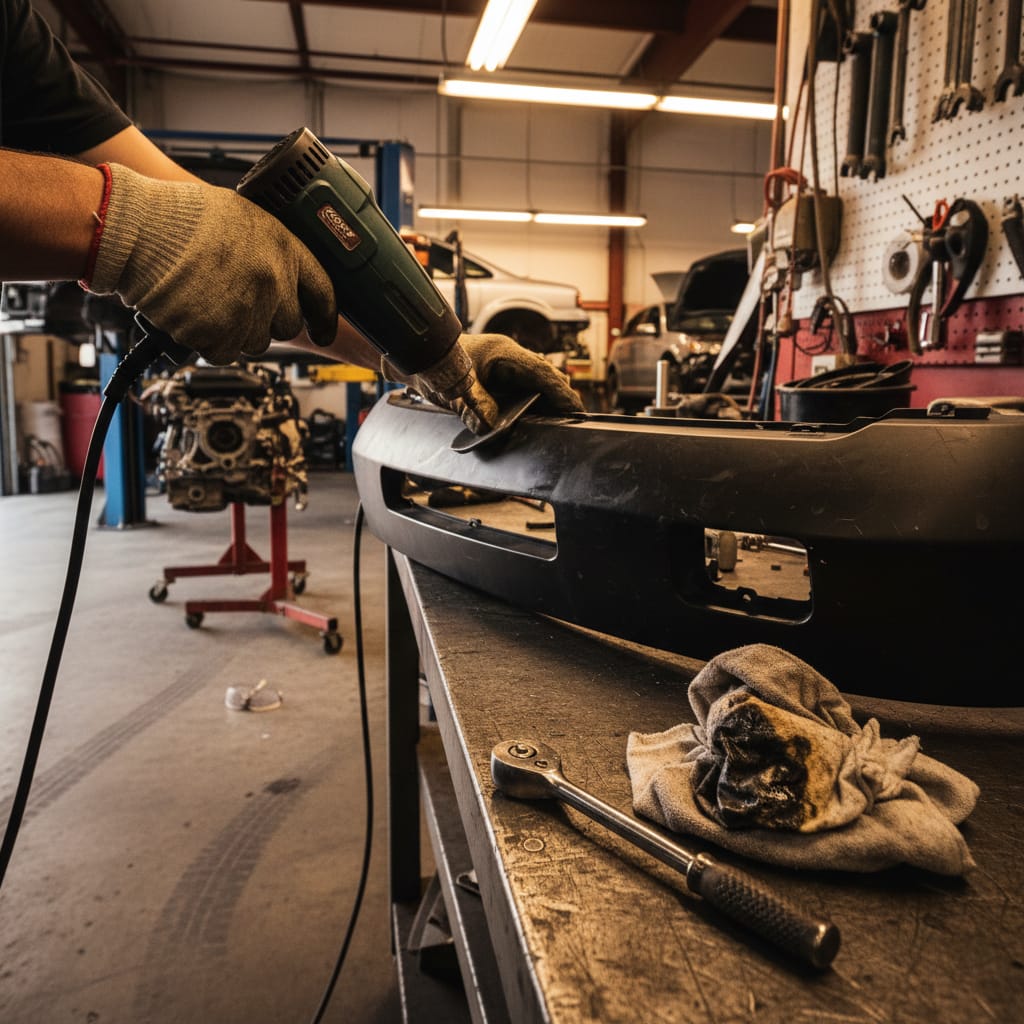
PDR uses heat and hand tools to push dents back out from behind the panel without touching the paint. It works well on metal. On plastic it works differently. Plastic does not have metal memory, meaning it does not spring back the way steel does. PDR on a plastic bumper cover works best on shallow, fresh dents where the plastic has not yet set into its deformed shape. If the dent is deep, the plastic is ripped, or it has been sitting for months, PDR alone will not give a clean result.
Plastic welding
Small cracks in the cover can be plastic-welded back together from the inside. A technician heats a plastic filler rod and fuses it into the crack. This is a strong repair when done correctly. It is invisible from the outside after repainting. It works well for cracks up to a few inches long. Bigger tears usually need a full cover replacement.
Repaint and refinish
Surface scratches and scuffs that did not break through the plastic often only need sanding, filler, and a repaint. Color matching is the skill here. A good body shop blends the new paint into the adjacent panels so the repair disappears. This is where 35 years of refinishing experience makes a visible difference.
When Replacement Is the Only Safe Answer
Sometimes repair is not the right call. Here are the situations where replacement is the honest answer.
The energy absorber is crushed
If the impact reached the absorber, it is gone. There is no repair for a crushed energy absorber. Replacing only the plastic cover and leaving a flattened absorber behind puts the next impact directly onto your reinforcement bar with no cushion in between.
The reinforcement bar is bent
Every major manufacturer prohibits straightening a damaged reinforcement bar. Bent high-strength steel behaves unpredictably in a second collision. A bar that has been "fixed" can collapse in ways the engineers never designed for.
Mounting tabs are broken
The cover attaches via clips and tabs. A loose cover can shift in a collision and cause more damage. Replacement covers usually cost less than trying to fabricate new tabs.
Sensors are damaged
If any parking sensor, radar module, or camera inside the bumper took a direct hit, the repair must include sensor replacement and recalibration.
Repair cost approaches replacement cost
When the labor to reshape, weld, fill, sand, and repaint a badly damaged cover gets close to the cost of a new cover plus paint, replacement is the smarter financial move. You also get a factory-fresh fit with no filler underneath.
Learn more on our bumper repair service page for Spring Valley.
ADAS Sensors and Recalibration: The Hidden Cost Most Shops Don't Mention
If your vehicle was built in the last seven or eight years, your bumper likely has sensors behind it. These components power adaptive cruise control, blind-spot monitoring, rear cross-traffic alerts, and parking assist.
The sensors sit close to the back of the bumper cover. When the cover is repaired or replaced, those sensors can shift by a few millimeters. That small shift can push them out of calibration. An out-of-calibration radar module may miss objects at the right distance. An uncalibrated camera may give false lane-departure warnings or fail to warn you at all.
Recalibration requires specialized equipment and a level surface with targets at exact distances. Not every shop has this gear. Before you authorize bumper work, ask directly: "Will you check and recalibrate the sensors?" A vague answer is a red flag.
Front bumpers carry more sensors than rear bumpers. That is why front repairs cost more. Budget for recalibration as a separate line item.
Filing an Insurance Claim for Bumper Damage in California
California gives drivers real protections when filing a collision claim. These are the most important ones to know.
You choose the shop
Your insurer can recommend a shop. They cannot require you to use it. California law gives you the right to take your vehicle to any licensed body shop. If a claims adjuster tells you otherwise, ask for that in writing.
Non-OEM parts must be disclosed
If your insurer plans to use aftermarket or recycled crash parts instead of factory (OEM) parts, they must tell you in writing before the repair starts. Those parts must meet OEM standards for fit, quality, safety, and performance under California Code of Regulations section 2695.8(g). If the parts fall short, you can push back.
You can get a free inspection if something goes wrong
The California Bureau of Automotive Repair (BAR) offers no-cost collision repair inspections. If you suspect substandard work or an insurer's estimate seems too low, BAR can send an inspector at no charge. The California Department of Insurance also publishes a full Auto Body Repair Consumer Bill of Rights that outlines every protection available to you.
Get everything in writing before work starts
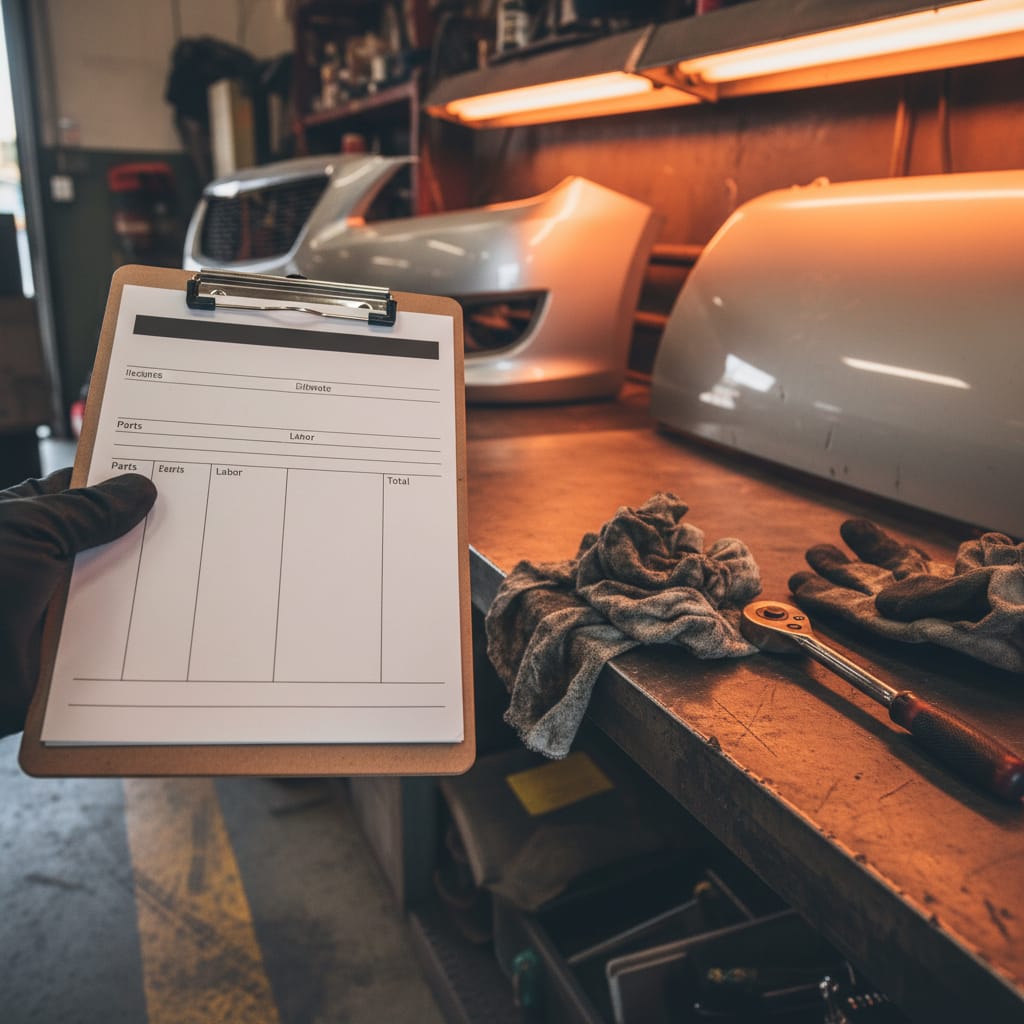
The shop must give you a written, itemized authorization before touching your vehicle. If anything is added during the repair, they must contact you for approval before proceeding.
FAQ: Bumper Repair and Replacement Questions
Q: Does insurance cover bumper repair and replacement in Spring Valley, CA?
A: It depends on your coverage and who was at fault. Collision policies typically cover bumper damage after an accident, minus your deductible. If another driver was at fault, their liability coverage should pay. In California, your insurer must disclose any plan to use non-OEM parts, and you have the right to choose your own shop.
Q: Can a bumper be repaired without repainting?
A: Minor scuffs on unpainted black rubber trim can sometimes be cleaned up without a full repaint. But if the cover is body-colored and the paint is broken, a repaint is usually needed to get an invisible result. A good shop blends the new paint into adjacent panels so the repair does not show.
Q: How long does bumper repair take?
A: A simple scuff repair or repaint usually takes one to two days. A full bumper cover replacement with painting takes two to three days. If ADAS recalibration is needed or parts must be ordered, add one to three business days.
Q: Will bumper damage affect my driver-assist systems?
A: Yes, it can. Parking sensors, radar modules, and cameras live behind the bumper cover. Any repair or replacement that shifts the cover can move sensor alignment. Ask your shop to verify calibration after any bumper work.
Q: What is the best approach for bumper repair and replacement Spring Valley CA residents can rely on?
A: Look for a licensed shop with experience in your vehicle brand. Ask them to inspect all three layers: the cover, the energy absorber, and the reinforcement bar. Ask whether they handle ADAS recalibration in-house. And get a written, itemized estimate before approving any work. At All Auto Repair, we have been doing exactly that since 1989.
Get a Free Estimate at All Auto Repair in Spring Valley
For bumper repair and replacement Spring Valley CA drivers count on, All Auto Repair has been the honest choice since 1989. We are a family-owned shop, not a franchise. We inspect all three layers of your bumper system, tell you what we find, and give you a straight answer about what it takes to fix it right.
Call or text Sam at (619) 466-3296 whenever you are ready. We are at 628 Grand Ave, Spring Valley, CA 91977.
No pressure. No upsell. Just an honest look and a free estimate.