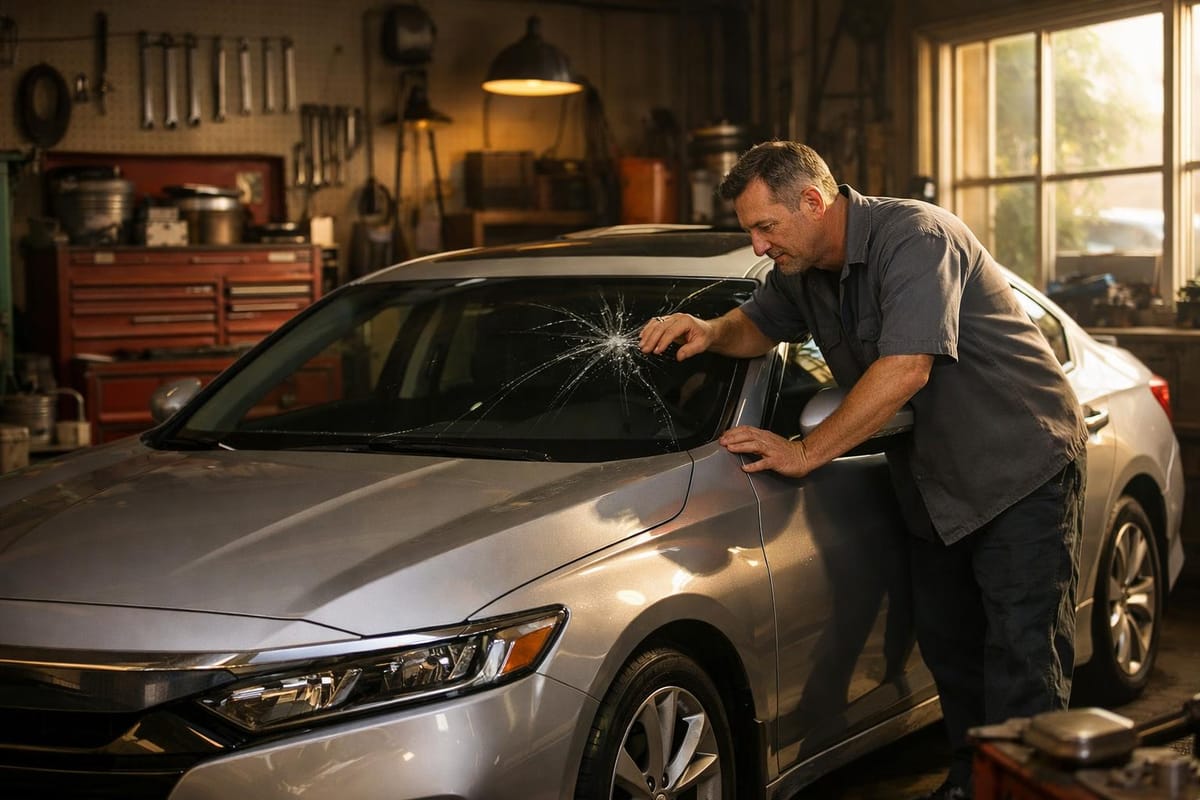
In California, insurance covers windshield replacement if you have comprehensive coverage — and many drivers pay $0 out of pocket. If you only carry liability, your insurance won't touch it.
The Short Answer: It Depends on Your Coverage Type
Comprehensive coverage is the one that handles your windshield. It covers damage from flying road debris, storms, hail, vandalism, and animal strikes. Most California comprehensive policies include a glass deductible waiver, so you pay nothing when you file a glass claim.
One thing to know: California does not legally require that $0 deductible. States like Florida, Kentucky, and South Carolina mandate it by law. Here, it depends on your specific policy. Check yours before you assume.
If you only carry liability, you're out of luck. Liability pays for damage you cause to other people's cars — not your own.
Collision coverage is a different story. It technically covers your windshield, but it rarely makes sense to file a collision claim for one. Windshield replacement in California typically runs $200–$500. Most collision deductibles sit at $500–$1,000. The math usually doesn't work in your favor.
California's $0 Deductible Rule for Comprehensive Claims
California law does not require insurers to waive the deductible on windshield claims — unlike Florida, Kentucky, and South Carolina. What matters is what your specific policy says.
The good news: most comprehensive policies sold in California include a glass deductible waiver. Common amounts are $0, $100, or $250. If yours is $0, a full windshield replacement costs you nothing out of pocket. If it's $500 and the job runs $350, you pay the full $350 yourself — the insurer covers nothing on that claim.
Comprehensive is the coverage that pays for windshield damage. It covers the things that happen when your car is parked or moving and something outside your control hits it: flying gravel off a truck (the single most common cause in California), hail, falling tree branches, vandalism, theft, and animal collisions. It does not cover a crack you caused by slamming the door or a rock you threw up yourself on a dirt road.
Standard windshield replacements in California run $200–$500. Vehicles with ADAS cameras or sensors built into the glass can run $400–$1,200, because the system needs recalibration after the swap.
How to Check Your Deductible Before You Call
Pull out your declarations page — it lists your comprehensive deductible in plain numbers. If you can't find the paper, open your insurer's app (GEICO, Progressive, Farmers, and Allstate all show it under policy details). If you're still stuck, call your agent.
One thing worth knowing: filing a comprehensive glass claim in California typically does not raise your premium. Glass claims are treated differently from at-fault accident claims. Ask your agent to confirm before you file, but most CA drivers can use this coverage without worrying about a rate increase.
Your Right to Choose Any Shop: California Insurance Code §758.5
California law is clear on this: your insurer cannot tell you where to get your windshield fixed. California Insurance Code §758.5 gives you the legal right to choose any licensed collision or glass repair shop you want. The insurer can suggest a shop — and most will suggest Safelite or another network vendor — but that suggestion carries no legal weight. You are not required to follow it.
Insurers push preferred shops because of preferred-vendor agreements that keep their costs predictable. That is a business arrangement — not a legal requirement for you.
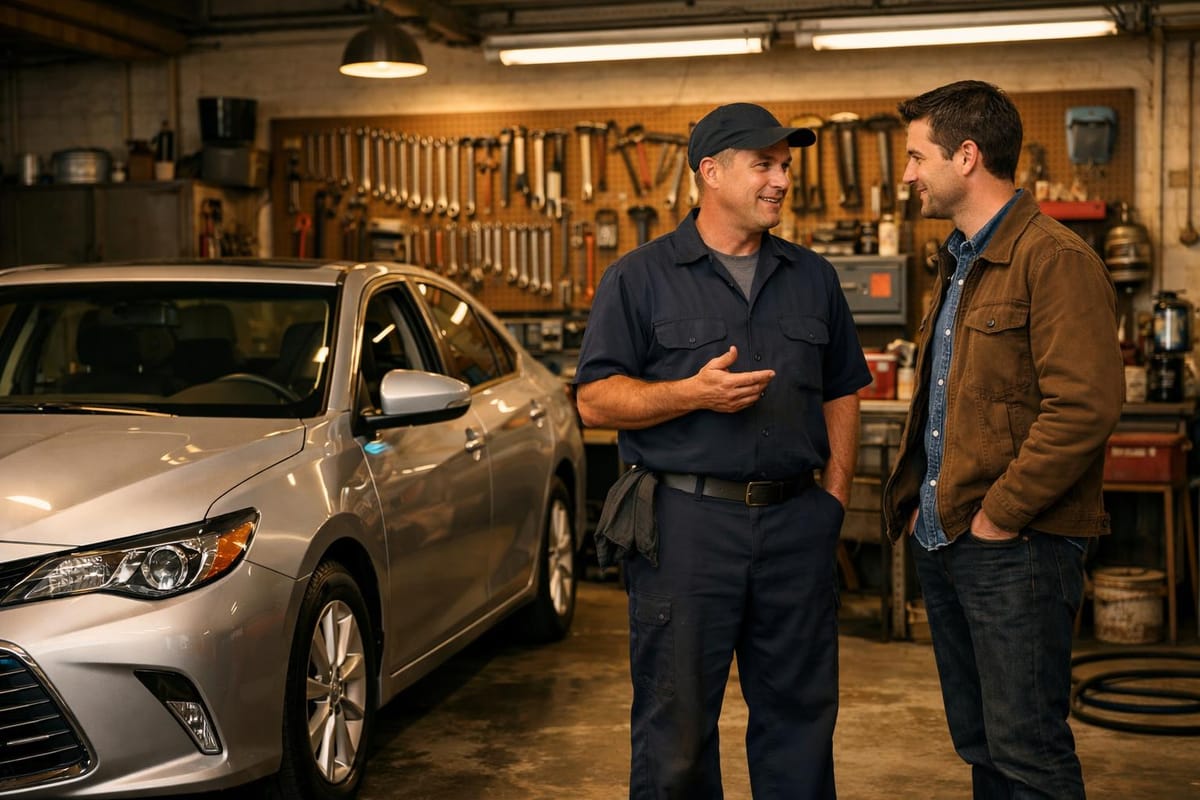
If you choose a shop outside the insurer's network, the process works one of two ways: the shop invoices you directly and you submit for reimbursement, or the shop bills the insurer directly after getting your claim number. Either way, your choice of shop cannot legally delay or reduce your payout. If an adjuster says otherwise, cite §758.5 by name and ask them to put that in writing. That single request tends to change the tone of the conversation quickly.
If steering continues after that, call the California Department of Insurance complaint line at 800-927-4357.
What "Steering" Looks Like and How to Spot It
Steering is when an adjuster guides you toward a specific shop in ways that imply you have no choice. A few real examples:
- "We only work with authorized shops." — This is not a legal limitation. It is a network preference.
- "If you go somewhere else, it could take longer to process your claim." — Delay cannot be used as a penalty under §758.5.
- "We can't guarantee the work at shops outside our network." — They are not required to guarantee any shop's work. This is a nudge, not a rule.
When you hear any of these, ask the adjuster to confirm in writing that your shop choice won't affect your claim. Most back down immediately. If they don't, use the complaint line and the statute number.
OEM vs. Aftermarket Glass: What Your Insurer Will Pay For
Your insurer will almost always default to aftermarket glass. It's cheaper for them, and it's legal. Aftermarket windshields must meet FMVSS 205 — the federal DOT safety standard — so the glass is road-safe. It's just not identical to the factory original.
OEM glass is made by or for your carmaker to the exact factory spec. The difference in price is usually $50–$300 more than aftermarket. Most insurers won't cover that gap. If you want OEM, you pay the difference out of pocket.
Here's the honest picture: for a 2010 Corolla, aftermarket glass is fine. It fits, it seals, and it meets every safety requirement. For a 2023 F-150 with a heads-up display, the calculus changes.
California Insurance Code §758 requires your insurer to tell you in writing when non-OEM parts are used in a covered repair. If they don't, ask — and ask before work starts, not after.
When OEM Glass Actually Matters
Two features make OEM worth asking about: heads-up displays and ADAS cameras.
Aftermarket glass on a HUD-equipped vehicle can distort the projected image. The display looks blurry or doubled because the glass layers aren't tuned to the same optical spec as the original.
ADAS cameras — the ones mounted near the rearview mirror for lane-keeping, automatic braking, and collision warnings — depend on the optical clarity of the glass directly in front of them. Aftermarket glass meets DOT standards, but the optical tolerances vary by manufacturer. On a vehicle where the camera reads road markings at 70 mph, that variation matters.
Practical rule: if your car has driver-assist features with a forward-facing camera near the mirror, ask your insurer about OEM before the shop orders the glass. The answer may be no — but you're entitled to ask, and you'll know exactly what you're getting.
ADAS Recalibration After Windshield Replacement
Many vehicles built after 2018 have a forward-facing camera at the rearview mirror base that powers lane-keep assist, automatic emergency braking, and adaptive cruise — what the industry calls ADAS (Advanced Driver Assistance Systems). When the windshield comes out, the camera's position shifts. Even a millimeter of change throws off the system. Recalibration resets it.
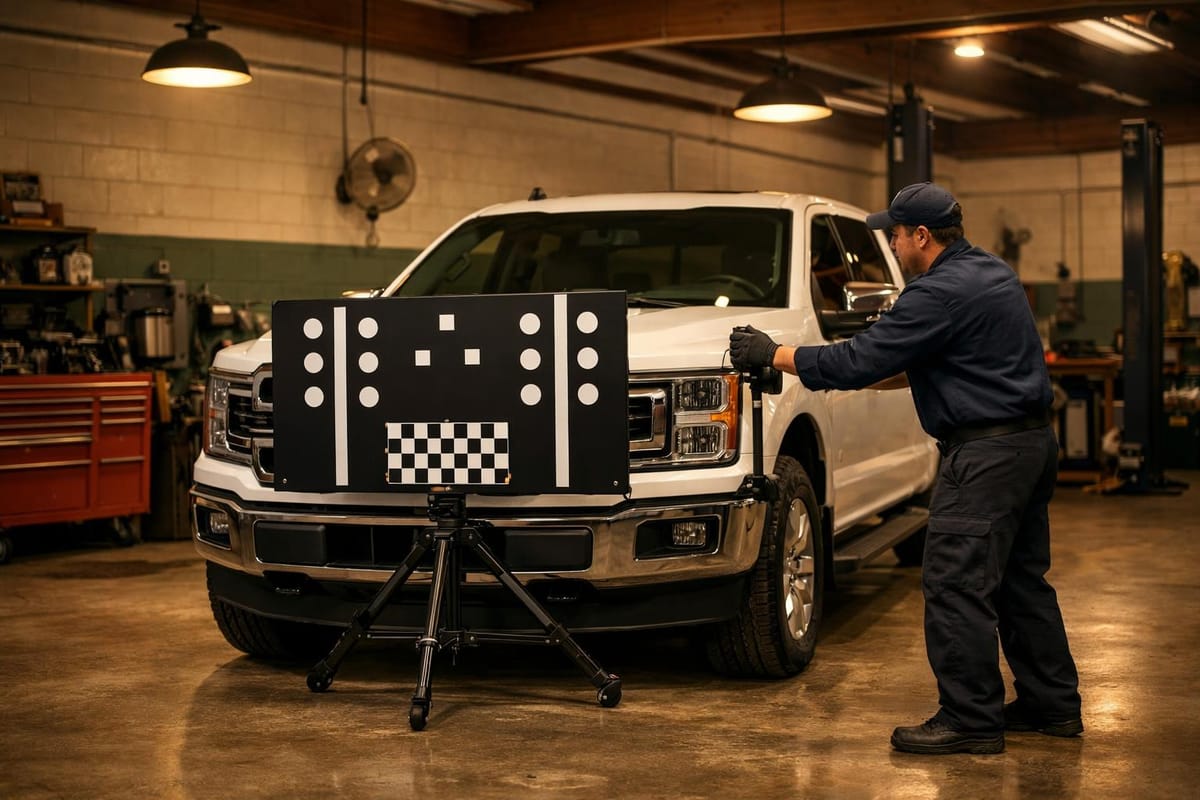
There are two calibration methods. Static calibration means the car sits parked in the shop while a technician positions calibration targets at exact distances in front of the vehicle — this requires a level floor and specific equipment. Dynamic calibration means a technician drives the car at set speeds on roads with clear lane markings until the system resets itself. Some vehicles need both. That's why mobile installers who come to your driveway often can't complete the job — they don't carry the static calibration targets.
Cost runs $150–$400 depending on your vehicle and which method it requires. A few specific examples: the Toyota Camry and Corolla (Toyota Safety Sense TSS-2 and TSS-P), Honda Civic and Accord (Honda Sensing mono camera), and Ford F-150 (Ford Co-Pilot360 front camera) all require recalibration after any windshield removal and replacement per their OEM service manuals. If a shop tells you the system will calibrate itself as you drive, that's wrong for most of these vehicles.
Insurance typically covers recalibration under a comprehensive claim when the shop documents it as an OEM-required procedure. But you have to ask your adjuster before the work starts — getting approval after the fact is harder, and some adjusters deny it if the request comes in after the invoice is already written.
Does Your Car Need Recalibration?
Quick rule: if your car has a camera mounted near the rearview mirror, assume it needs recalibration and ask the shop to confirm. Most 2018-and-newer vehicles with any driver-assist package do. A shop that skips this step is cutting a corner — a miscalibrated lane-keep or emergency braking system can fail the moment you need it. Verify the shop is certified to perform calibration, or that they're sending the car to a facility that is, before you approve the job.
How to File a Windshield Claim in California: Step by Step
Here is the full process, start to finish.
-
Check your declarations page. Confirm you have comprehensive coverage and note your deductible. If your deductible is higher than the replacement cost, filing a claim may not make sense.
-
Call the claims line or log into the online portal. Most insurers offer both. Ask for a "comprehensive glass claim" by name — that phrasing routes it differently from an accident claim.
-
Get a claim number before anything else. This is your authorization. Do not let a shop start work without one in hand.
-
Choose your shop. Under California Insurance Code §758.5, you have the right to pick any licensed shop. Your insurer cannot require you to use a network shop.
-
Sort out billing. The shop can bill your insurer directly using the claim number, or they may invoice you upfront and you submit receipts for reimbursement. Confirm which route before the job starts.
-
If ADAS recalibration is needed, get written confirmation from your adjuster first. Do not let the shop proceed on recalibration until you have that approval in writing — approval after the invoice is already submitted is a harder fight.
-
Keep all receipts and the repair order. Hold onto everything until the claim is fully closed, in case a reimbursement dispute comes up later.
Frequently Asked Questions
Q: Does insurance cover windshield replacement in California with no deductible? A: Many California comprehensive policies include a glass deductible waiver, but state law does not require it. Check your declarations page — if your deductible shows $0 for glass claims, you pay nothing out of pocket. If it reads $250 or $500, that amount comes out of your pocket first before the insurer covers the rest.
Q: Can my insurance company force me to use Safelite in California? A: No. California Insurance Code §758.5 prohibits your insurer from requiring you to use a specific shop. They can suggest one, but the choice is legally yours.
Q: Will my insurance rates go up if I file a windshield claim in California? A: Filing a comprehensive glass claim typically does not raise rates in California. That said, policy terms vary, so confirm with your specific insurer before you file.
Q: Does insurance cover ADAS recalibration after windshield replacement? A: Often yes under a comprehensive claim, but only if you ask your adjuster before the work starts and get written confirmation. Do not assume recalibration is included — verify it first.
Q: What if I only have liability insurance — does it cover my cracked windshield? A: No. Liability coverage pays for damage you cause to others, not damage to your own vehicle. You need comprehensive coverage to file a windshield claim.
Get a Free Estimate from All Auto Repair in Spring Valley
All Auto Repair & Auto Glass has been Spring Valley's family-owned body shop since 1989, serving Spring Valley and East San Diego County. Call or text Sam at (619) 466-3296, or email allautorepair628@gmail.com — get a free written estimate, same-day reply during business hours.