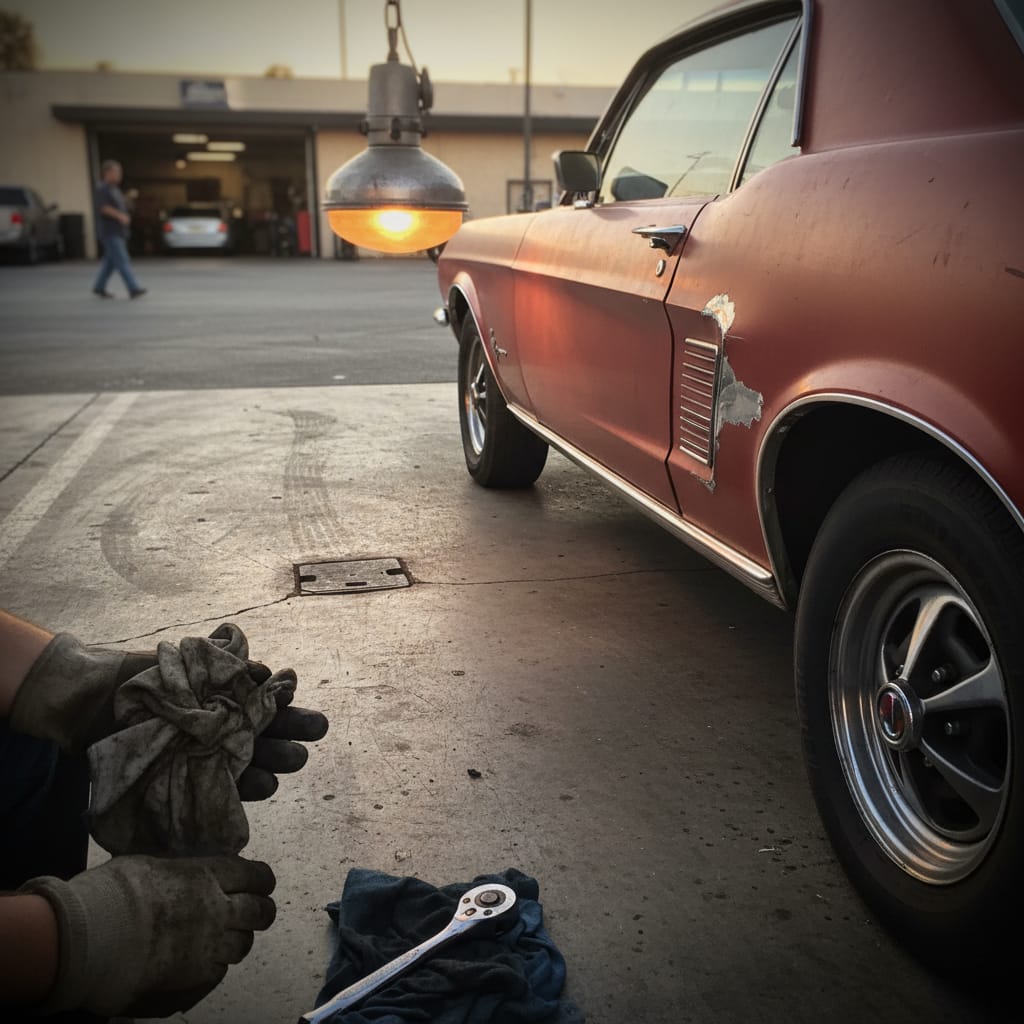
Most hit-and-run victims hurt their own claim by doing three things wrong in the first 24 hours. They skip the police report. They call their insurer before they have all the facts. And they move the car before taking any photos. This guide gives you a clear decision path from the moment you find the damage to the moment the car is fixed.
What to Do in the First 30 Minutes
You come back to your car and see damage. Your first move matters.
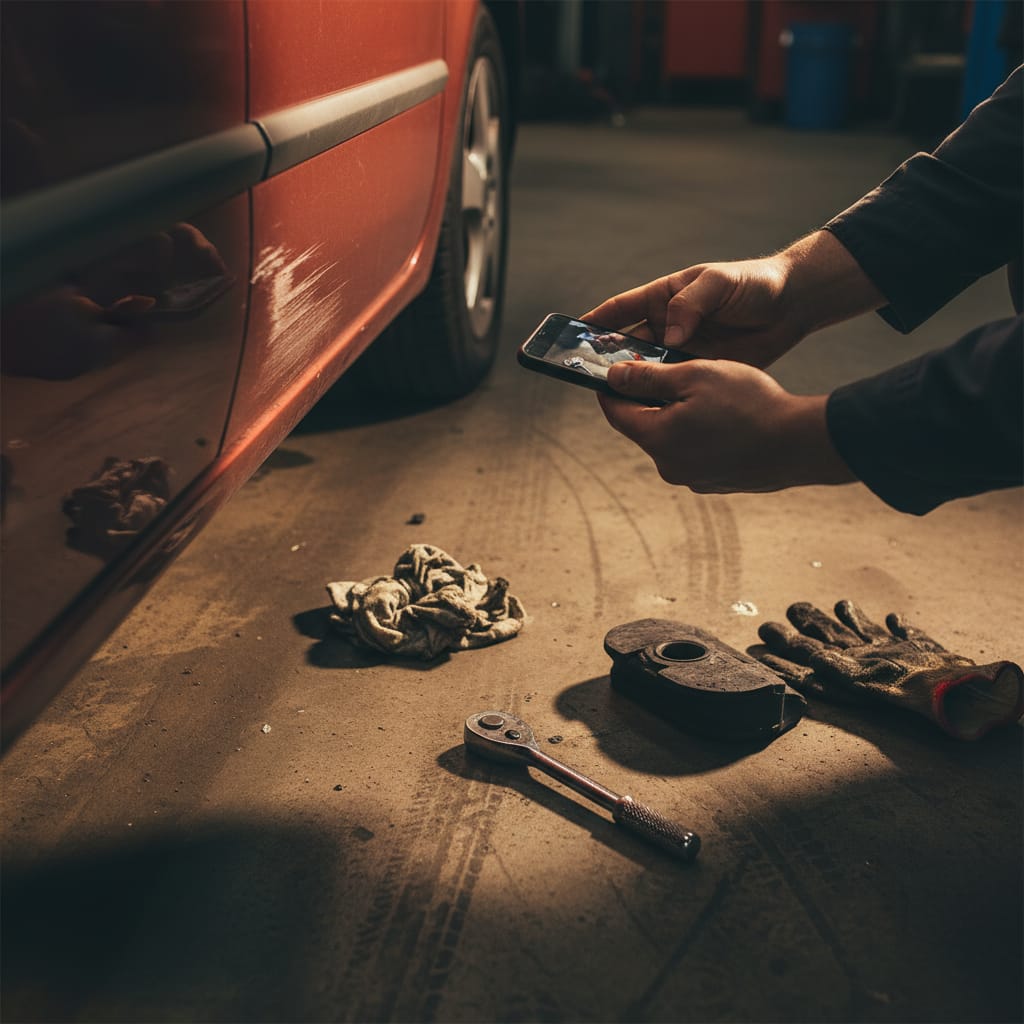
Step 1: Do not move the car yet. Take photos before anything shifts. Date-stamped phone photos are admissible documentation. Get wide shots and close-ups. Photograph the damage, the parking spot, nearby signs, and any paint transfer or debris on the ground.
Step 2: Look for witnesses. Ask anyone nearby if they saw what happened. Get their name and phone number right now. People leave fast. If there is a parking lot camera, note its location. Most systems overwrite footage every 24 to 72 hours. The sooner you (or law enforcement) request that footage, the better your chances of identifying the other driver.
Step 3: Check for notes. Sometimes a driver does leave a note. Check under the wipers. If there is a note, photograph it before you touch it.
Step 4: File a police report. This is the most important step. Do not skip it because the damage looks minor or because you doubt they will catch anyone. The report creates an official record that your insurer will require.
Why a Police Report Matters More Than You Think
A police report is not optional. It is the foundation of your claim.
California Vehicle Code § 20002 makes it a crime to leave the scene of a property damage accident without leaving contact information. Hit-and-run is a misdemeanor. When you file a report, you create a legal record that a crime occurred. That record is what your insurer uses to verify your story.
Without a police report, many insurers will deny an uninsured motorist property damage (UMPD) claim outright. They treat an unverified claim as a risk for fraud. The report removes that obstacle.
For Spring Valley, call the San Diego County Sheriff's Department non-emergency line. You do not need to call 911 for a property-damage-only hit-and-run. File the report within 24 hours. If the damage happened while your car was parked and you were not present, you can often file online or by phone.
Keep the case number. You will need it when you call your insurance company.
Which Insurance Coverage Pays for Hit-and-Run Damage
This is where most people get confused. Two types of coverage apply. The right one depends on your policy.
Uninsured Motorist Property Damage (UMPD): This coverage exists for exactly this situation. A hit-and-run driver is treated as an uninsured driver because they cannot be identified. UMPD pays to repair your car, and the deductibles are typically low: $0 to $250 for most policies. The catch is that some UMPD policies require physical contact with the other vehicle. If a driver ran you off the road and disappeared without touching your car, UMPD may not apply. Check your policy language.
Collision coverage: This also covers hit-and-run damage. You pay your deductible and your insurer pays the rest. Collision deductibles are usually higher, often $500 to $1,000. But collision coverage does not require physical contact. If your UMPD policy has a contact requirement and it is not met, collision is your backup.
Liability-only policies: If you carry only liability coverage, neither UMPD nor collision applies. You pay out of pocket unless the other driver is later identified.
One important fact: in California, filing a not-at-fault claim like UMPD should not raise your rates. California Insurance Code prohibits rate increases for claims where you are not at fault. Confirm this with your insurer before you decide not to file.
Filing a Claim vs. Paying Out of Pocket
Not every hit-and-run is worth a claim. Here is how to decide.
Get an estimate first. Do not guess. Call a body shop and get a written estimate before you decide anything. The cost of repair relative to your deductible is the core of the decision.
Use this framework:
- Repair cost is lower than or close to your deductible: Pay out of pocket. A claim here costs you roughly the same as self-paying, and it adds a claim to your history.
- Repair cost is clearly above your deductible: File the claim. You are paying the deductible either way, and the insurer absorbs the rest.
- Repair cost is above your UMPD deductible but below your collision deductible: File UMPD if your policy covers it. The lower deductible means you keep more money.
- Cosmetic damage only, car drives fine: Get the estimate. Minor scrapes and scuffs on older cars sometimes cost less than a deductible to fix.
Time matters on the claim side. Most policies require you to report the incident within 24 to 72 hours of discovery. Check your policy for the exact window. Waiting too long gives the insurer a reason to question the claim.
Your California Rights When Dealing with the Insurer
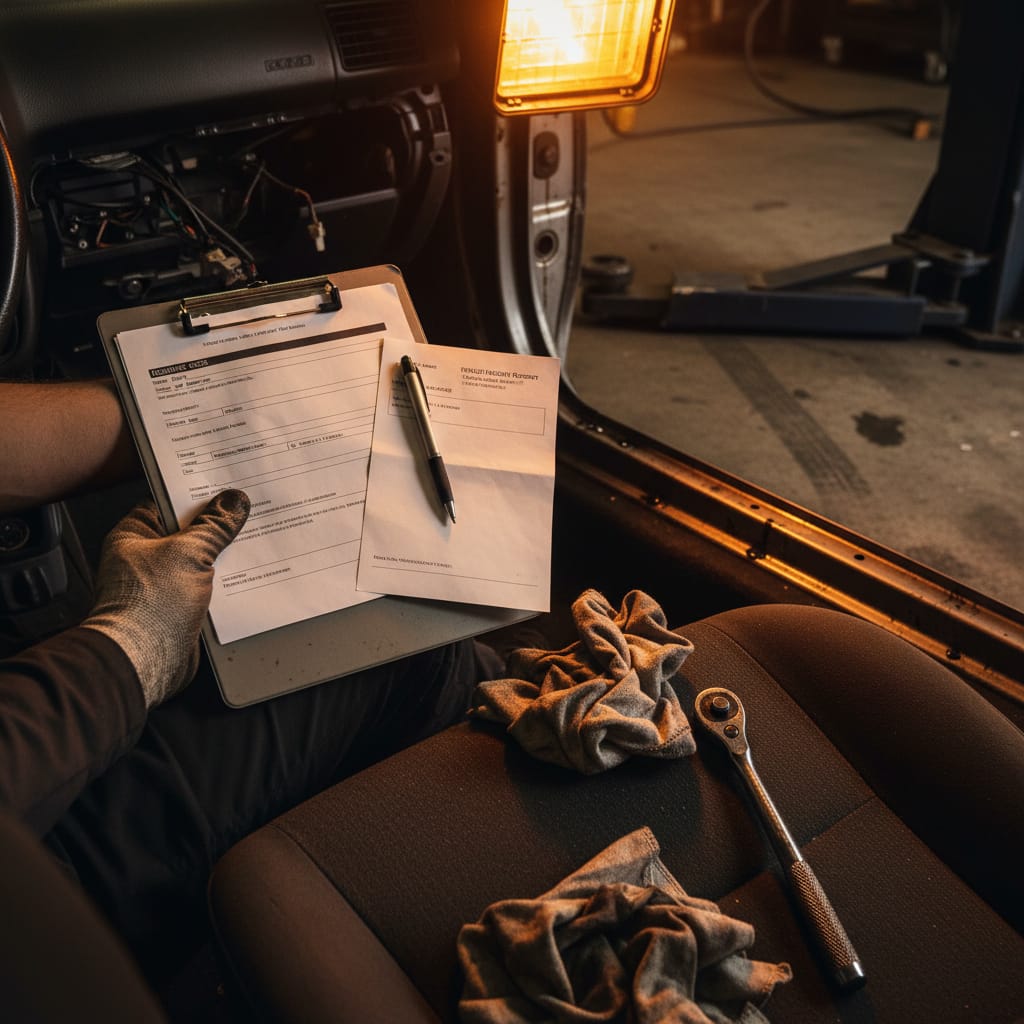
California law gives you specific rights once a claim is open.
You choose the repair shop. California Insurance Code § 758.5 says your insurer cannot require you to use a specific shop. They must give you written notice of this right. If an adjuster tells you to take it to a certain shop, you can decline. Your choice is legally protected.
Timelines apply to your insurer. Once you notify them of a claim, California law requires them to contact you within 15 days, accept or deny the claim within 40 days of proof of claim, and pay within 30 days of a settlement agreement. If they miss these deadlines, file a complaint with the California Department of Insurance at 1-800-927-4357.
The adjuster's estimate is a starting point, not a final number. If a shop finds hidden damage after the repair starts, your insurer is required to pay for documented supplemental damage. A good shop will handle the supplement request on your behalf.
Getting the Repair Done Right
Hit-and-run damage looks simple on the outside. It often is not.
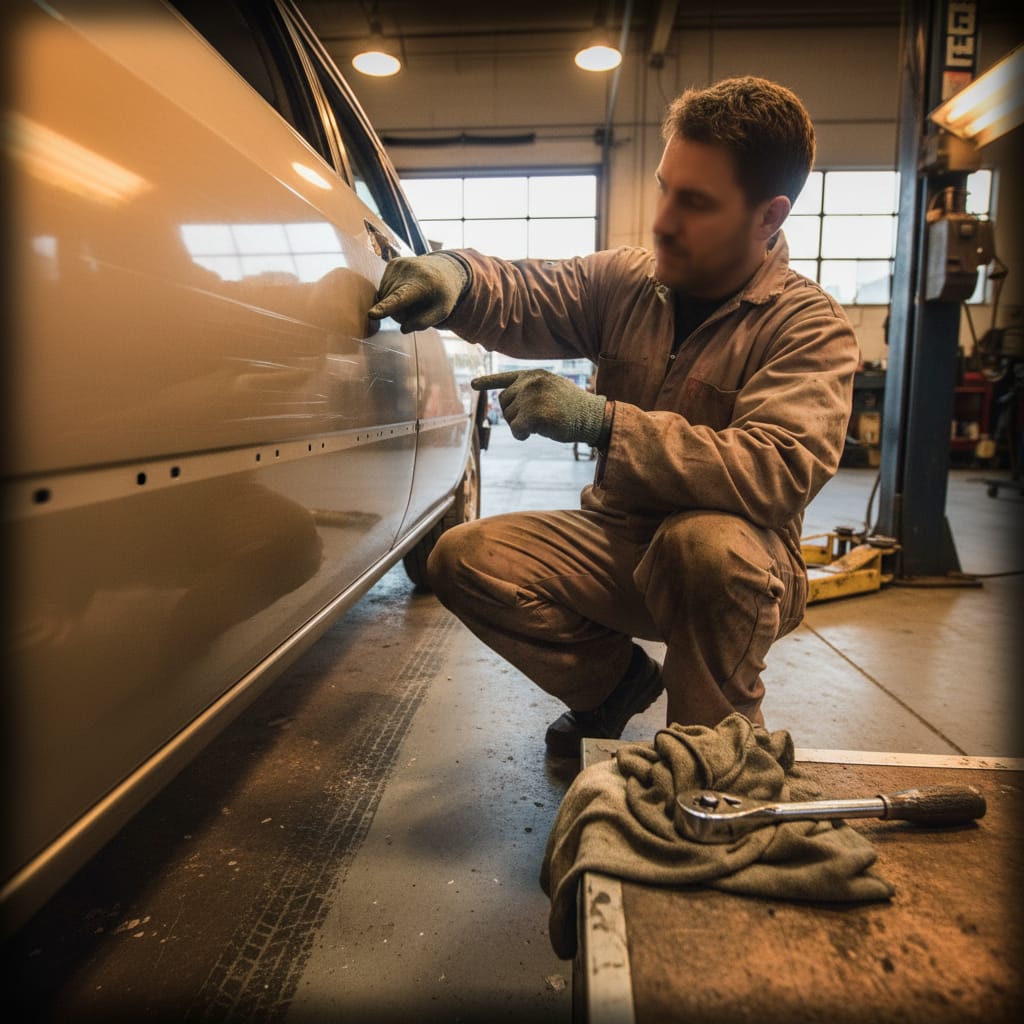
A side impact or parking lot strike can bend the door structure, damage the door seal, or shift the body panel alignment. Paint transfer from the other car needs to be fully removed before new paint goes on, or it telegraphs through the finish over time. And if the hit happened near a camera housing, sensor array, or mirror with turn signal electronics, those components need to be checked too.
This is what hit and run damage repair Spring Valley CA drivers need to know: visible damage and structural damage are not always the same thing. A shop with frame equipment and color-matching capability can find both.
At All Auto Repair & Auto Glass, we give you a written estimate that covers what we can see. If we find more once the panel comes off, we document it, photograph it, and submit a supplement to your insurer directly. You do not have to go back and forth with the adjuster yourself.
Our collision repair service covers full body work, structural repair, color-matched paint, and glass. We have handled hit and run damage repair Spring Valley CA residents have brought to us since 1989. We know what insurers require and how to document the work properly.
Frequently Asked Questions
Q: Do I need a police report for a hit-and-run claim in California? A: Yes, in almost every case. Most insurers require a police report to process a UMPD claim. Without it, they may deny the claim. File the report within 24 hours through the San Diego County Sheriff's non-emergency line.
Q: Will filing a hit-and-run claim raise my rates in California? A: Filing a UMPD claim as the not-at-fault party should not raise your rates under California law. Confirm this with your specific insurer before filing. Collision claims on a not-at-fault hit-and-run are also generally treated as non-chargeable events in California.
Q: What if I only have liability insurance and my car was hit while parked? A: Liability coverage only pays for damage you cause to others. It does not cover your own vehicle. If you do not have UMPD or collision coverage, you would need to pay out of pocket unless the other driver is later identified through camera footage or witnesses.
Q: My UMPD policy requires physical contact. The other car never touched mine. What do I do? A: Check whether you have collision coverage. Collision pays regardless of contact. The deductible is higher than UMPD typically, but it is your coverage option if the physical contact requirement blocks the UMPD claim.
Q: How quickly does parking lot camera footage disappear? A: Most systems overwrite footage within 24 to 72 hours. Tell the police officer where the cameras are located when you file the report. If you want to request the footage yourself, contact the property manager immediately. Do not wait.
Q: Can my insurer force me to use their recommended shop? A: No. California Insurance Code § 758.5 gives you the right to choose your own repair shop. Your insurer must notify you of this right in writing. You can decline any shop they recommend without it affecting your claim.
Q: What does UMPD actually cover in California? A: UMPD covers damage to your vehicle caused by an uninsured driver or a hit-and-run driver who cannot be identified. It pays up to your policy limit, minus your UMPD deductible. It does not cover bodily injury. Check your declarations page for your specific limits and deductible.
Get the Car Fixed at All Auto Repair & Auto Glass
You did everything right. Now get the repair done at a shop that knows this process.
All Auto Repair & Auto Glass has been a family-owned body shop in Spring Valley since 1989. We handle the estimate, the supplement paperwork, and the repair itself. You talk to Sam, not a call center.
Call or text Sam at (619) 466-3296 whenever you are ready. We are at 628 Grand Ave, Spring Valley, CA 91977.