A car hits you from behind at 15 mph in a parking lot on Jamacha Road. The other driver apologizes. Your bumper has a crack and a small dent. You think you got lucky.
You may not have.
Rear-end collisions are the most common crash type on American roads, according to NHTSA data. They also produce some of the most commonly underestimated damage. The plastic cover you can see is the last thing that matters. What sits behind it (foam absorbers, a steel reinforcement bar, and two frame rails) tells the real story. A shop that only quotes you for the bumper cover is not quoting you the full job.
This article walks through what happens to a car in a rear-end hit, why some damage stays invisible, and how the repair process works here in Spring Valley and East County.
Section 1: What's Behind That Bumper Cover
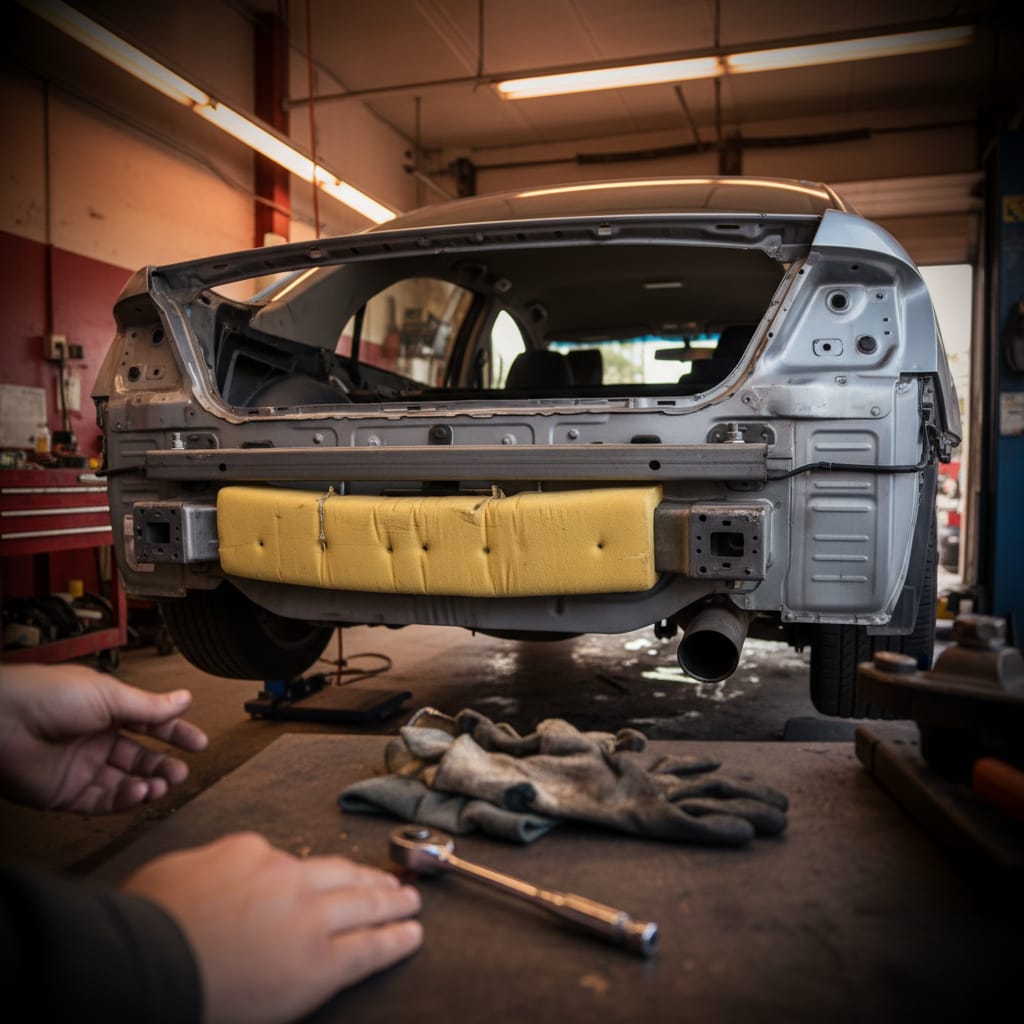
Most people think of a bumper as one piece. It is actually three separate layers. Each one does a different job.
The outer layer is the bumper cover, the painted plastic skin you see from the street. It looks structural. It is not. Manufacturers make it from flexible thermoplastic so it can flex on minor taps without shattering. Its job is aerodynamics and appearance, not impact protection.
Directly behind the cover sits the foam energy absorber. It is a block of polypropylene foam or a molded plastic honeycomb. Think of it like a crumple zone for low-speed hits. In a parking-lot tap, this absorber crushes and soaks up the energy so the rest of the car does not have to. But because it crushes, it is a one-time-use part. If it was hit before, it offers less protection the next time.
Behind the absorber is the reinforcement bar, a steel or aluminum beam that bolts directly to the frame rails. This bar is the bridge between the bumper system and the structure of your car. In a significant hit, it bends, twists, or transfers force straight into the rails. A bent reinforcement bar often looks fine from the outside. You cannot see it without pulling the bumper cover off.
CARFAX notes that structural damage is one of the most common problems buyers discover after purchasing a used vehicle. That is because it is not visible at a glance. The same principle applies to fresh collision damage. What you see after a rear hit is rarely the whole picture.
The repair process starts by removing the bumper cover entirely. Until that cover comes off, nobody (not you, not an insurance adjuster in a parking lot) can tell you what the actual damage is.
Section 2: Frame Rails and Why They Matter
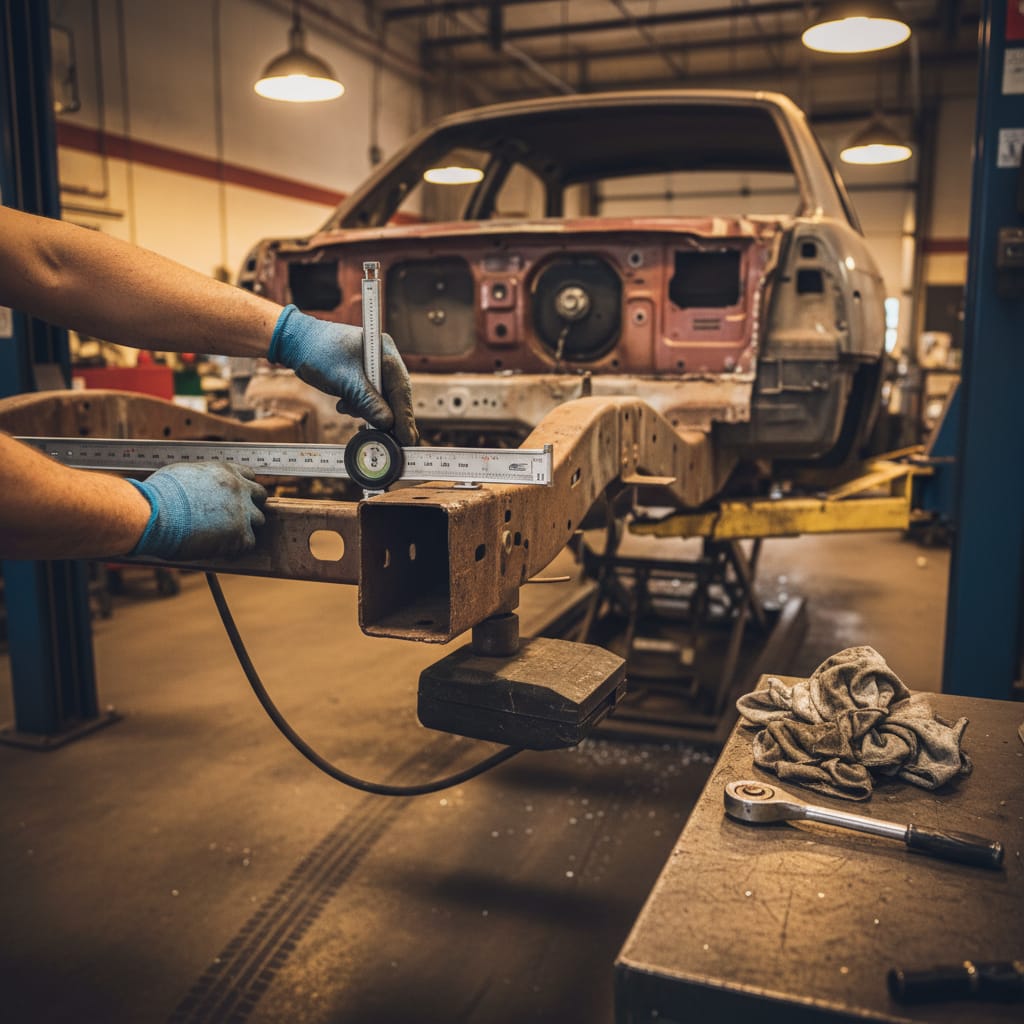
The rear frame rails are two steel channels that run from the rear suspension mounts forward along the floor of the vehicle. They are the backbone of the rear structure. When the reinforcement bar takes a hard enough hit, it pushes that force into the rails.
Bent rails do not always look bent. A rail can be 0.5 inches out of spec and the car will still drive, open its doors, and park. But the rear suspension geometry will be wrong. Here is how that shows up in everyday driving:
- The car pulls to one side on a straight, flat road even when you are holding the wheel level.
- The rear tires wear unevenly. You may see more wear on the inside or outside edge than normal.
- The trunk gaps are uneven. Stand behind the car and look at the gap between the trunk lid and the body on each side. A wider gap on one side means the rear structure shifted.
- The trunk lid does not latch cleanly, or the rear hatch sits slightly crooked.
These are not cosmetic problems. Misaligned rear suspension affects how the car handles in an emergency. It also chews through tires faster than normal. A car that pulls after a rear hit should get a proper frame measurement before anyone calls the job done.
Modern unibody vehicles do not have a traditional ladder frame. "Frame rail" refers to the structural sections of the unibody floor pan. Straightening them requires a frame machine, a specialized jig that pulls the metal back to factory spec using measured anchor points. Some sections can be straightened. Others are sectioned out and replaced with new steel. The decision depends on where the bend is and how severe it is.
After any frame work, the car needs a four-wheel alignment check. Straightening rails without aligning the wheels is like resetting a broken bone without setting it properly.
Section 3: Sensors and Cameras
New vehicles pack a lot of electronics into the rear bumper area. A 2020 or newer car likely has at least three of these in the rear:
- Backup camera, the lens usually mounts to the trunk lid, tailgate, or a bracket on the rear bumper cover.
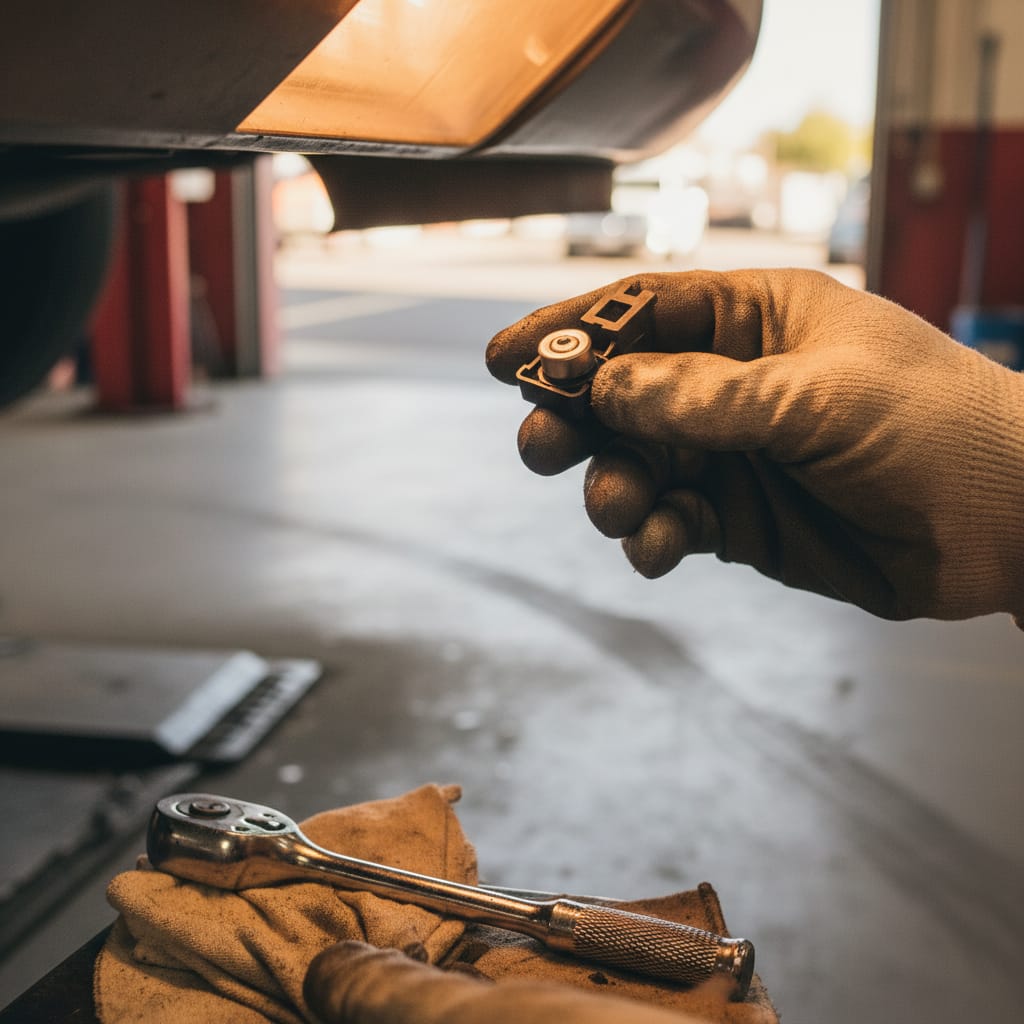
- Parking sensors, small round ultrasonic sensors pressed into holes in the bumper cover.
- Blind-spot monitoring radar, a module mounted inside the rear bumper behind the cover, one on each corner.
Any of these can be knocked out of position, cracked, or broken loose in a rear hit. A backup camera bracket that moved even slightly will give a skewed image. A blind-spot radar module that shifted will produce false warnings, or miss actual vehicles in your blind spot. Cracked parking sensors will throw an error code and stop working.
The fix is not always replacement. Sometimes the bracket just needs realignment. But every rear-end repair should include an inspection of all rear electronics. Camera systems require recalibration after any repair that involves removing the bumper or adjusting the mount position. Recalibration is a software procedure that tells the car's computer exactly where the camera is now pointing. Skip it and the parking guidelines on your screen will be off.
This step is easy to miss if a shop is not used to working with late-model vehicles. It is not optional. NHTSA's backup camera rule made backup cameras mandatory on all new passenger vehicles sold in the US after May 2018. A non-functional camera after a repair is a safety defect, not just an inconvenience.
Section 4: How the Repair Process Works Here
Here is the step-by-step sequence for a rear-end repair at All Auto Repair & Auto Glass in Spring Valley.
Step 1: Disassembly and inspection. We pull the bumper cover, absorber, and reinforcement bar. We photograph everything before touching it. We measure the frame rails against factory spec using measuring equipment, not visual judgment.
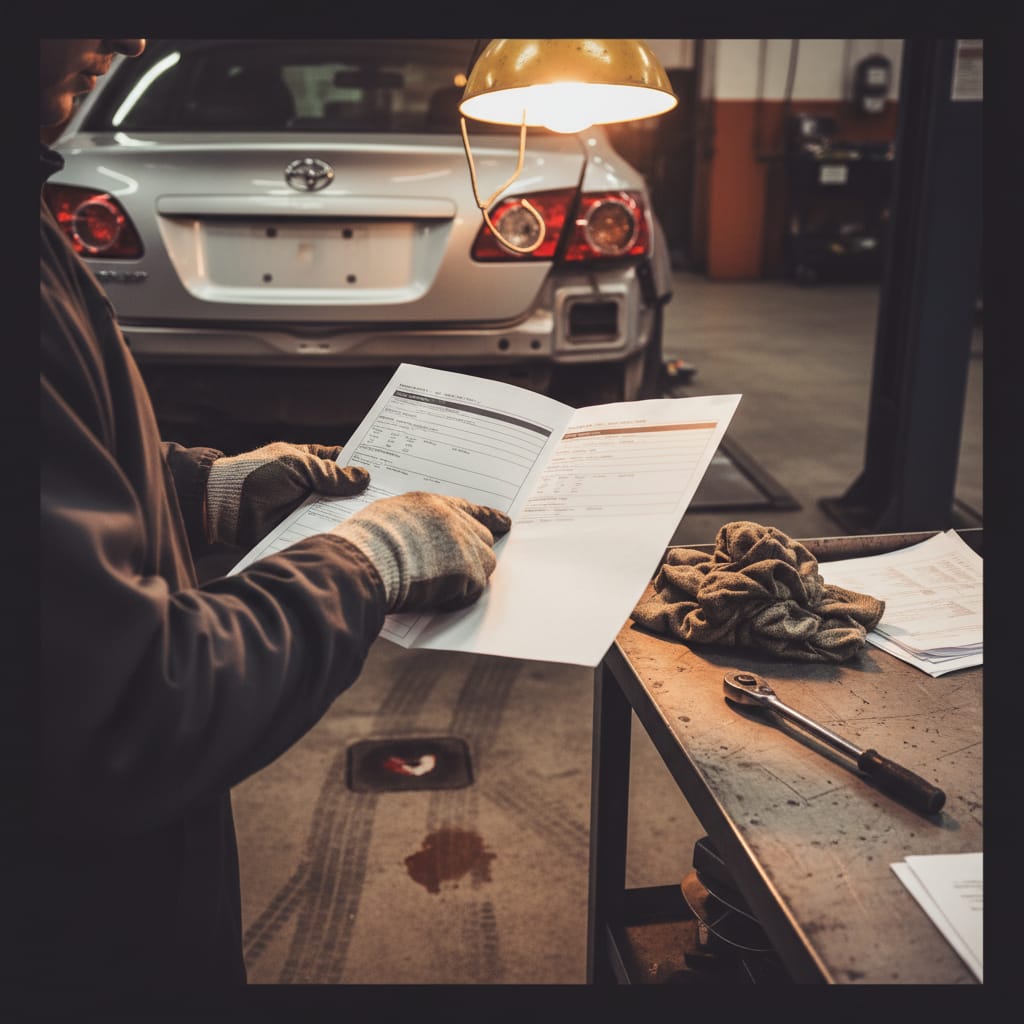
Step 2: Damage documentation. We write a complete itemized estimate. This is the list your insurance adjuster needs. It also protects you if hidden damage shows up mid-repair (called a "supplement").
Step 3: Frame work, if needed. If the rails are out of spec, they go on the frame machine. We pull and measure until the numbers match the factory spec sheet for that year, make, and model.
Step 4: Parts replacement. Crushed absorbers, bent reinforcement bars, and cracked covers get replaced, not repaired. We use OEM or OEM-equivalent parts and note the part type on every invoice, as required by California law.
Step 5: Electronics inspection and recalibration. Every rear sensor, camera bracket, and radar module gets checked. Cameras get recalibrated after reassembly.
Step 6: Alignment check. After any frame work, the car goes on the alignment rack. We check all four wheels against spec, not just the rear.
Step 7: Paint and reassembly. We spray color-matched paint on all repaired panels. Color matching on a car with original factory paint requires a blend panel in most cases. We do not just spot paint the bumper cover.
Step 8: Quality check and delivery. We test every electronic function before the car leaves. Trunk latches, hatch struts, parking sensors, backup camera. All confirmed working.
A purely cosmetic repair (bumper cover and absorber only, no frame work) typically takes two to four days. A repair that involves frame straightening, parts sourcing, and recalibration runs five to seven business days, depending on parts availability.
Learn more about our full collision repair services for East County and Spring Valley.
Section 5: Insurance, Estimates, and Your Rights in California
California gives you more rights in this situation than most drivers know.
You choose your own shop. Under California Insurance Code 758.5, your insurance company cannot require you to use a specific repair facility. They can suggest one. You are not obligated to use it. If you prefer a shop you already trust, tell your adjuster and provide the shop's contact information.
You have the right to an independent estimate. You can take your car to any BAR-licensed auto body shop for an estimate before you authorize any repair. The Bureau of Automotive Repair licenses and regulates all auto body shops in California. A licensed shop is required to give you a written itemized estimate before starting work.
If the insurance company wants to total your car: They must offer you a settlement that reflects the fair market value of a comparable vehicle in your area. Same make, model, year, mileage, and condition. If you disagree with their valuation, the California Department of Insurance has an appraisal dispute process. You each pick an appraiser and, if they disagree, a neutral umpire decides.
OEM vs. aftermarket parts. Your invoice must identify every part as new OEM, used, aftermarket, reconditioned, or rebuilt. You can request OEM parts. The insurer may not cover the price difference, but you can pay the difference yourself if it matters to you.
A detailed repair estimate helps avoid a total-loss decision. Insurance companies sometimes total a car when a quick look suggests high repair cost, before anyone has actually pulled the bumper and measured the frame. A full teardown and written estimate (with photos) gives the adjuster a real number to work with instead of a ballpark.
Frequently Asked Questions
My car drives fine after a rear hit. Does that mean there is no frame damage?
Not necessarily. A frame rail can be 0.5 inches out of spec and the car will still start, shift, and steer. You will notice it over time as uneven tire wear or a slight pull. By then you may have already spent money on tires and alignments without fixing the root cause. A proper frame measurement is the only way to know.
How long will the repair take if I need frame work done?
Cosmetic repairs (bumper cover, absorber, and paint) typically take two to four days. Add frame straightening, parts ordering, and sensor recalibration and the job runs five to seven business days. We will give you a timeline when we complete the teardown and know exactly what the car needs.
Does my backup camera need to be recalibrated even if it still turns on after the accident?
Yes. If the bracket moved at all during the impact or during repair, the camera's viewing angle is off. The image on your screen will look normal, but the parking guidelines will not line up correctly with where the car actually is. Recalibration is a software procedure that corrects this.
Can I negotiate with my insurance company if they say the car is a total loss?
Yes. You have the right to dispute a total-loss valuation in California. You can request the methodology they used to value your vehicle, provide evidence of comparable vehicles in your area, and invoke the appraisal provision in your policy if you still disagree. The California Department of Insurance at 1-800-927-4357 can help if the process stalls.
What if new damage is found after my insurance company already approved an estimate?
This is called a supplement. It is normal in collision repair, especially for rear hits where frame damage only becomes visible after the bumper is removed. A reputable shop will document the additional damage with photos and send a supplement to your insurer. In California, your insurer is required to respond to supplements in a reasonable time.
Ready to Get a Real Answer About Your Car?
All Auto Repair & Auto Glass has been part of San Diego County since 1989. Family-owned, honest, and standing behind every job we do. Call or text Sam at (619) 466-3296 whenever you're ready.
We are at 628 Grand Ave, Spring Valley, CA 91977. We do the teardown, write the full estimate, and walk you through exactly what your car needs, before you commit to anything.