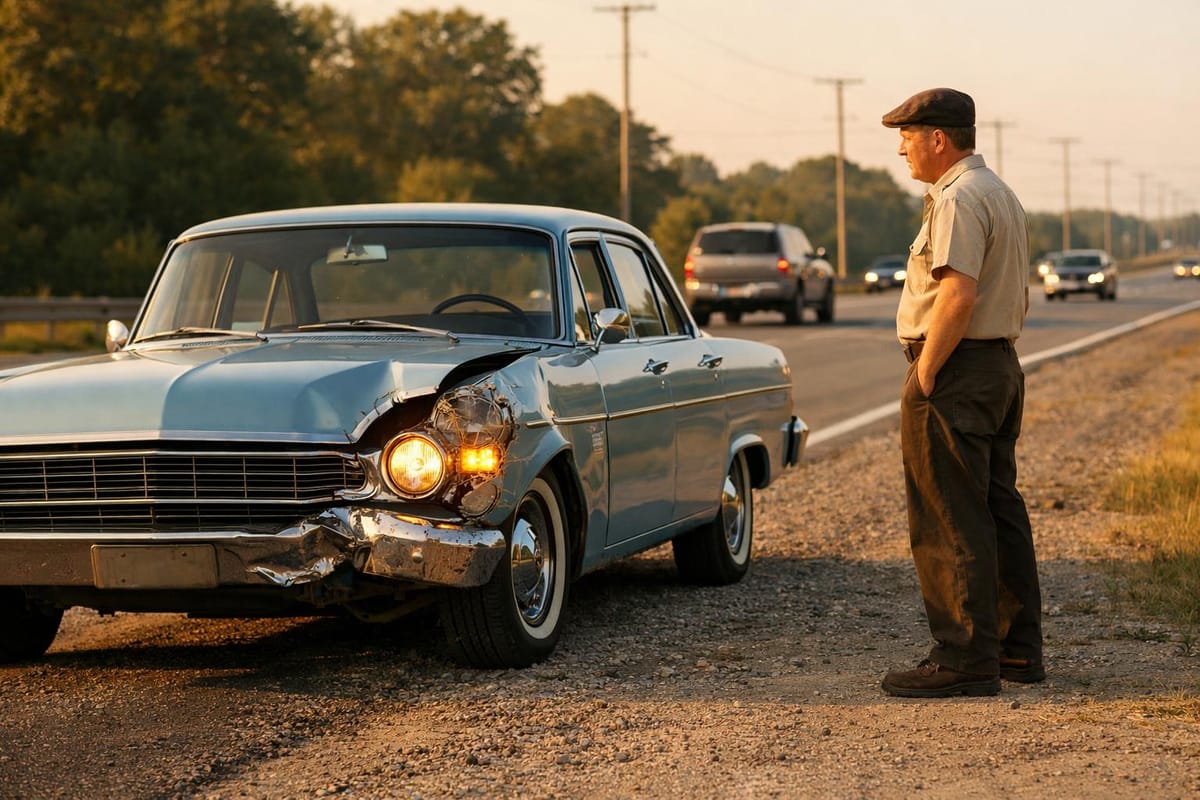
Knowing what to do after a car accident in California can save you hundreds of dollars and protect your legal rights. The two decisions that matter most in the first 60 minutes: can the car move safely, and where does it go? Most people let the tow truck driver decide the second one for them. That mistake can cost $1,000 or more in storage fees before a single repair starts. This guide walks through every step, in order.
What to Do at the Scene
San Diego County sees about 12,838 crashes per year. Most drivers have no idea what the law requires them to do in the first five minutes. And the law does require specific things.
Move to Safety First
If your car can move, get it off the road. Pull to the shoulder or a nearby parking lot. Turn on your hazard lights. Do not stand in the lane of traffic while you wait for police or exchange information. A second collision at a crash scene is more common than most people expect.
What Information to Exchange
California Vehicle Code § 20002 requires you to stop and exchange information. Leaving the scene is a misdemeanor: up to 6 months in jail or a $1,000 fine. Get the other driver's full name, driver's license number, insurance card (a photo of the card is fine), license plate, and the vehicle's make and model. Get names and phone numbers from any witnesses. Write nothing down from memory. Photograph everything.
When to Call Police
Call 911 if anyone is injured. If damage looks like it exceeds $1,000 (and the average U.S. property damage crash runs about $5,700, so it usually does), a police report protects you if the other driver later changes their story. If the other driver refuses to share information or you suspect they're uninsured, call police before they leave.
Document Everything Before You Leave
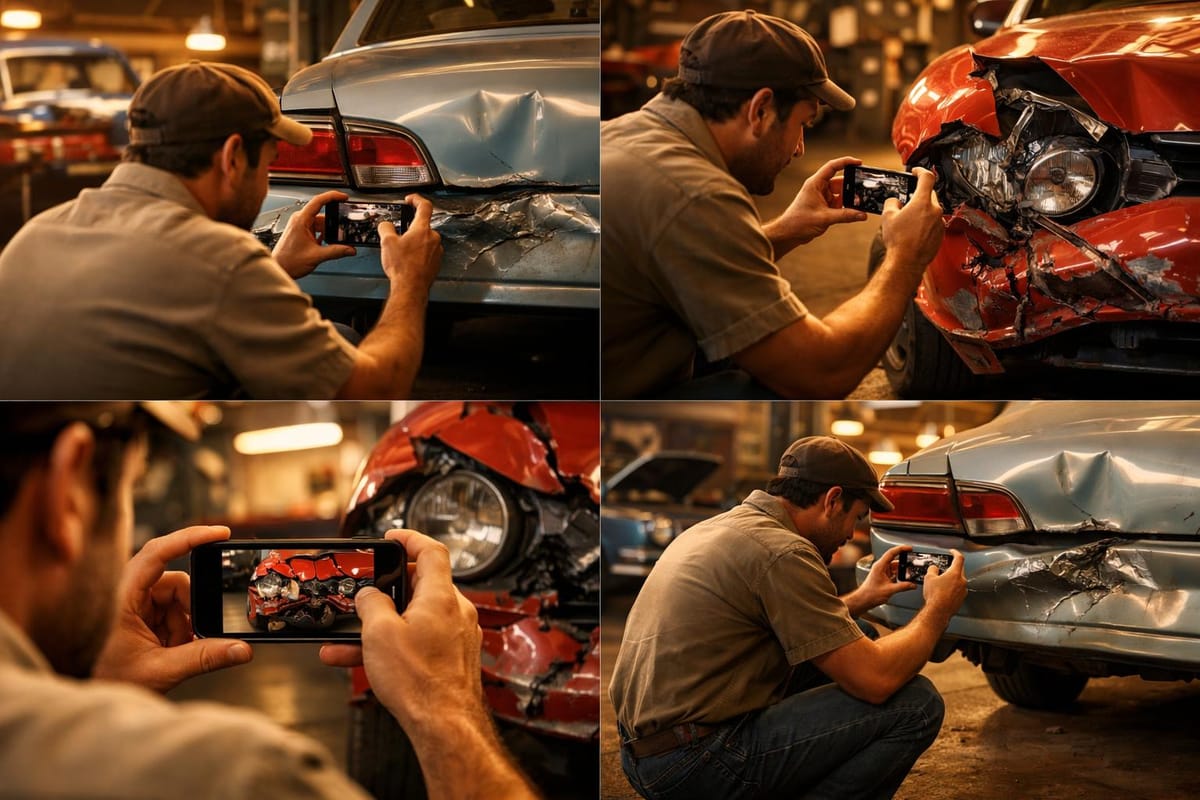
Photos are your only protection if the other driver's account shifts after the fact. Aim for 20 or more shots before you move the vehicles.
Photos That Actually Help Your Claim
Take wide shots and close-ups. Photograph all four corners of both vehicles. Get street signs in frame so the location is clear. Photograph skid marks, debris, and road conditions. Capture both license plates and both VINs (the VIN is usually visible through the windshield on the driver's side). If you have a dashcam, save the footage right now, before the loop overwrites it.
The SR-1 Form: California's 10-Day Filing Requirement
Under California Vehicle Code § 16000, you must file an SR-1 form with the California DMV within 10 calendar days if the crash caused $1,000 or more in damage, or if anyone was injured. Filing is not an admission of fault. Missing the deadline can suspend your driver's license, even if the accident wasn't your fault (Vehicle Code § 16004). File online at dmv.ca.gov.
Is Your Car Safe to Drive?
The choice to drive away or call a tow truck is yours to make at the scene. Make it on facts, not on wanting to get home faster.
Quick Visual Check You Can Do Right Now
Run through this list before you decide:
- Fluid puddle forming under the car
- Flat or shredded tire
- Door that won't close flush
- Airbag warning light on the dashboard
- Steam rising from under the hood
- Steering pulling hard to one side
If any of these are present, tow it. Driving a structurally compromised car creates safety risk and can turn a $3,000 repair into a $7,000 one.
Hidden Damage You Can't See
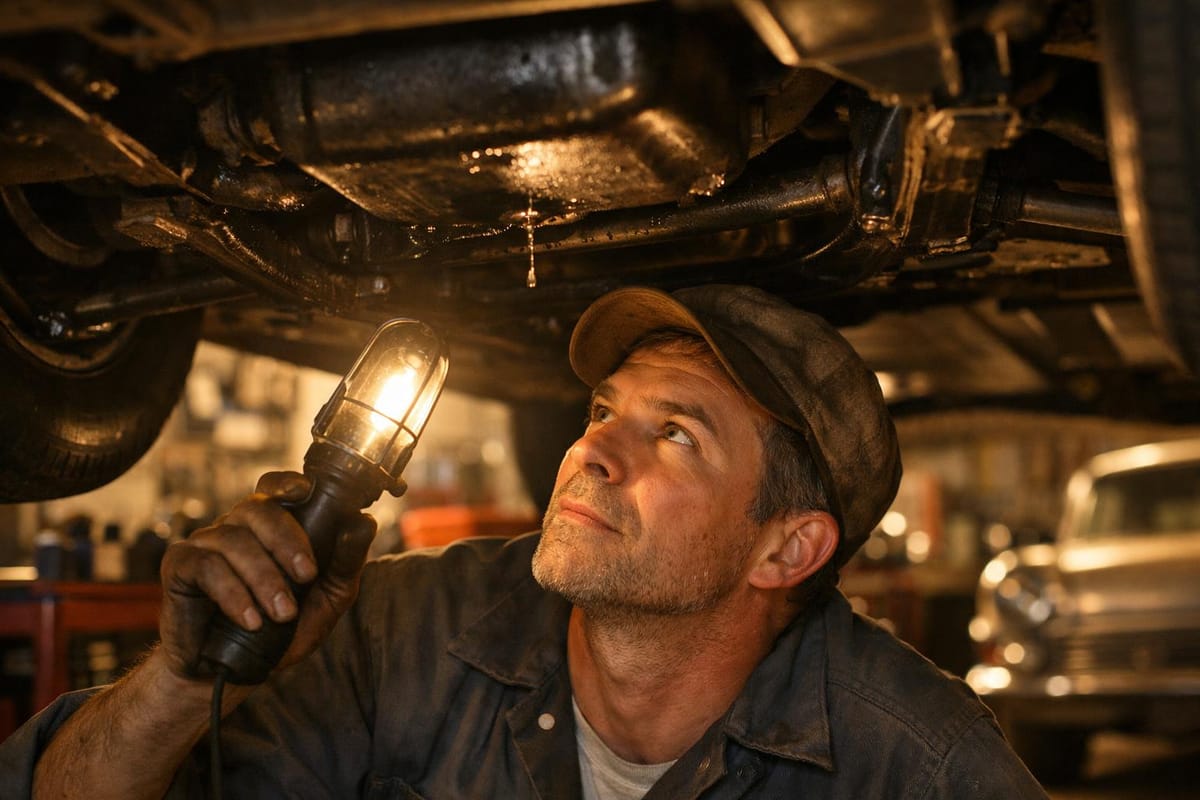
A gentle hit can bend the unibody frame or shift suspension geometry without leaving a mark you'd notice. ADAS sensors (the cameras and radar units that power lane-keep assist and automatic emergency braking) mount behind bumpers and windshields. A low-speed tap can knock them out of calibration with no outward sign at all. A shop inspection catches what your eyes can't. Our auto body and mechanical inspection services cover both visible collision damage and hidden sensor drift.
Avoid the Tow Yard Trap
Every other guide you'll find online skips this section. It's the mistake that costs drivers the most money.
About 70% of wrecked cars go to a tow yard first. Only about 30% go directly to a body shop. That gap is where fees accumulate.
What Bandit Tow Trucks Are
Bandit tow trucks are unlicensed operators who show up at crash scenes without being called. They take your car to a lot they own or have a kickback arrangement with. The California Department of Insurance has issued active warnings about this practice. The moment your car lands on their lot, storage fees begin.
How Storage Fees Add Up
In San Diego County, tow yard storage runs $75–$150 per day. Two weeks in storage (not unusual while claims process and adjusters schedule inspections) adds up to more than $1,000 before any repair work begins. That money does not come off your repair estimate. It's a separate bill you owe the lot.
How to Protect Yourself
Before any tow truck hooks up to your car, say the destination shop address out loud. You can refuse a truck you didn't call. If you're injured or disoriented, have a passenger or bystander make the call on your behalf. The single best move: have your shop's number saved in your phone before you ever need it. Tell the tow driver to bring it here and give them the Spring Valley address before they hook up.
Your Right to Choose Your Own Repair Shop
Most drivers hand this decision to their insurance company by default. California law gives it back to you.
What § 758.5 Actually Says
California Insurance Code § 758.5 prohibits your insurer from requiring you to use a specific repair shop. They must give you written notice of your right to choose, not just mention it verbally. If an adjuster orally recommends a shop and you go along with it, the insurer must deliver written statutory notice within 5 calendar days. That is a legal requirement.
Why Insurer 'Preferred Shops' Exist
Preferred-shop programs let insurers negotiate lower labor rates in exchange for directing claim volume to a short list of shops. That arrangement isn't automatically bad. Some preferred shops do good work. But a shop operating under a preferred-shop agreement serves two sets of expectations: the insurer's cycle time targets and your repair quality. An independent shop answers to one.
How to Exercise That Right
When the adjuster calls, say: "I'm taking it to [shop name]." They may push back. You do not have to accept their recommendation. If an insurer denies or reduces your claim because you chose an independent shop, file a complaint with the California Department of Insurance at 1-800-927-4357. We've been a family-owned Spring Valley shop since 1989. We answer to you, not to a carrier's cycle time targets.
Notifying Your Insurance Company
Report the accident the same day if you can. Most policies require "prompt" notice, and California law holds insurers to a response timeline once they receive it: contact you within 15 days of claim notice, accept or deny within 40 days of proof of claim, and pay within 30 days of a settlement agreement.
First-Party vs. Third-Party Claims
A first-party claim goes to your own insurer and uses your collision coverage. It doesn't require proving the other driver's fault. A third-party claim goes to the at-fault driver's insurer and can include pain and suffering, but it requires establishing fault. When liability is disputed, first-party often resolves faster.
Recorded Statements: What to Know
You are not required to give a recorded statement to the other driver's insurer. Your own policy may require you to cooperate with your own insurer. That's different. Before agreeing to any recorded statement on either side, talk to an attorney first. Under California's pure comparative fault rule, established in Li v. Yellow Cab Co. (1975), means even a driver who is 99% at fault can recover 1% of their damages, which means recorded statements carry real weight.
Rental Car Rights in California
If the other driver is at fault, their insurer owes you a rental vehicle while yours is being repaired. If liability is in dispute and you carry rental coverage on your own policy, that coverage applies while the claim works its way through. The California Department of Insurance consumer guide covers your full rental entitlement in detail.
Frequently Asked Questions
Q: Do I have to go to the shop my insurance recommends? A: No. California Insurance Code § 758.5 gives you the legal right to choose your own repair shop. Your insurer must notify you of that right in writing. They cannot deny or reduce your claim because you chose an independent shop over one of their preferred vendors.
Q: What happens if I don't file an SR-1 form after an accident in California? A: If the crash caused $1,000 or more in damage, or anyone was injured, you must file the SR-1 with the California DMV within 10 calendar days. Missing that deadline can suspend your driver's license, even if the accident wasn't your fault. File at dmv.ca.gov.
Q: How long do I have to report a car accident to my insurance in California? A: Report it the same day if possible. Most policies require prompt notice, and delaying can give your insurer grounds to dispute coverage. Once they receive your notice, California law requires them to contact you within 15 days.
Q: Can I drive my car after a minor accident? A: Run through the quick visual check first: look for fluid under the car, check tire condition, test that doors close flush, watch for the airbag warning light, and pay attention to how the steering feels. If anything looks off, tow it. Hidden frame or ADAS sensor damage won't show on the outside, but both affect your safety on the road.
Get a Free Estimate at All Auto Repair & Auto Glass
All Auto Repair & Auto Glass handles body and collision repair, mechanical work, and auto glass, all under one roof in Spring Valley.
All Auto Repair & Auto Glass has been Spring Valley's family-owned body shop since 1989. Call or text Sam at (619) 466-3296, or email allautorepair628@gmail.com. Free written estimate, same-day reply during business hours. Request your free written estimate here.