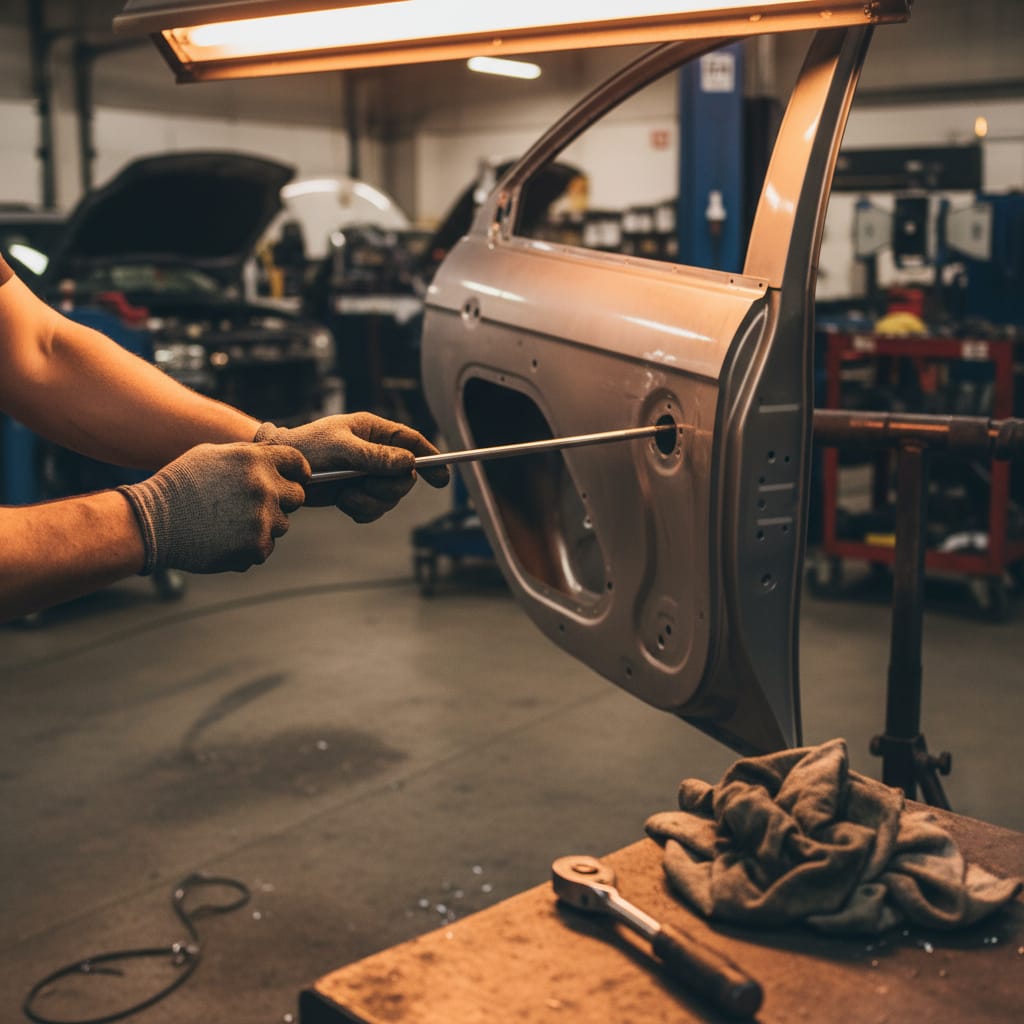
You look at a dent and think: how hard can it be to push that back out? The answer depends less on what you see and more on what the metal did when it got hit. Dent repair is not about the shape of the depression from outside the car. It is about what happened to the metal on the inside. That determines everything: which repair method works, how long the job takes, and what it costs.
This guide covers how auto body dent repair Spring Valley CA drivers need actually works, from the physics of sheet metal to the two main repair paths and when each one is right.
We have been doing this at All Auto Repair since 1989. This is the honest version.
Why Not All Dents Repair the Same Way
Every dent looks simple from the outside. A smooth depression, maybe a few inches wide. But two dents that look identical from ten feet away can require completely different repairs.
One dent might pop back out in an hour with no paint work at all. The dent next to it might need metal straightening, body filler, primer, and a full repaint. The difference is not visible from outside. It is in how the metal moved.
Understanding that difference saves you from either overpaying for work you do not need or getting a cheap fix that falls apart in six months.
How Metal Behaves in a Dent: Elastic vs. Plastic Deformation
Sheet metal has two ways of responding to force.
The first is elastic deformation. When you press lightly on a car panel, it flexes and springs back the moment you release it. The metal molecules stretched slightly but did not break their bonds. This is the elastic zone, and metal in this zone "remembers" its original shape.
The second is plastic deformation. If the force is strong enough, the metal passes its elastic limit. The molecular bonds shift permanently. The metal no longer springs back. It holds the deformed shape because that shape is now its new "memory."
A shallow, rounded dent from a stray shopping cart? Usually elastic deformation. The metal bent but stayed within its recoverable range. A sharp crease from a parking post impact? Plastic deformation. The metal was stretched and work-hardened at the crease line. It will not spring back on its own.
This is the core mechanism behind all dent repair decisions. Paintless dent repair (PDR) only works when the metal is still in or near the elastic zone. Once the metal has crossed into plastic deformation, especially at a crease, different tools and techniques are needed.
PDR: What It Is and When It Works
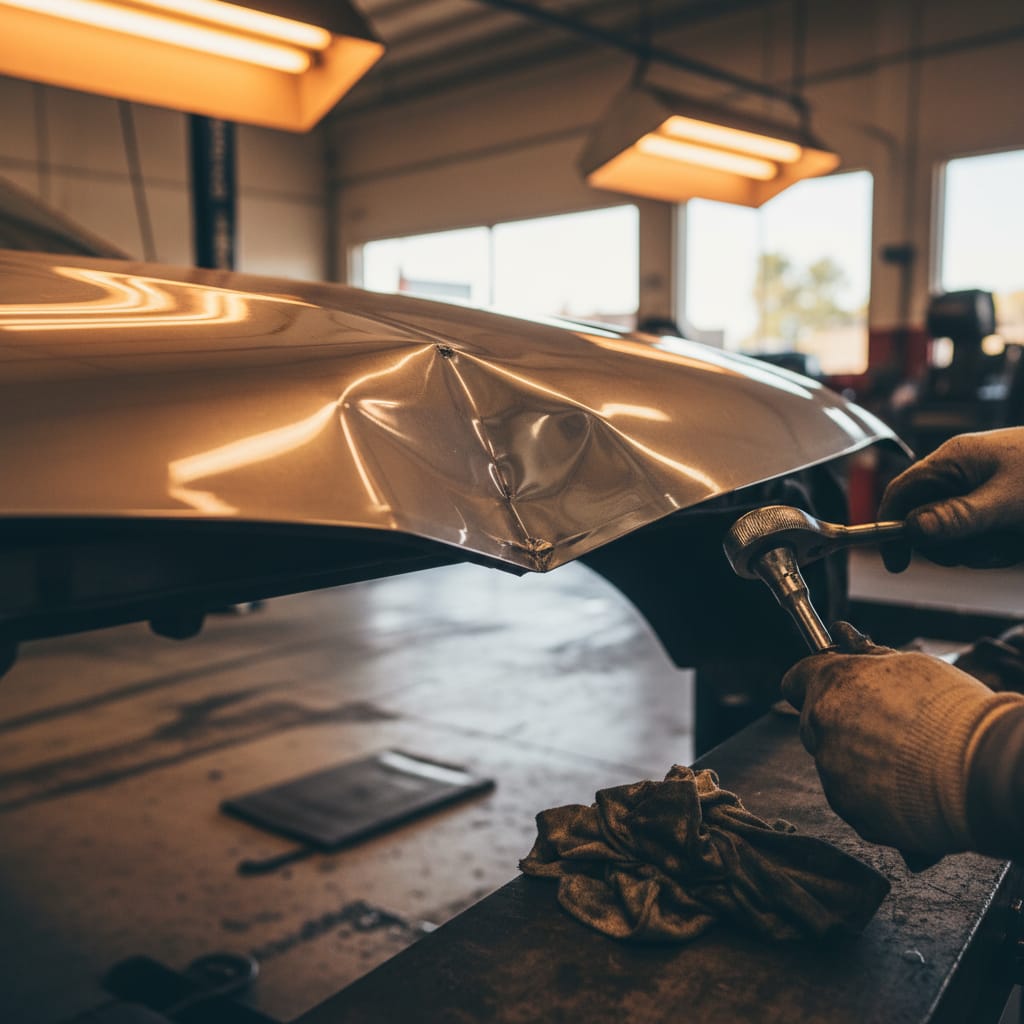
Paintless dent repair (PDR) is the method of removing a dent without any filler, primer, or paint. A technician either pushes the metal from behind with a metal rod or pulls it from the front using a suction cup or glue tab. The goal is to massage the metal back into its original shape by working around the elastic limit of the panel.
PDR is fast, affordable, and leaves your original factory paint untouched. For hail damage, door dings, and minor parking lot impacts, it is almost always the right first choice.
Here is when PDR works well:
- The paint is fully intact, no chips or cracks
- The dent has no sharp crease running through it
- The technician can access the backside of the panel
- The metal has not been stretched thin at the center of the dent
- The dent is not on a body line or panel edge
- The panel has not had previous filler work
When all of those conditions are met, a skilled PDR technician can often restore the panel to factory condition in an hour or two. You drive away with original paint and no filler underneath.
Our paintless dent repair service covers hail damage, door dings, and minor collision dents across Spring Valley and the surrounding area.
When PDR Will Not Work
PDR is the right tool for a specific type of dent. Use it on the wrong dent and the result will look worse than before.
Here are the situations where PDR is not the right call:
The paint is cracked or chipped. PDR does not touch the paint. If the paint is already broken, you still need paint work after. The PDR adds cost without fixing the real problem.
There is a sharp crease in the metal. A crease means the metal passed its elastic limit. Pushing a creased panel with a PDR rod often creates a wave or ridge next to the crease. Body hammers and dollies are the right tools here, not a push rod.
The panel edge or a body line runs through the dent. Body lines are high-stress zones. The metal around them is harder to move and easier to over-work. Dents that hit a body line almost always need traditional repair.
The metal is stretched at the center. A deep impact thins and stretches the metal at the lowest point. Stretched metal is larger than the original panel. Pushing it back out creates a bubble. That excess metal has to be removed with heat shrinking first.
The panel has been previously filled. Filler sits between the rod and the metal. The rod pushes the filler, not the metal. The filler has to come off before PDR can work.
The Traditional Body Repair Path
When PDR is not the right fit, traditional collision repair takes over. This is a multi-step process. Each step builds on the last, and skipping any one of them shows up in the final result.
Here is how it works:
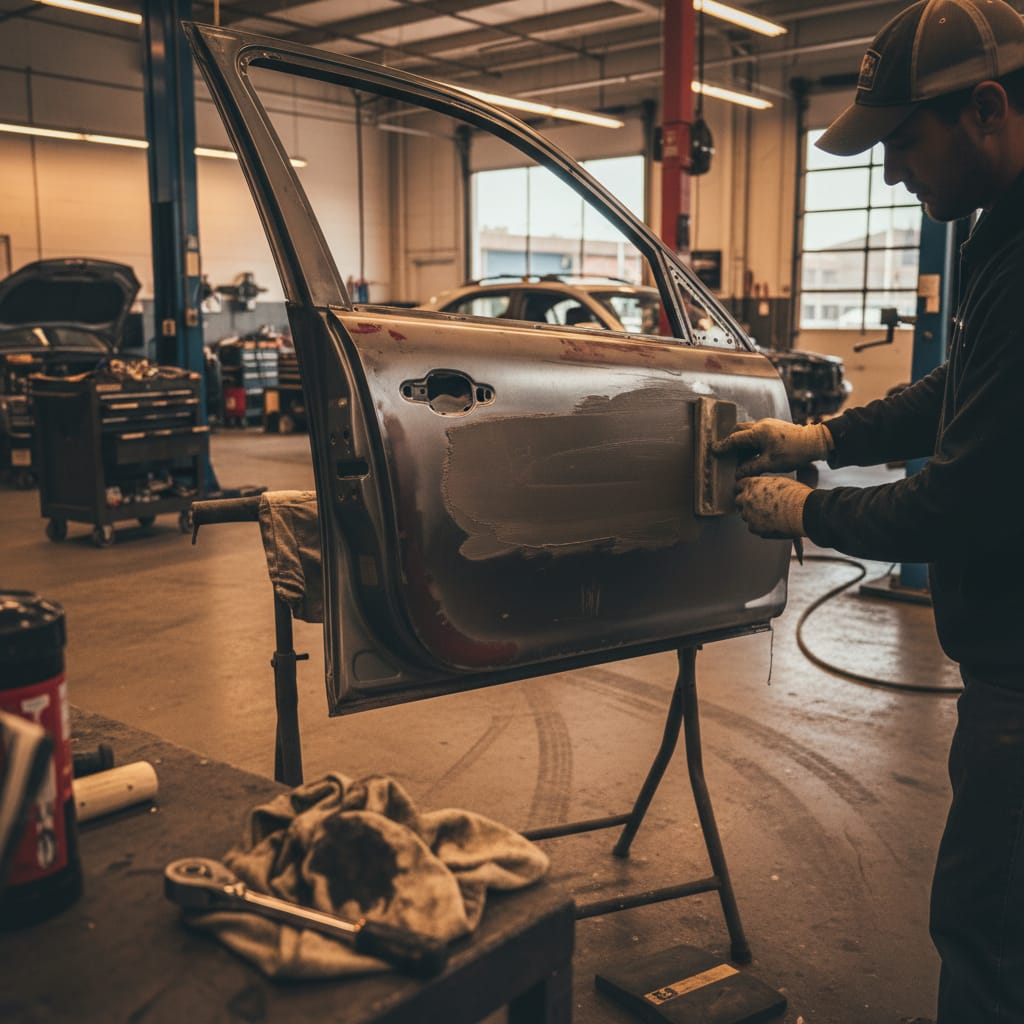
Step 1: Metal work. A technician uses body hammers, dollies, and a stud welder to work the metal back close to its original shape. The goal is getting as close as possible so filler does only light correction work.
Step 2: Body filler. A thin layer of polyester body filler fills the remaining low spots. Filler is a surface correction material, not a structural one. Thick filler over sloppy metalwork shrinks and cracks over time.
Step 3: Primer. Epoxy primer seals the bare metal and filler. It prevents rust and gives the base coat something to bond to. Skipping primer is how repairs start peeling inside a year.
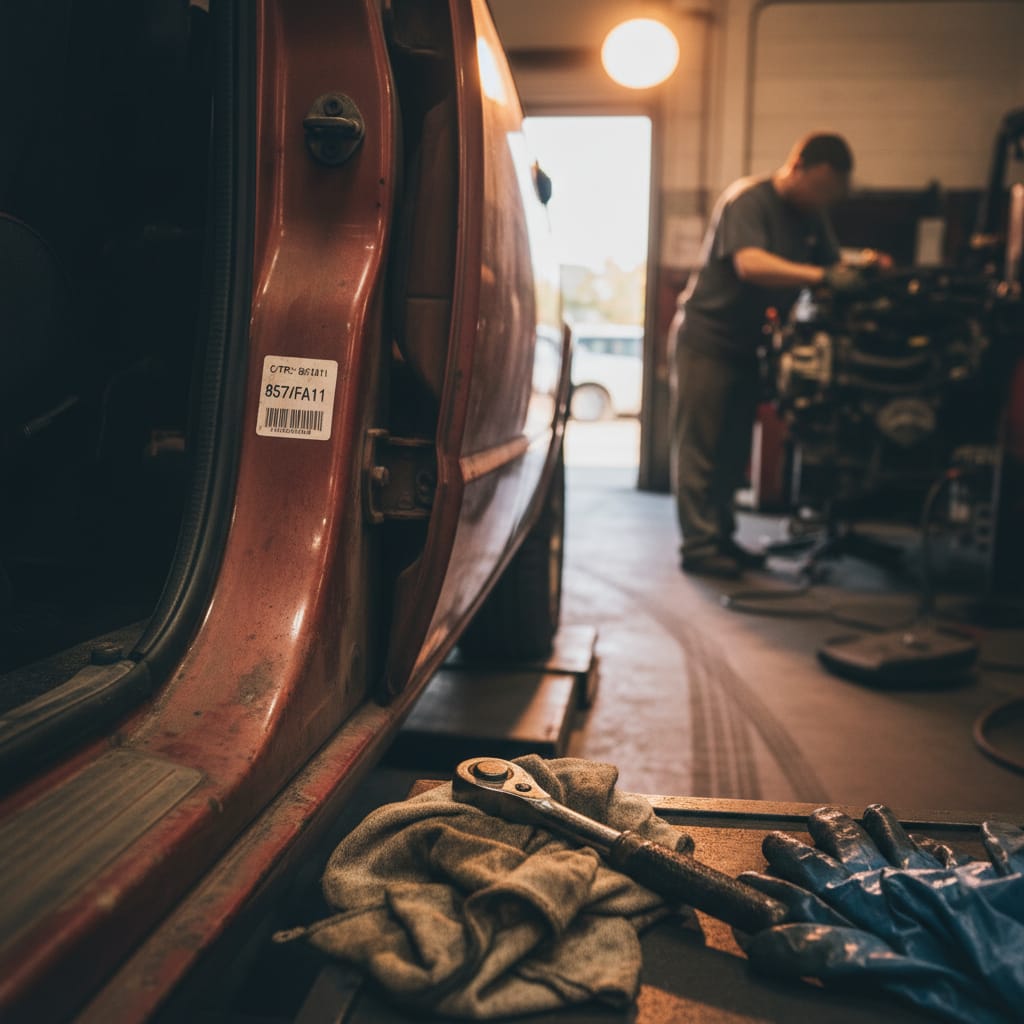
Step 4: Color-matched base coat. Every car has a paint code on a sticker inside the driver's door jamb. That code tells the shop which formula to mix. A shop that skips the paint code is guessing at your color.
Step 5: Clear coat. The clear coat protects the color and provides gloss and UV resistance. The blend zone where new paint meets old is where skill matters most. Done right, the repair disappears.
For dents that have crossed into plastic deformation territory, this is the path that gives a durable, invisible result. Our collision repair service handles the full sequence for Spring Valley drivers.
Hidden Damage Behind Dents
A dent in a body panel often looks like the whole story. It is usually not.
Modern vehicles are built with inner structural panels, sensor brackets, wiring clips, and ADAS (advanced driver-assistance system) mounting hardware behind the outer skin. Any of those components can be damaged in an impact that leaves only a dent visible from outside.
Here is what to check:
Sensor mounts and brackets. Backup cameras, radar modules, and parking sensors mount to brackets attached to inner panels. A dent that moves the outer panel even two inches can crack a bracket or shift a sensor mount. The sensor itself may look fine but now points in the wrong direction.
Inner panel supports. The outer skin of a door or quarter panel is backed by an inner structure. A heavy impact can dent or crack that support. Fixing only the outer skin without inspecting inside can leave a repair that flexes or cracks later.
ADAS recalibration. If a dented panel is near any camera, radar, or ultrasonic sensor, that sensor may need recalibration after repair. The California Bureau of Automotive Repair (BAR) recommends verifying sensor function after any repair that moves panels near sensor locations.
A responsible body shop opens the panel and looks. They do not write an estimate based only on what is visible from outside.
Under California Insurance Code Section 758.5, you have the right to choose your own licensed shop for any insurance repair. You are not required to use a shop your insurer recommends. That means you can choose a shop willing to do a full inspection rather than a fast surface-only fix.
FAQ: Auto Body Dent Repair in Spring Valley, CA
Q: What is the difference between PDR and traditional dent repair?
A: PDR uses metal rods or suction tools to push or pull a dent back out without touching the paint. It works when paint is intact and the metal has no crease. Traditional repair uses body hammers, filler, primer, and paint. It works on deeper damage where PDR cannot restore the surface alone.
Q: How do I know if my dent can be fixed with PDR?
A: Check two things first. Is the paint intact, no chips or cracks? Does the dent have a sharp crease or is it a smooth depression? If the paint is fine and there is no crease, PDR is likely an option. A technician's eyes-on inspection will give you the definitive answer.
Q: Will my insurance cover auto body dent repair Spring Valley CA drivers file claims for?
A: If another driver caused the damage, their liability coverage should pay. If you are filing under your own collision coverage, your deductible applies. California Insurance Code Section 758.5 gives you the right to choose any licensed body shop for the repair, regardless of which insurer prefers.
Q: Can a large dent always be repaired, or does it sometimes require panel replacement?
A: Large dents can usually be repaired through traditional metalwork and filler. But if the inner structure is compromised, the panel edge is badly buckled, or repair cost approaches replacement cost, a new panel is the more honest recommendation. We give you both options and explain the tradeoffs.
Q: How long does auto body dent repair take?
A: A PDR repair on a single panel takes one to four hours. Traditional body repair with metalwork, filler, primer, and paint usually takes two to four days. If parts need ordering, add time.
Q: Does the paint code matter for dent repair?
A: Yes. For any repair requiring paint, the shop must pull your paint code from the sticker inside your driver's door jamb. That code gives them the exact formula. Cars fade over time, so a skilled technician blends the new paint into adjacent panels. That is how the repair becomes invisible.
Q: What should I look for when choosing a shop for auto body dent repair Spring Valley CA?
A: Look for a licensed California body shop with experience in your vehicle make. Ask if they inspect the inner panel. Ask how they handle paint code matching and whether they do blend work. Ask whether they handle ADAS recalibration in-house if your vehicle has driver-assist systems near the dent.
Get a Free Estimate at All Auto Repair in Spring Valley
When you need auto body dent repair Spring Valley CA drivers can count on, All Auto Repair has been the honest choice since 1989. We are a family-owned shop, not a franchise. We look at the metal, not just the surface. We tell you whether PDR is the right call or whether the repair needs to go further, and we explain why either way.
Call or text Sam at (619) 466-3296 whenever you are ready. We are at 628 Grand Ave, Spring Valley, CA 91977.
No pressure. No guessing. Just a straight look at your dent and a free estimate.