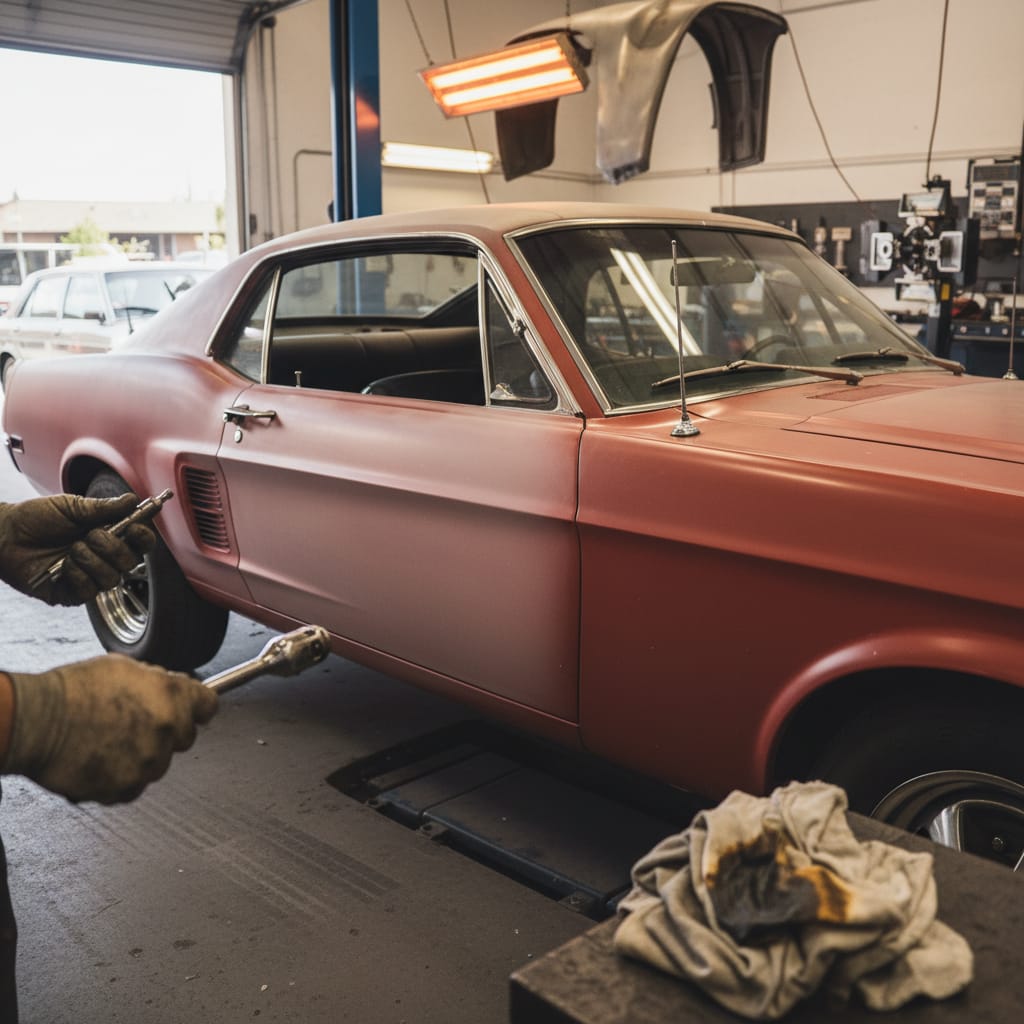
You get a small dent repaired and the shop sprays fresh paint. But in sunlight the repaired panel looks slightly different from the one next to it. The color is close, but not exact. That gap is what separates a good paint job from a great one.
Most drivers assume a paint code is all a shop needs. Look up the sticker, mix the formula, spray it on. Done. But color matched auto paint Spring Valley CA drivers ask for is not that simple. Factory paint ages, fades, and varies from car to car even with the same code. Getting a repair that disappears takes more steps.
This guide explains exactly what those steps are and why each one matters.
Where Your Car's Paint Code Lives and What It Means
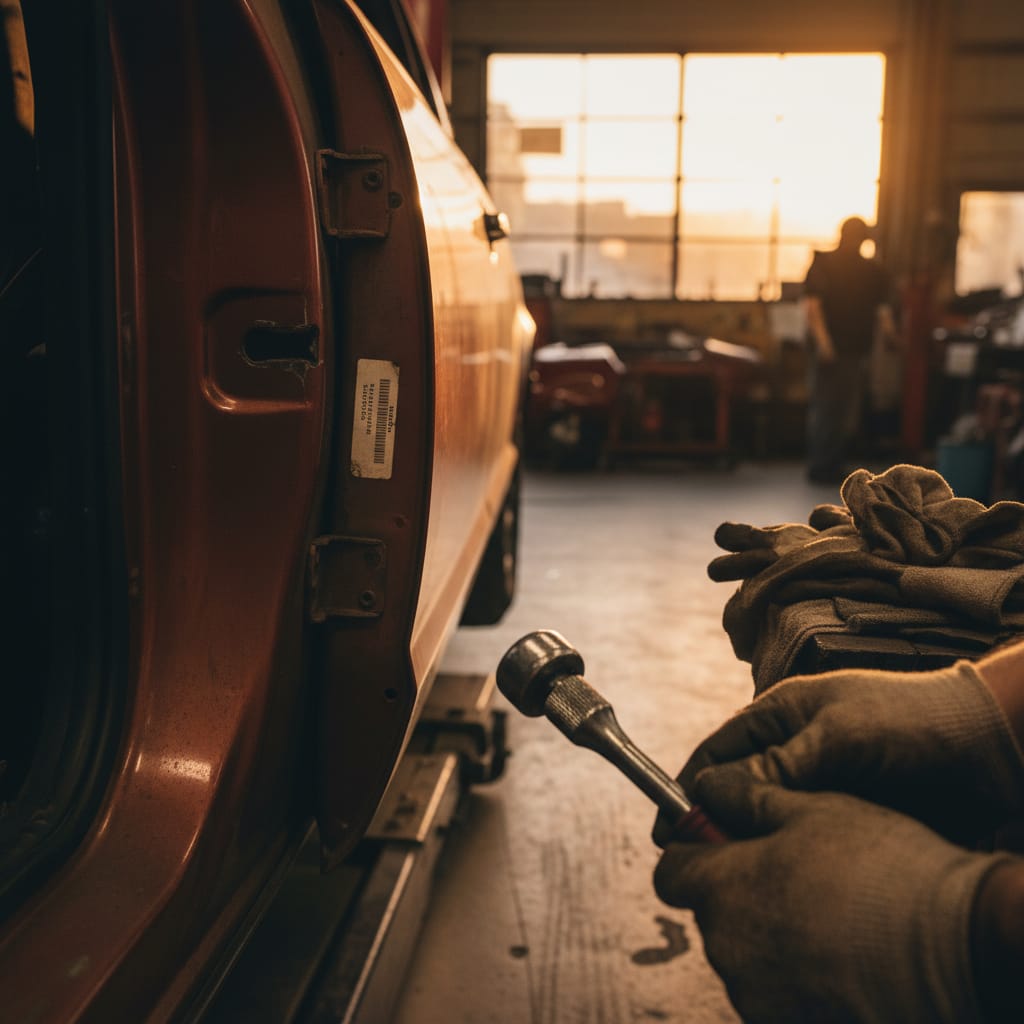
Your car's paint code is on a sticker inside the driver's door jamb. Open the door and look at the vertical surface between the door opening and the body. You will see a label with your VIN, tire pressure specs, and a few other codes. One of those codes is the paint color.
The format depends on who made the car. Toyota uses a three-character code. Honda uses two letters, sometimes followed by a number. GM uses a letter-number combination. Ford uses a two-letter code. Each manufacturer has its own system.
That code tells a paint supplier which formula to mix. The formula lists the exact pigments and their ratios. It is the factory's original recipe for your car's color.
The problem is that a recipe written in 2018 does not account for what your car looks like in 2024.
Why the Paint Code Alone Is Not Enough
Paint ages on the car. Sun, heat, and oxidation shift the color over time. A panel that has been in direct sun for six years looks different from a panel that was in the shade. The paint code still says the same thing. The car does not look that way anymore.
There is also batch variation. The same factory mixing the same code in two different production runs can produce slightly different results. The pigment suppliers change. The mixing machines drift. A paint code gives you a range, not a single exact point.
Metallic paint adds another layer of complexity. Metallic paint contains aluminum flakes that scatter light. The angle you view the panel from changes what color you see. Two coats that use the exact same formula can still look different if the spray speed, gun distance, or air pressure was slightly different. Those variables change how the flakes lay down, and that changes how the color looks.
Pearl paint is even harder. Pearl finishes use mica particles that shift color depending on viewing angle and lighting. A pearl white looks cream-colored from one angle and almost blue-white from another. Matching that behavior requires matching both the formula and the spray technique.
This is why color matched auto paint Spring Valley CA shops use more than a sticker to get the color right.
How Shops Read Actual Color With a Spectrophotometer
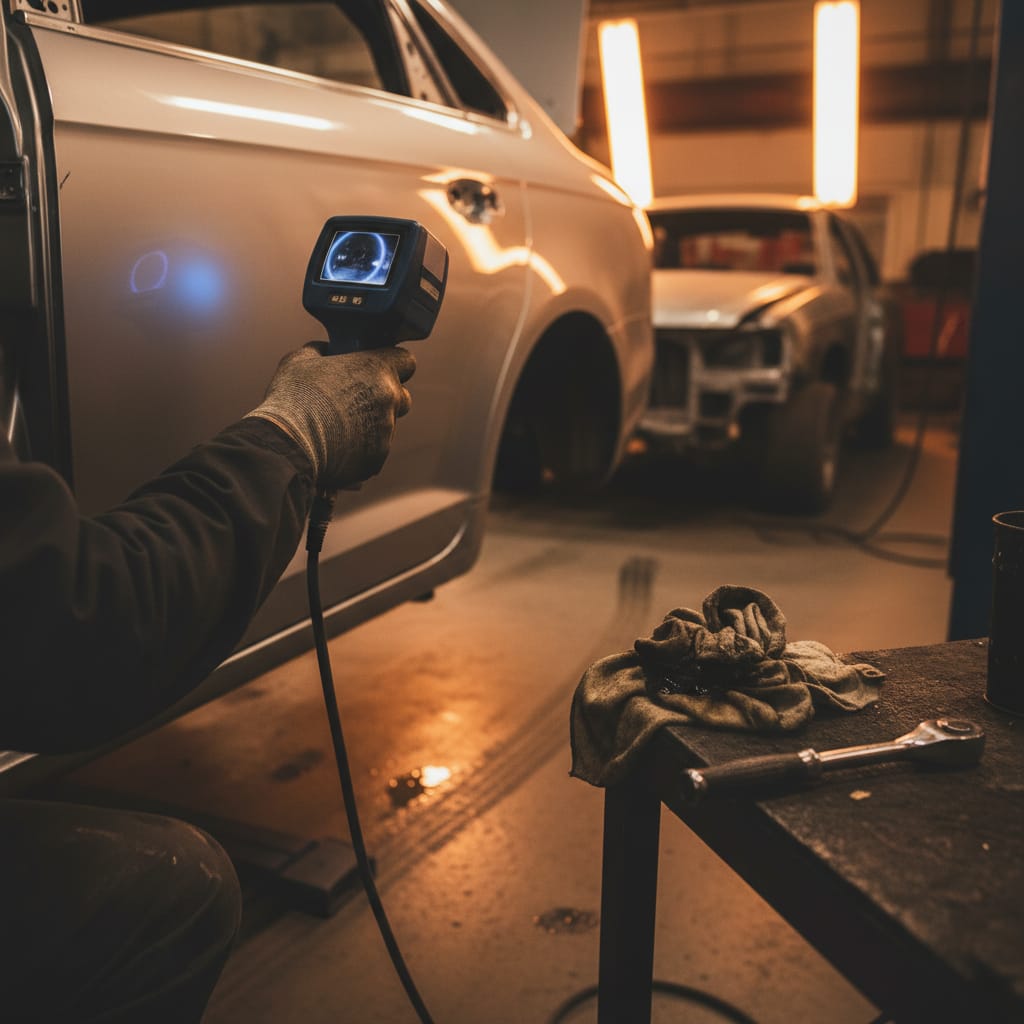
A spectrophotometer is a handheld device that reads the actual color on your car. It does not look at a sticker. It shines light at the paint and measures how that paint reflects each wavelength. The device sends those measurements to a database that finds the closest matching formula or generates a custom tint adjustment.
Most paint systems use spectrophotometer data combined with a tinting system. The machine gives a starting formula. The painter adds small amounts of toner to shift the color toward what the car actually is today, not what the code says it was when it left the factory.
This is the difference between spraying a guess and spraying a match.
The spectrophotometer also reads the car in multiple spots. A door panel may be more faded at the top than at the bottom. The rear quarter may have more oxidation than the front fender. The device gives the painter data from the actual car, not the original spec sheet.
The Blending Process: Why Adjacent Panels Get Painted Too
Even with a perfect color match, the boundary between fresh paint and aged paint is visible if you look at the right angle. Fresh paint is smoother and reflects light slightly differently than aged paint. At certain lighting angles, you see a line.
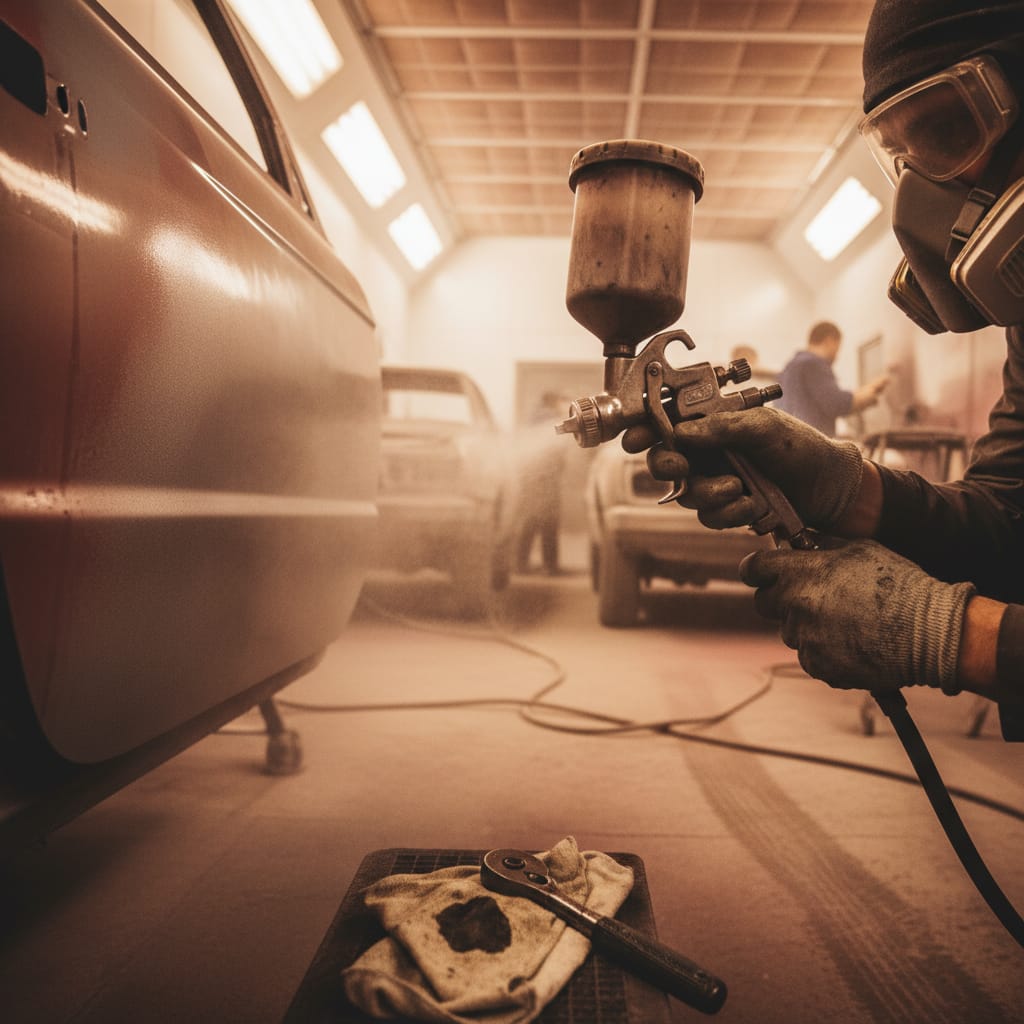
The solution is blending. After painting the repaired panel, the painter feathers the fresh paint into adjacent panels. The transition is gradual instead of abrupt. The eye cannot find the boundary because there is no sharp line.
A shop that skips blending saves time. But the repair is visible. You can see exactly where the new paint ends. In direct sunlight or under fluorescent lights, it looks like a patch.
Blending matters especially on metallic and pearl colors. Those finishes react to viewing angle. A hard line between new and original paint on a metallic silver panel shows up clearly as you walk around the car. Blending eliminates that problem by creating a gradual fade.
This adds cost and time to the job. But it is the difference between a repair that disappears and one that you notice every time you look at the car.
Single-Stage vs. Two-Stage Paint
Modern factory paint has two layers. The base coat carries the color, pigments, and metallic or pearl flakes. The clear coat goes on top and provides gloss, depth, and UV protection.
Two-stage paint is standard on almost every car made in the last 30 years. Without clear coat, a base coat fades fast. The color goes dull and chalky within a few years.
Some older vehicles use single-stage paint, which combines color and gloss in one coat. It fades faster than a two-stage system.
When a shop repaints a panel, they match the original system. Skipping the clear coat or applying it thin causes the repair to fade before the rest of the car. A few years in the California sun and the repaired panel looks noticeably lighter than the original ones.
What Makes a Paint Job Fail After the Repair
Most paint failures come from shortcuts in prep or application, not from bad paint products.
Surface contamination is the most common failure point. Wax, silicone, or grease on the panel before painting keeps the new paint from bonding. It lifts at the edges or develops fisheye craters. Proper prep means cleaning, sanding, and wiping with a degreaser first.
Skipping primer is another problem. Bare metal or body filler needs primer before base coat. Paint sprayed directly over those surfaces peels sooner.
Wrong reducer for the weather causes orange peel texture. Reducers control dry speed. A fast reducer on a hot day makes the paint dry before it flows out smooth. A good shop picks reducer speed based on temperature and humidity.
Thin clear coat is the most common long-term failure. A shop that rushes the clear pass does not put down enough film. The base coat fades, and the repaired panel looks lighter than the original ones after two or three years.
Your Rights in California
Under California Insurance Code Section 758.5, you have the right to choose your own repair shop. The insurer cannot require you to use a specific shop and must pay for repairs that meet accepted trade standards.
For paint repairs, that means color matched work. If the shop an insurer steers you toward cuts corners on matching, you can take your car to a shop of your choice and have the insurer pay the difference.
At All Auto Repair, we work with all major insurers and handle the documentation for you.
FAQ
Q: Can I find my paint code myself before bringing in the car? Yes. Open the driver's door and look at the door jamb sticker. The code is there. Write it down. But keep in mind that the code is a starting point. The shop will still read the actual color on your car to get the formula right.
Q: How many panels need to be blended for a small repair? It depends on the location of the repair. A dent on the center of a door panel usually requires blending into the front fender or rear quarter, or both. A shop will tell you which panels are affected during the estimate.
Q: Does blending mean my whole car gets repainted? No. Blending involves feathering fresh paint a few inches into adjacent panels. The painter does not repaint the full panel. The process fades the new paint into the existing finish so the boundary is not visible.
Q: My car is older and faded. Can you still match it? Yes. A spectrophotometer reads the current color of the car, not the original formula. A faded 2010 silver looks different from a new 2010 silver. The device accounts for that. The painter can match what the car actually looks like today.
Q: How long should a quality paint repair last? A properly prepped and clear-coated repair done in a professional spray booth should last as long as the original factory paint. Years, not months. The California sun is hard on clear coat, so keeping the car waxed and out of the sun when possible helps both the repair and the original panels.
Q: What if I just want to touch up a small chip myself? Touch-up pens work for chips smaller than a pencil eraser, mostly to stop rust. They will not match the surrounding paint. For a repair that disappears, you need a proper spray application with blending.
Get a Color Match That Disappears
The goal of any paint repair is simple: you should not be able to tell it happened. That requires reading the actual color on your car, tinting the formula to match what age has done to the paint, and blending the new coat into adjacent panels.
Color matched auto paint Spring Valley CA drivers can count on is what we do at All Auto Repair & Auto Glass. We have been getting this right since 1989. We handle both insurance and out-of-pocket repairs, and we explain the process before we start.
For more on our full paint and body services, see our collision repair and auto body paint pages.
Call or text Sam at (619) 466-3296 whenever you're ready. We are at 628 Grand Ave, Spring Valley, CA 91977.