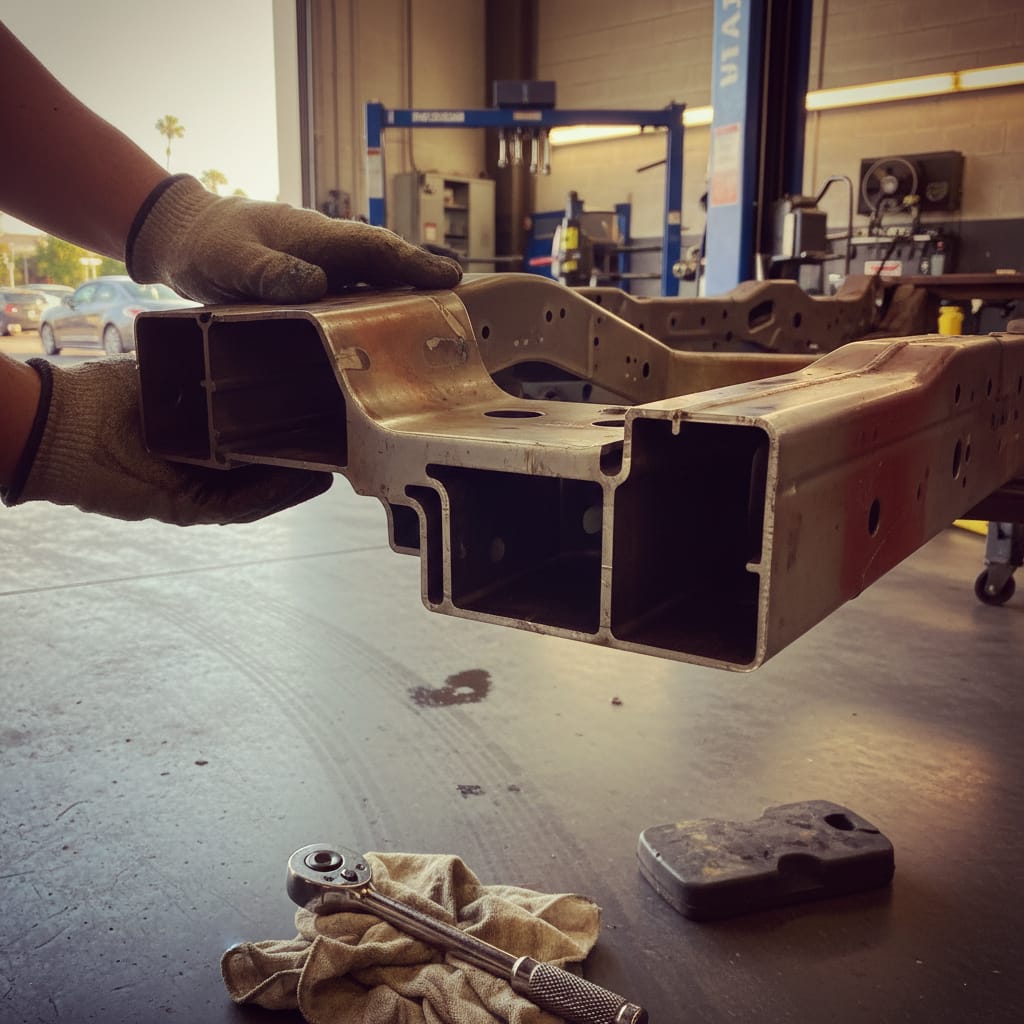
Someone rear-ends you at the light on Jamacha Road. The impact does not feel catastrophic. Your car starts. You pull over and walk around it. The bumper cover looks pushed in, but nothing looks seriously wrong. You drive home.
A week later, you take it in for an estimate. The tech puts it on the frame machine. He comes back with a printout. The rear left frame rail is 14 millimeters out of spec. You cannot see it. You would never have guessed. But it is there.
That is how frame damage works in a modern car. It is often invisible to you. For anyone searching for frame damage repair Spring Valley CA, here is what you need to know before you decide anything. Frame damage is not an automatic death sentence for your vehicle. In most cases, a shop with the right equipment can tell you exactly what is bent and whether it can be fixed.
This article covers four things: what frame damage means in a modern unibody car, how shops find and fix it, when California law says a car should be totaled versus repaired, and what your rights are if your insurer and your shop disagree.
What "Frame Damage" Actually Means in a Modern Car
Most people picture a frame as two steel beams running under the car. That is how trucks work. Most passenger cars built in the last 30 years do not work that way.
Modern cars use unibody construction: the frame and body shell are one integrated piece of stamped steel. There is no separate chassis underneath. The whole car is the frame.
This design includes crumple zones: sections engineered to fold and absorb crash energy. Once a crumple zone compresses, the car's geometry changes. A frame rail (one of the main structural tubes running front-to-back) may be bent inward. A rocker panel may be twisted. The rear frame section may be pushed a few millimeters off.
A few millimeters sounds trivial. It is not. Every suspension and steering component aligns to factory measurement points. When those points move, the car does not drive straight, tires wear unevenly, and in a second collision, the crumple zones may not protect you as designed.
Learn more about frame damage repair at our Spring Valley shop.
How to Tell If Your Car Has Frame Damage
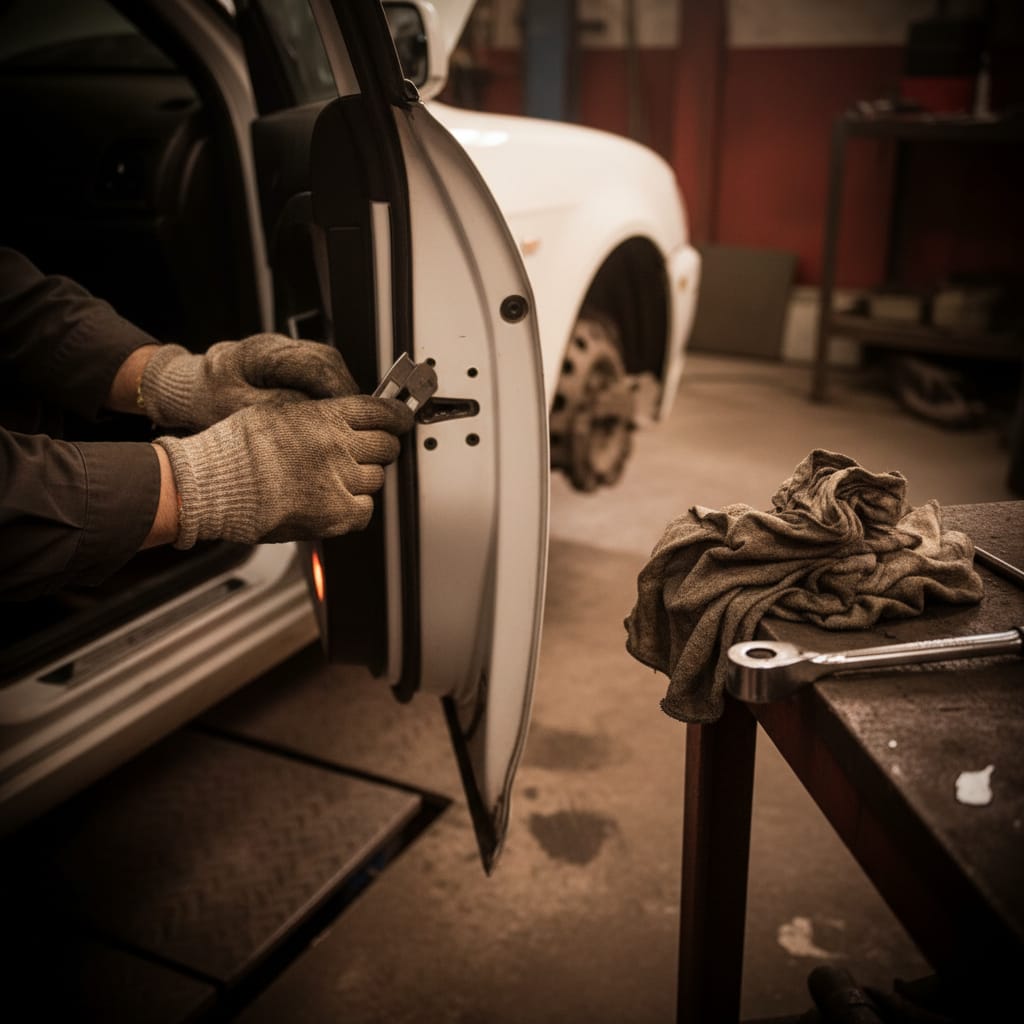
There are two categories of warning signs: what you can notice yourself, and what only a machine finds.
What You Can Notice Yourself
Uneven panel gaps. Look at the gaps around your hood, doors, and trunk lid. If one side is wider than the other, the body has shifted.
Doors that stick or won't latch. If a door that used to open smoothly now requires extra force, the door opening has changed shape.
Pulling to one side. On a flat road, if the car drifts left or right when you let go of the wheel, something is off with alignment or the frame.
Crab-walk. Watch from behind as someone drives slowly away. Rear tires should track directly behind the front. If the rear end is offset, the frame is likely bent.
Uneven tire wear. One tire wearing faster than others -- especially on the inside or outside edge -- can point to frame misalignment.
Shaking at highway speed. A vibration above 50 mph that was not there before the collision may indicate structural misalignment.
What Only a Machine Finds
Some frame damage is completely invisible from outside the car. A kinked frame rail behind the bumper cover looks fine until you pull the bumper. A shifted subframe can be millimeters out of position with no visual clue. Suspension mounting points can be bent without any visible body damage.
The California Bureau of Automotive Repair puts it plainly: "Most collision repairs are hidden by your vehicle's panels. This can make it hard to tell if the work was done right -- or done at all."
The only reliable way to assess frame damage is a frame machine with a laser or electronic measuring system. It attaches sensors to reference points on the car and compares readings to factory specs for that exact make, model, and year. Deviations show in millimeters. There is no guessing.
Ask the shop to show you the before and after measurement printout when the repair is done. Any shop doing this job correctly will have one.
If you want an independent check after a repair, the Bureau of Automotive Repair offers free post-repair inspections for California consumers.
How Frame Straightening Actually Works
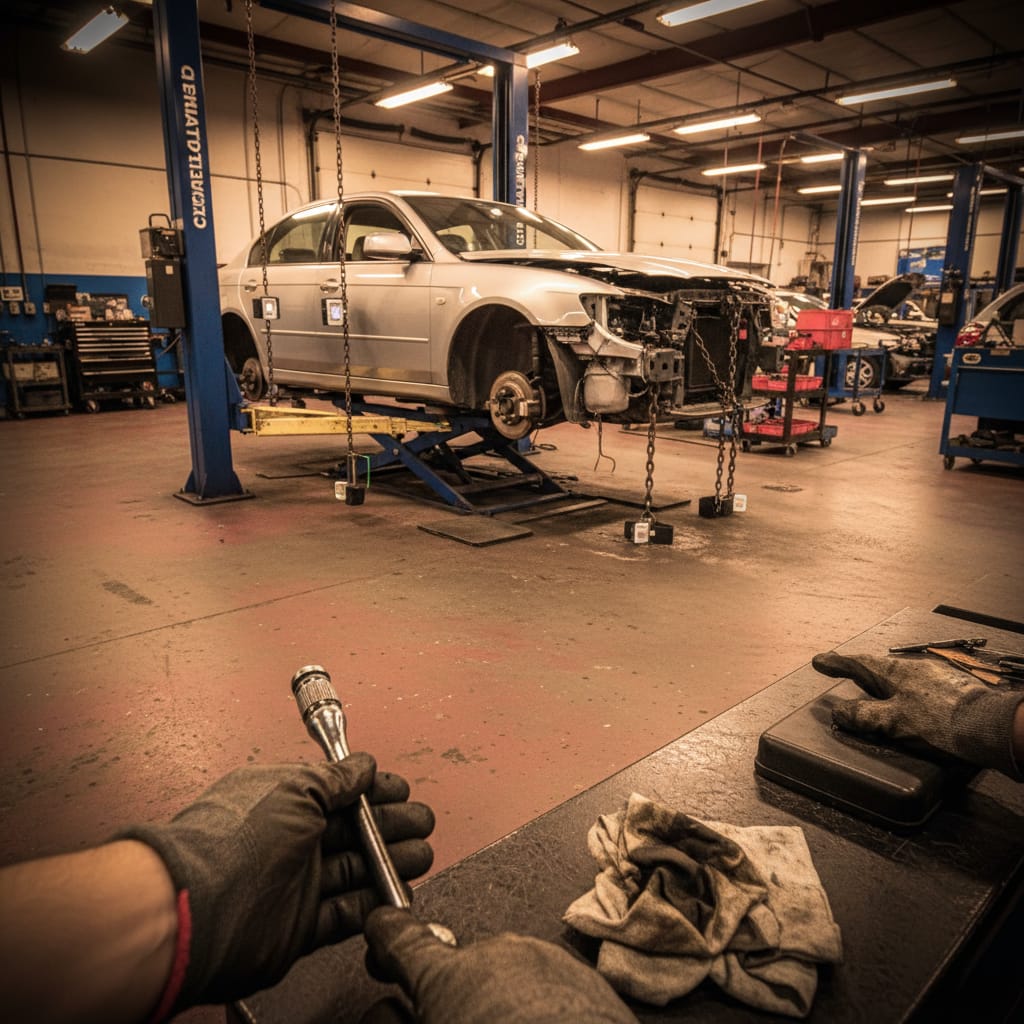
Frame straightening is a sequence. Each step must be done correctly or the next step will not work.
Step 1: Measurement. Measuring targets go onto reference points across the unibody. A laser or electronic system reads each target and compares it to the factory specification for that vehicle. Every deviation is documented in millimeters. Professional laser systems are accurate to within one millimeter.
Step 2: Pull. The car is anchored to a frame machine: a steel bench with hydraulic pull towers that apply force in any direction. Chains or clamps attach to the bent sections. Pressure is applied gradually while the measuring system runs continuously. The pull stops when measurements reach factory spec. Overpulling weakens the metal; underpulling leaves the car out of spec.
Step 3: Sectioning or Welding (when needed). Some sections cannot be straightened -- a fully compressed crumple zone or a cracked rail must be cut out and replaced with a new OEM section. Modern unibody vehicles use high-strength steel (HSS) and ultra-high-strength steel (UHSS). These cannot be welded with standard heat settings. Technicians trained to I-CAR standards follow the manufacturer's published sectioning and welding procedures to preserve structural integrity.
Step 4: Four-Wheel Alignment. After any frame pull or sectioning, the car must have a four-wheel alignment. Every suspension angle -- camber, caster, toe -- was set at the factory assuming the frame is at spec. Moving the frame moves all those angles. Skipping alignment leaves the car tracking incorrectly and wearing tires unevenly.
Step 5: ADAS Recalibration (if equipped). If your car has cameras or sensors for lane-keep assist or automatic emergency braking, frame repairs may affect how those systems aim. Manufacturers require ADAS recalibration after structural work. A system that is not recalibrated may fail to warn you when it should.
The repair is done when all measurements match factory spec and alignment and calibration checks are complete. Not when the car looks straight.
See how we handle collision repair from intake to delivery.
When Frame Damage Totals a Car: California Rules and Your Rights
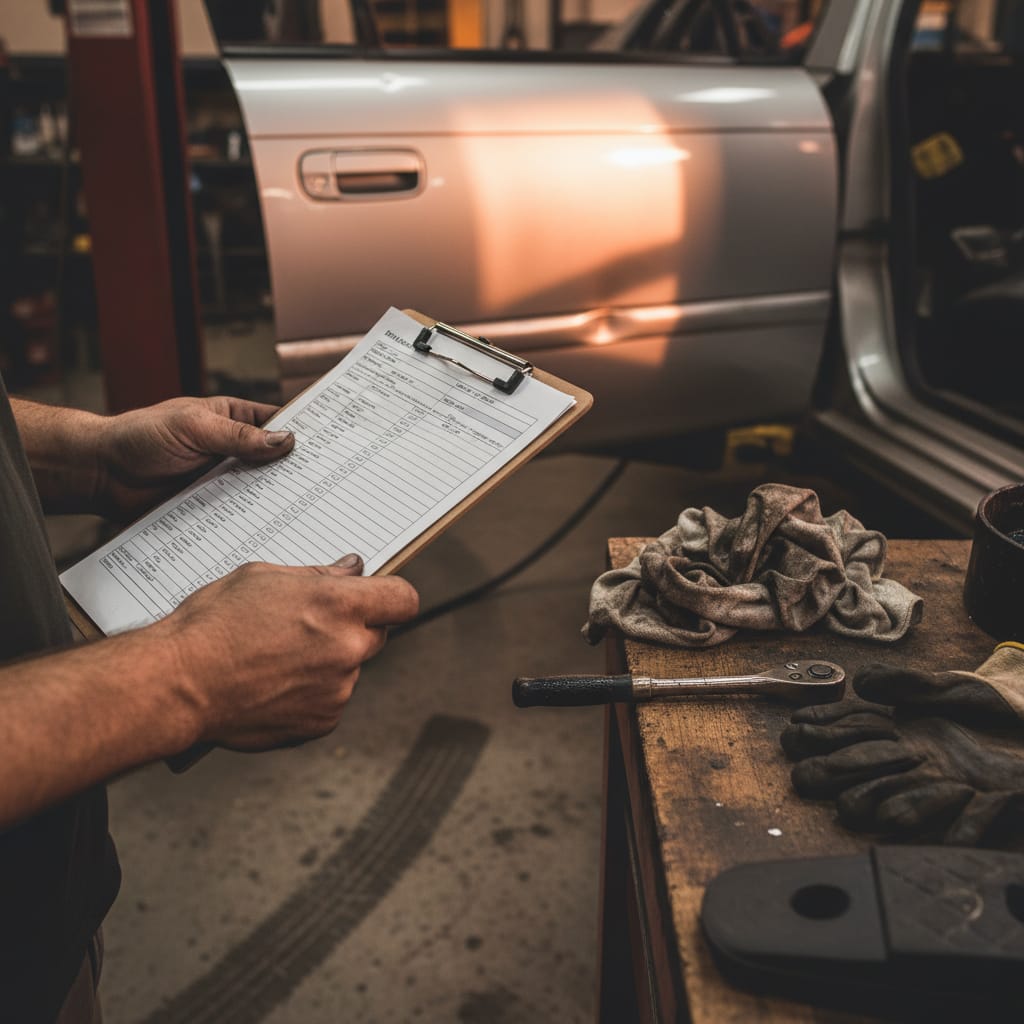
Frame damage does not automatically total a car. Severity and location determine repairability.
Minor or subframe damage. Small deviations in non-critical sections are often repairable. Cost is lower and repair time is shorter.
Moderate structural bends. Bent frame rails or shifted suspension mounting points may still be repairable with a frame machine. The shop verifies all measurements return to spec after the pull.
Severe structural damage. Major twisting, buckling, or damage to multiple sections can make repair impractical. When repair costs plus salvage value exceed the car's pre-loss value, California law treats the vehicle as a total loss.
The California Total Loss Formula
California uses this formula: Repair Cost + Salvage Value greater than or equal to ACV = total loss.
ACV (actual cash value) is the market value of your vehicle at the moment of the crash: not what you paid, not replacement cost. It accounts for age, mileage, condition, and local market prices. Insurers commonly apply an internal threshold of around 70--75% of ACV. A car worth $20,000 might be totaled if repair costs approach $14,000--$15,000.
Under California Code of Regulations Title 10, Section 2695.8(b), your insurer must establish ACV using a documented method and give you a written statement explaining how they calculated it. Total loss settlements must also include sales tax and registration fees on a comparable replacement vehicle.
One more honest note: even after a good frame repair, your car may be worth less at resale. This is called diminished value. In California, you can pursue a diminished value claim against the at-fault driver's insurer.
Your Right to Dispute a Total Loss Call
Request the written valuation basis. Review the comparable vehicles your insurer used -- verify the year, make, model, trim, mileage, and condition actually match yours. Research independent comparables on Cars.com or CarGurus.
Invoke the appraisal clause in your policy if a material disagreement exists. This provision brings in a neutral appraiser to settle the dispute without going to court.
File a complaint with the California Department of Insurance if the insurer violates its obligations. Consumer hotline: 1-800-927-4357.
Your California Insurance Rights for Frame Damage Claims
California law gives you three protections that apply directly to frame damage situations.
Right 1: You choose the shop. California Insurance Code §758.5 says your insurer cannot require you to use a specific shop. You are free to use any licensed shop. If you use your own shop, the insurer must pay reasonable repair costs in accordance with accepted trade standards. Call your insurer and tell them the shop name. That is all it takes.
Right 2: The insurer must back the repair. If you use an insurer-recommended shop and the repair is not done correctly, the insurer must make it right at no additional cost to you beyond your deductible.
Right 3: You can get an independent check. The Bureau of Automotive Repair (BAR) offers free post-repair inspections for California consumers. A BAR inspector verifies all invoice-listed repairs are complete. Call (866) 799-3811 or visit bar.ca.gov/collision-inspection.
Insurer timelines. California law requires your insurer to contact you within 15 days of your claim notice, accept or deny within 40 days of proof of loss, and pay within 30 days of settlement.
FAQ: Frame Damage Repair in Spring Valley
Does frame damage mean my car is totaled?
Not automatically. Frame damage ranges from minor subframe shifts to severe structural buckling. A shop with a frame machine can tell you exactly what is bent and whether it returns to factory spec. The decision to total a vehicle depends on repair cost compared to ACV, not on frame damage alone.
Can I drive my car safely after frame damage?
It depends on severity. Minor frame damage may not affect driveability immediately. But driving with frame damage risks uneven tire wear, steering problems, and reduced crash protection. Have it inspected first.
How long does frame straightening take?
Minor frame pulls typically take 1--2 days. Repairs involving sectioning, welding, and alignment typically run 3--5 days for structural work alone. Additional body and paint work adds time. Get a written timeline estimate from your shop.
Will frame damage show on a CARFAX?
Yes, if reported to insurance or noted on a title. A collision claim typically shows on a vehicle history report. If repaired without a claim, it may not appear. A pre-purchase inspection by a mechanic is the only reliable way to check for undisclosed frame damage.
Do I have to use my insurer's recommended shop for frame damage repair Spring Valley CA?
No. California Insurance Code §758.5 gives you the legal right to choose any licensed repair shop. Your insurer cannot require you to use their preferred network. If you choose your own shop, the insurer must pay reasonable repair costs.
Think Your Car Might Have Frame Damage?
When you need frame damage repair Spring Valley CA, All Auto Repair & Auto Glass has been part of San Diego County since 1989. Family-owned, honest, and standing behind every job we do. Call or text Sam at (619) 466-3296 whenever you're ready.
We are at 628 Grand Ave, Spring Valley, CA 91977. We use measuring equipment, not visual judgment, to tell you exactly what your car needs. Get the real answer before you decide anything.