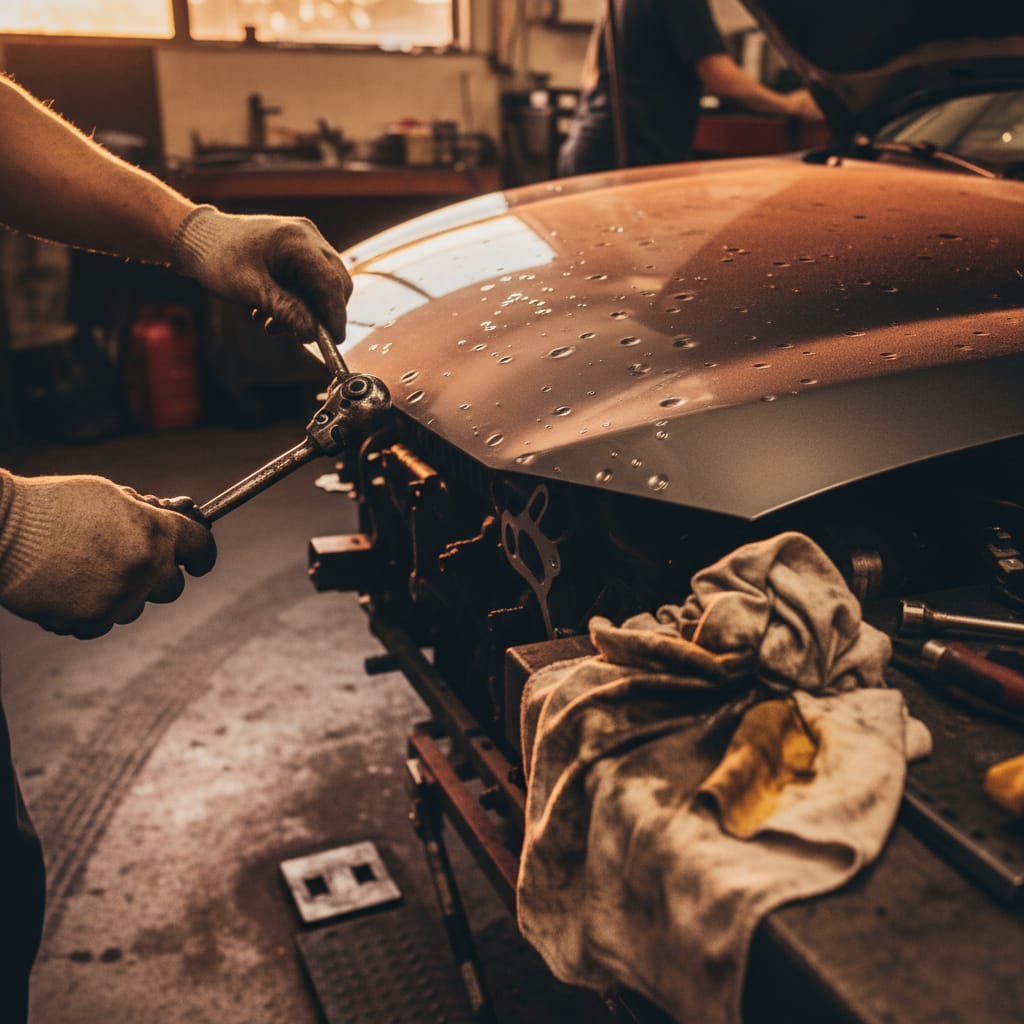
Hail damage looks uniform from a distance. Every dent seems about the same size, scattered across the hood and roof like a pattern. But a technician does not see it that way. Each dent is a separate repair decision. The depth, the shape, and the condition of the paint on each one determines whether PDR works or whether that specific spot needs traditional bodywork.
This is how hail damage repair Spring Valley CA drivers ask us about actually works. Not a general overview. The real process, dent by dent.
What Hail Actually Does to a Car
Hail falls fast. A hailstone moving at 40 to 50 miles per hour hits a flat metal panel. The stone is round, so the impact force spreads outward in a cone. The panel flexes inward at the center and compresses the metal just below the surface.
The result is a small, round depression. Usually shallow. Usually without any cracking at the edges. That shape is why hail dents are good PDR candidates: they are round, with intact paint, and no sharp crease.
But not every stone is the same size. Not every panel takes the same force. A hailstone landing dead center on a flat hood transfers very different energy than one hitting the curve at the front edge. Flat, horizontal surfaces take the most hits. The hood, the roof, and the trunk lid absorb the bulk of the damage. Doors take less because they are vertical. The stone glances off at an angle instead of hitting straight on.
California near the coast rarely gets hail. But East County is different. Spring Valley, El Cajon, and Alpine sit at higher elevation and see hail storms several times per year, mostly during spring months. A single storm can leave 50 to 200 or more dents across multiple panels.
How Technicians Assess Hail Damage
The assessment is not a quick walk around the car. A thorough inspection takes time, panel by panel and dent by dent.
Inspection Lighting
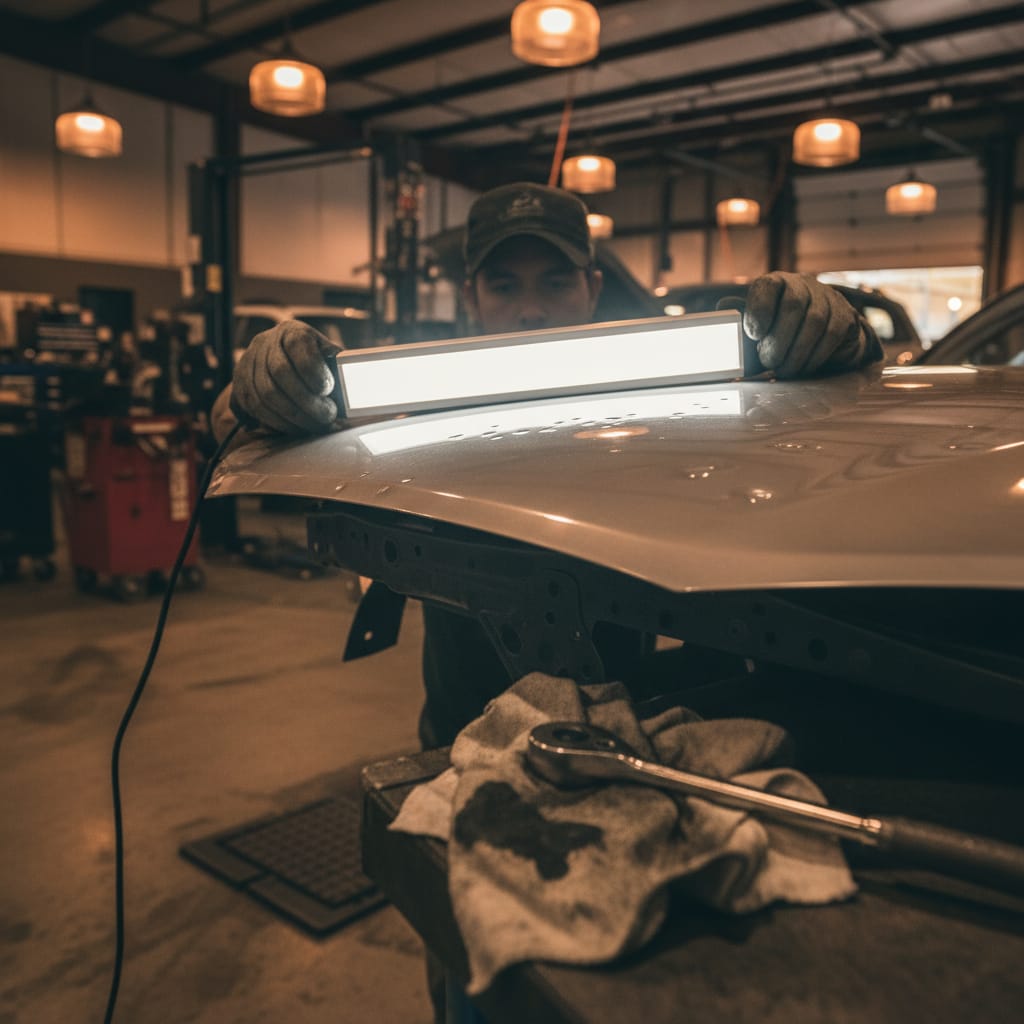
Technicians use a small LED lamp held at a low angle to the panel. Raking light across a surface throws shadows inside every depression. In normal overhead lighting, many shallow dents are nearly invisible. Under raking light, the shadow pattern makes every dent visible and countable.
This is the first step because the total dent count directly affects the repair plan and the time required.
Depth and Shape
After counting dents, the technician checks depth and profile on each one. A shallow, round depression with a smooth edge is a clean PDR candidate. A deeper dent with a sharp inner edge may have a micro-crease at the bottom. That changes the approach.
Technicians use their fingernails and fingertips to feel the dent profile. A smooth bowl feels different from a dent that has a lip or ridge at the center. That tactile check is faster than measuring tools and usually more informative.
Paint Condition
This is the most important part of the assessment. PDR only works when paint is intact. The technician inspects each dent for cracks, chips, or flaking. On softer metals like aluminum, paint sometimes spider-cracks even on shallow dents. On steel panels, most hail dents leave the paint whole.
A dent with broken paint still gets repaired, but that specific spot needs paint work in addition to, or instead of, PDR. The rest of the panel may still be PDR-eligible. The technician marks each problem spot separately.
Panel-by-Panel Count
The final step is documenting the damage panel by panel. Hood: 62 dents, all PDR-eligible. Roof: 48 dents, 2 with paint chips. Trunk lid: 31 dents, all clean. That breakdown drives the written estimate and sets expectations for repair time.
PDR for Hail Dents: When It Works
Paintless dent repair is the preferred method for hail damage. Most hail dents meet all four conditions that make PDR work well.
The dent is round and shallow. The paint is intact. The metal has not creased. The panel has backside access, or glue-pull technique can reach the area from the front.
A skilled PDR technician can complete 50 to 80 hail dents per day on a typical vehicle. A car with 150 dents across hood, roof, and trunk takes two to three days. That is faster than traditional repair because there is no primer, no paint, no drying time.
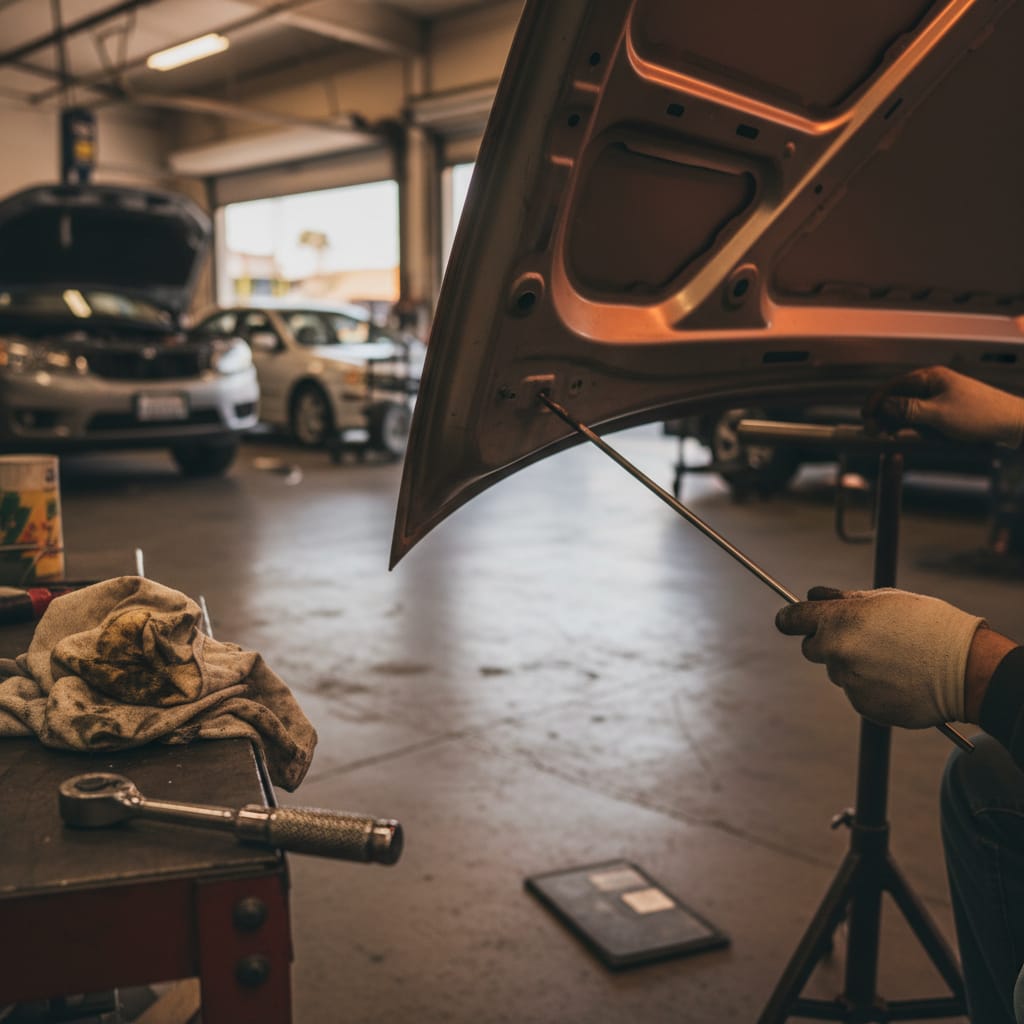
The repair process uses a thin metal rod inserted behind the panel. The technician pushes from the inside while watching a reflection board, a flat panel with printed parallel lines that reflect off the metal surface. On a flat, repaired surface the lines run straight. On a dented area, the lines bow. The technician works until the lines run straight again, then moves to the next dent.
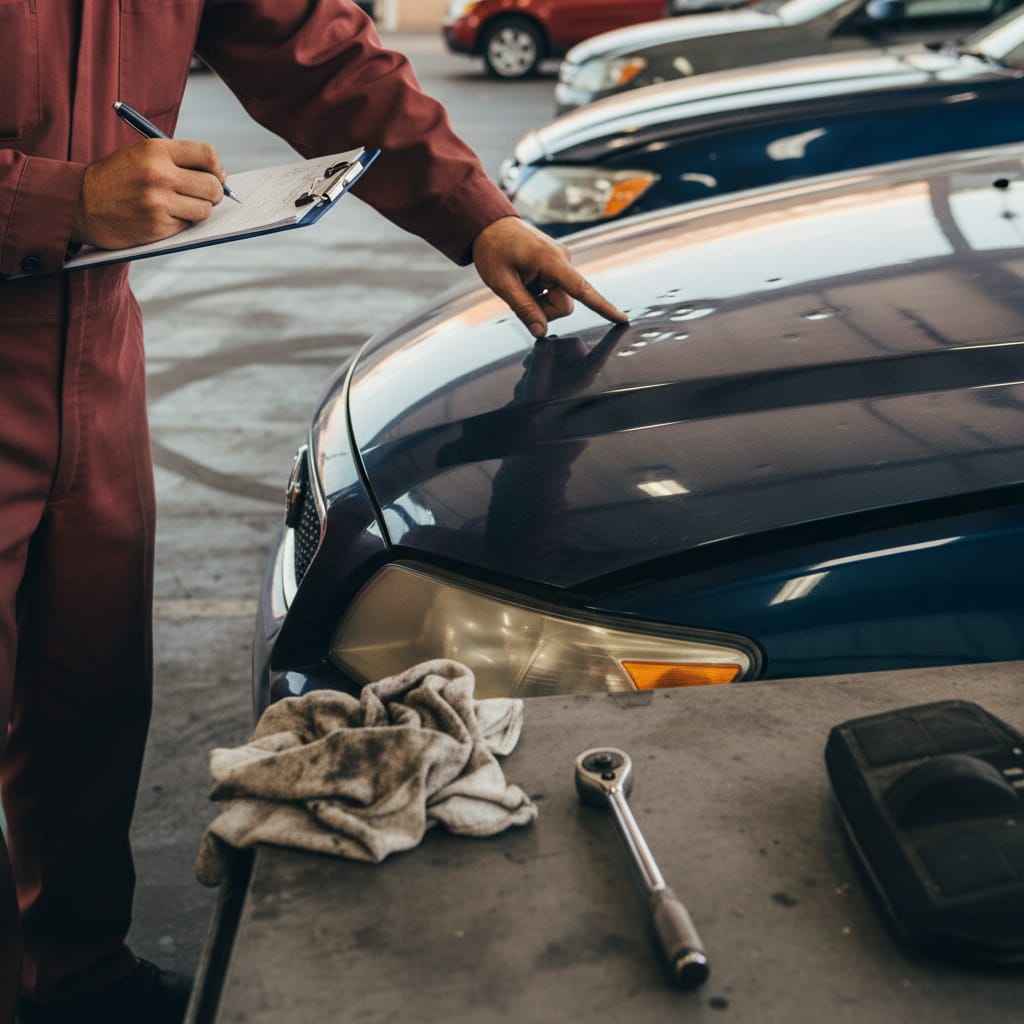
Our paintless dent repair service covers all hail-damaged panels, including hood, roof, trunk, fenders, and doors.
When Hail Damage Needs Traditional Repair
Not every hail dent is clean. Some spots on every storm-damaged car need something beyond PDR.
Cracked or chipped paint. The paint seals the metal. Once it breaks, moisture gets in and rust starts. A cracked paint dent needs filler and repaint, not just PDR. The metal shape can still be corrected with PDR rods first, but the paint work follows regardless.
Deep dents on panel edges. Panel edges are flanged and reinforced. A hailstone hitting an edge concentrates force on a stiff area. Those dents tend to be sharper and harder to push back. Traditional repair with body hammers and heat shrinking is often the better path.
Roof rail dents. The roof rail is where the roof skin meets the pillar. That area is structurally reinforced and has very limited backside access. Hail dents on the roof rail almost always need traditional repair.
Dents with micro-creases. Some dents look round on the surface but have a tiny crease at the lowest point. A PDR rod pushing on that spot creates a ridge instead of a smooth repair. The technician spots this during assessment and routes those dents to traditional methods.
Our collision repair service handles every case where PDR is not the right fit, including blended paint work when only a few panels need traditional repair.
Hail Damage and Your Insurance
Hail damage falls under comprehensive coverage. Not collision. That distinction matters because comprehensive claims are not-at-fault events. Filing a comprehensive claim for hail damage generally does not raise your rates.
Some California comprehensive policies carry a $0 deductible for glass and hail damage specifically. Check your declarations page or call your agent before you assume you owe a deductible.
The claim process works like this. You contact your insurer to report the damage. An adjuster, either in person or through a photo estimate app, documents the dents and writes a repair estimate. The insurer pays the shop directly, minus your deductible.
Under California Insurance Code Section 758.5, you choose the repair shop. Your insurer cannot require you to use their preferred vendor or network. If you already have a shop you trust, tell your insurer that is where the car is going.
The California Department of Insurance handles complaints if an insurer tries to steer you to a specific shop against your wishes.
Hail Chasers: What They Are and Why to Be Careful
After a major hail storm, traveling crews appear. They set up in a parking lot near the damage zone, put up signs, and approach drivers directly. These are sometimes called hail chasers or storm crews. They follow the storm from city to city.
Some of them do good work. But the business model creates pressure you should know about. These crews need to move to the next storm. They push for quick signatures. Contracts signed under pressure may not give you time to read the terms carefully.
In California, consumer protection law gives you a 3-day right to cancel certain home improvement contracts. Auto repair contracts operate under different rules. Once you sign an authorization and the shop starts work, cancellation may not be simple.
The safest approach: do not sign anything the day of a storm. Hail dents on sheet metal are safe to drive with for several days. The metal is dented, but structurally fine. Take that time to choose a shop you know and trust. If glass is shattered, do not drive the car until the glass is replaced.
A local shop has a reputation to protect in the community. A traveling crew has already moved on by the time you notice a problem.
FAQ: Hail Damage Repair in Spring Valley, CA
Q: Does hail damage repair in Spring Valley CA require an insurance claim?
A: No. You can pay out of pocket. But hail damage is covered under comprehensive insurance, and comprehensive claims are not-at-fault. Many drivers file because the cost of a full hail repair, with 100 or more dents, can be significant. Check your deductible first. If your deductible is close to the repair cost, paying out of pocket may make more sense.
Q: How long does a full hail repair take?
A: It depends on the dent count and the number of panels affected. A vehicle with 100 to 150 dents across hood, roof, and trunk takes two to three days with PDR. Vehicles with paint damage on several panels take longer because paint work adds drying time.
Q: Can hail dents cause rust?
A: A clean hail dent with intact paint will not rust on its own. The paint is the barrier. But if the stone cracked the paint and you leave the dent unrepaired, moisture can work under the paint edge over weeks and months. Rust can start that way. Dents with cracked paint should be repaired sooner rather than later.
Q: Is PDR right for every hail dent?
A: Most hail dents, yes. But not all. Deep dents, edge dents, dents with cracked paint, and dents with micro-creases need a different approach for those specific spots. The technician assesses each dent individually. Some panels are all PDR. Others are a mix.
Q: Will a hail claim show up on my insurance record?
A: Yes, but as a not-at-fault comprehensive claim. Most insurers do not surcharge rates for a single not-at-fault claim. Check your policy or ask your agent before filing if you are concerned.
Q: Can I drive my car after a hail storm?
A: Yes, if all glass is intact. Dented metal is structurally safe. If a window or windshield was shattered or cracked through, do not drive the car until the glass is replaced. Driving with shattered glass is unsafe and illegal.
Q: How do I know if my comprehensive policy covers hail with no deductible?
A: Look at your declarations page. It lists each coverage with its deductible. Some California policies write comprehensive with a separate $0 deductible for glass and weather events. Call your agent if the declarations page is unclear.
Get Your Hail Damage Assessed at All Auto Repair
All Auto Repair has been handling hail damage repair Spring Valley CA drivers trust since 1989. We are a family-owned shop. We assess every dent individually, tell you exactly what needs PDR and what needs traditional repair, and walk you through the insurance process if you are filing a claim.
Call or text Sam at (619) 466-3296 whenever you're ready. We are at 628 Grand Ave, Spring Valley, CA 91977.
No pressure. Just a straight look at the car and an honest answer.