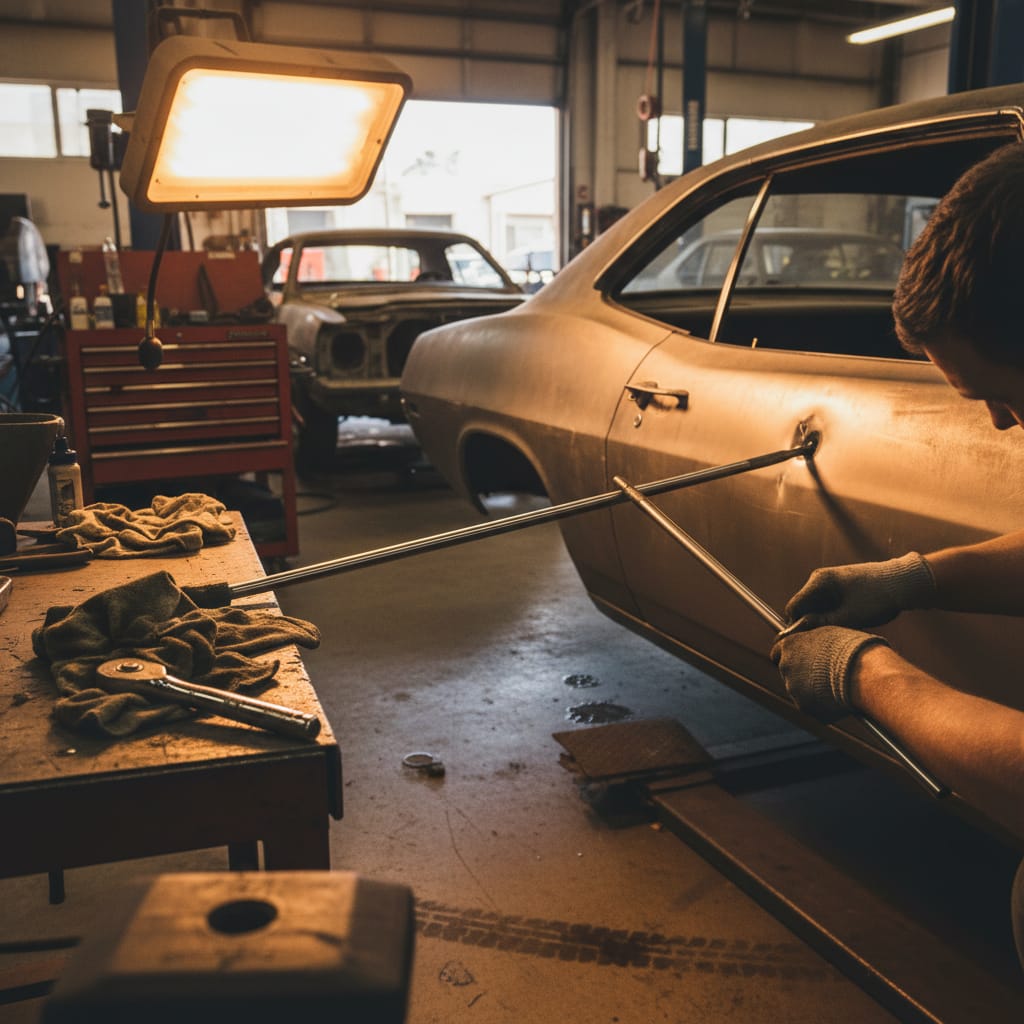
A lot of shops describe paintless dent repair as a cheaper, faster alternative to traditional bodywork. That framing misses the point. PDR is not a shortcut. It is the only repair method that leaves your factory metal and factory paint completely untouched. When conditions are right, it is literally the original panel, restored.
This guide covers how paintless dent repair Spring Valley CA drivers ask about really works. What the technician does, why it works on some dents and fails on others, and what you should ask before you say yes.
We have been doing this at All Auto Repair since 1989. Here is the honest version.
What PDR Actually Is (and What It Is Not)
PDR stands for paintless dent repair. The name is exact: no paint, no primer, no filler. The technician works the metal directly, pushing or pulling it back to its original shape.
Your car left the factory with a finish built in controlled conditions: primer, color coat, and clear coat. That original finish is thicker and harder than anything a body shop can spray later. A repaint is always a step down from factory.
PDR skips the repaint entirely. The factory finish stays intact. No color-matching. No blend zones. No risk of peeling years later.
The tradeoff: PDR only works when paint has not cracked. The moment paint breaks, you are already in repaint territory. PDR then becomes one step in a larger repair, not the whole repair.
A common misconception is that PDR is just a suction cup and a yank. It is not. Done right, PDR is slow, precise, visual work. The technician spends most of the time looking, not pushing.
How PDR Works: The Technique
Understanding the method helps you evaluate whether a shop is doing it right.
Reading the Reflection Board
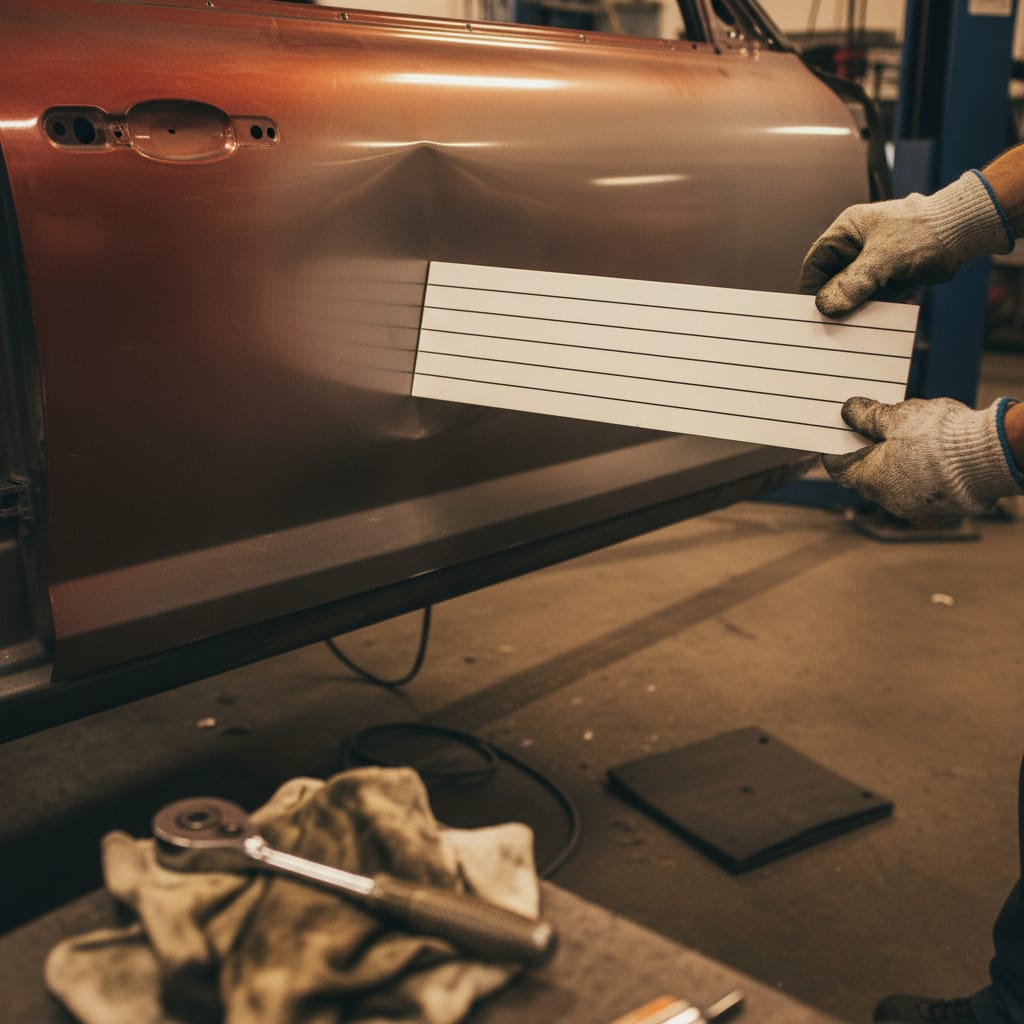
Before a technician touches the metal, they read it. A reflection board (sometimes called a line board) is a flat panel printed with parallel lines. The technician positions it so the lines reflect off the damaged panel.
On a flat, undamaged surface, those lines are straight and evenly spaced. On a dented surface, they bow, compress, or break. That distortion tells the technician where the dent boundary is, how deep the low points are, and where metal has been pushed outward into a high point.
It is a real-time diagnostic. Every push that moves metal changes how the lines look. The technician keeps working until the lines run straight again.
Pushing with PDR Rods
For panels where the backside is accessible (door skins, quarter panels, fenders with removable inner liners), the technician uses long metal rods. PDR technicians carry dozens of rods in different lengths, tip profiles, and angles.
The rod contacts the metal from inside. The technician applies pressure at a specific point and checks the reflection board after each move. The goal is not to push the center up. It is to work surrounding metal back toward the center, reducing the depression from the outside in. That approach avoids over-pushing, which creates a high spot worse than the original dent.
Aluminum panels require less rod pressure than steel. Aluminum is flexible but easy to stretch if the technician pushes too hard. A technician trained only in steel can leave permanent damage in an aluminum panel.
Glue-Pull PDR
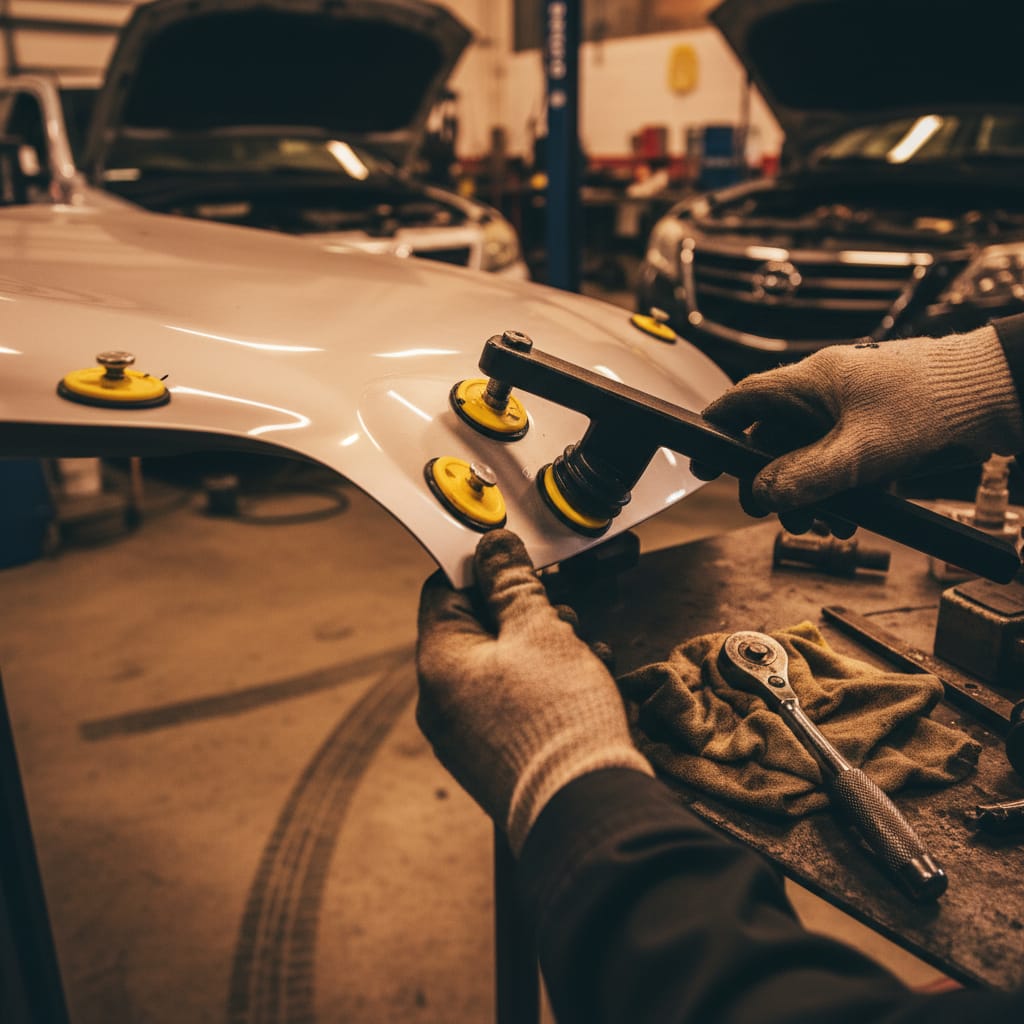
Not every panel has an accessible backside. Hood skins are often two layers with very limited access. For those areas, technicians use glue-pull PDR.
A glue tab bonds to the front of the dent using heat-activated adhesive. A bridge puller or slide-hammer pulls the tab outward, lifting the dent from the front. The technician reads the reflection board with each pull, just like with a rod.
After the dent is out, the adhesive releases cleanly. The panel surface is unmarked. For inaccessible areas, glue-pull is the only non-destructive option.
When PDR Is the Right Call
PDR works best when four conditions are met.
Paint is intact. No chips, cracks, or flaking anywhere in the dented area. If paint is broken, you need paint work regardless. PDR will not hide it.
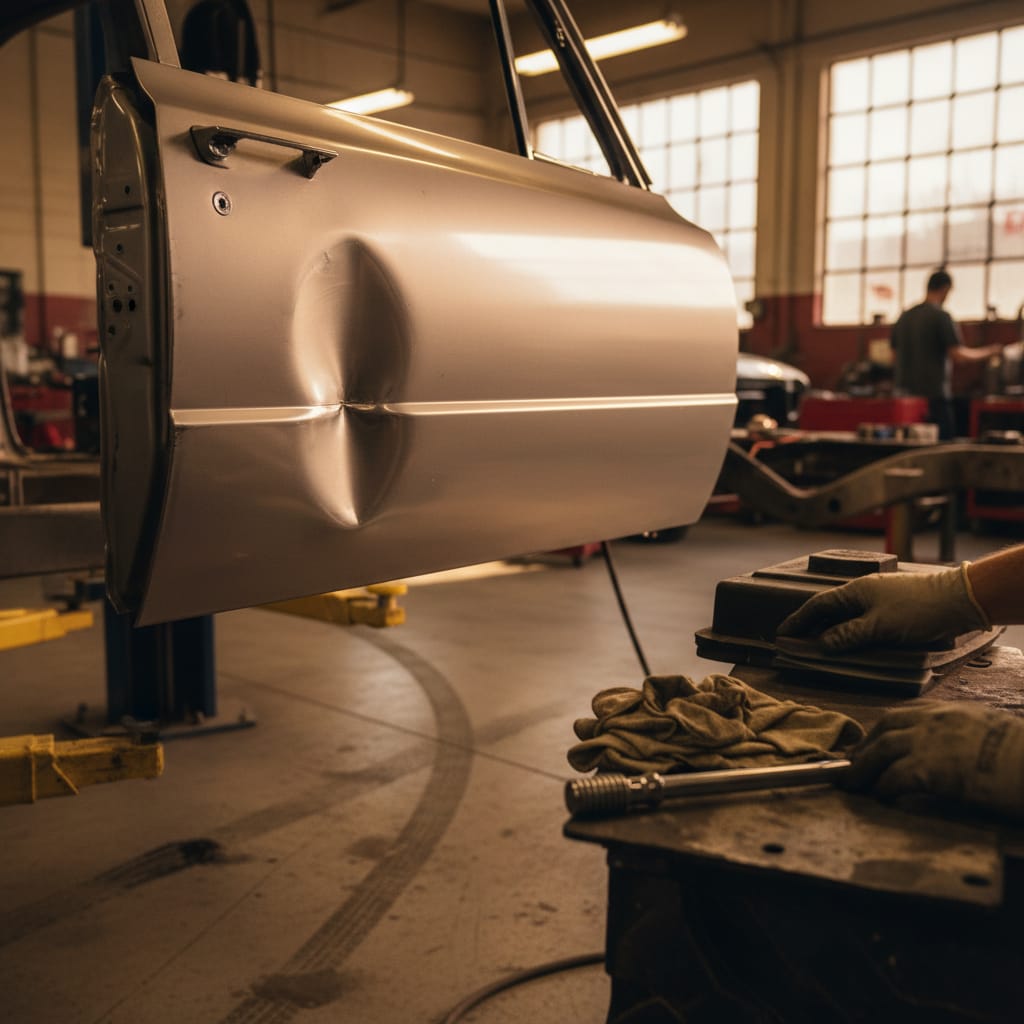
No sharp crease. A rounded depression is recoverable. A crease means the metal passed its elastic limit and hardened in a new shape. Pushing a crease with a PDR rod typically creates a ridge or ripple beside the crease. That is harder to fix than the original dent.
Access to the backside. Rod PDR requires physical access behind the panel. Glue-pull can cover areas without backside access, but the dent shape and depth still affect results. Technicians assess access before quoting.
Metal is not stretched. A severe impact can thin and stretch metal at the deepest point of the dent. Stretched metal is physically larger than the original panel. Pushing it back up creates a bubble. Before PDR can work on stretched metal, a technician needs to shrink it using heat. Not every PDR shop does this step.
Hail damage is the most common PDR candidate. Individual hail dents are usually small, rounded, and evenly distributed. As long as each dent is clean (no paint break, no crease), hail repairs are almost entirely PDR-eligible. Multiple panels can be done in a single session.
Our paintless dent repair service covers hail damage, door dings, and minor parking lot dents throughout Spring Valley and the surrounding area.
When PDR Cannot Work
Knowing when PDR fails is just as important as knowing when it works.
Paint is cracked or chipped. PDR restores metal shape but does not seal broken paint. A cracked paint surface is an entry point for moisture and rust. The panel needs paint work regardless, so traditional collision repair is often the more efficient path.
Sharp crease runs through the dent. A crease means metal is work-hardened at the crease line. It will not spring back. A body hammer and dolly can work it close to flat, then a thin layer of filler corrects the rest. PDR rods are the wrong tools here.
Dent hits a body line. Body lines are styled ridges pressed into panels. Metal around them is harder to move and easier to over-work. A dent crossing a body line almost always needs traditional repair.
Previous filler under the paint. A PDR rod pushes filler, not metal. If a prior repair left filler under the surface, results will be poor until the filler comes off.
Panel edge is involved. Edges are flanged and reinforced. Metal at an edge is harder to move and does not respond well to PDR rods.
Our collision repair service handles all the cases where PDR is not the right fit.
Why PDR Preserves Resale Value Better
This is the part most shops skip.
CARFAX pulls records from insurance companies, body shops, and repair databases. A traditional repair involving a paint claim shows up. A PDR repair typically does not, because no claim was filed and no paint work occurred.
A used car buyer can often spot a repaint: color that does not match under different light, overspray on rubber trim, orange peel texture on one panel while the rest looks smooth. Those details cut trade-in offers.
PDR leaves none of those signs. The factory paint is intact. The surface reads as untouched, because it is.
For leased cars approaching turn-in, newer vehicles, or cars being prepared for private sale, PDR protects value in a way traditional repair cannot match.
What to Ask a Shop Before You Agree to PDR
Not every shop offering PDR has a technician trained specifically in it. Ask these questions before you commit.
Does the technician use a reflection board? A yes is the baseline. Anyone doing PDR without a reflection board is working blind.
How do they handle aluminum panels? Ask directly. Aluminum requires different tool pressure and technique. If they cannot explain the difference, they may have limited experience with modern vehicles.
What do they do if the metal is stretched? The answer should mention heat shrinking. A shop that says "we just push it back" is skipping a step.
What happens if PDR reveals a crease mid-repair? Some dents look clean on the surface but have a subtle crease underneath. A honest shop stops, shows you what they found, and explains the options. They do not just keep pushing and hope you do not notice.
Will the repair show on CARFAX? PDR with no insurance claim typically does not. But if you are using insurance for hail damage and the insurer pays a PDR-only claim, ask whether that claim gets reported.
Under California Insurance Code Section 758.5, you choose the repair shop. Your insurer cannot require you to use their preferred vendor. The California Bureau of Automotive Repair (BAR) licenses body shops and handles complaints if a shop falls short.
FAQ: Paintless Dent Repair in Spring Valley, CA
Q: How long does paintless dent repair Spring Valley CA residents usually wait for a finished repair?
A: A single door ding or small dent takes one to three hours. A full hail repair on a vehicle with many dents can take one to three days depending on panel count. PDR is faster than traditional repair because there is no paint drying time.
Q: Can PDR fix a dent on an aluminum hood?
A: Yes, but it requires a technician with aluminum-specific training. Aluminum is more ductile than steel and easier to over-push. The technician needs to use lighter pressure and read the reflection board more carefully. Confirm the shop has done aluminum PDR before you agree.
Q: Will my insurance cover PDR?
A: Hail damage is commonly covered under comprehensive coverage, and most hail claims are PDR-eligible. Filing any claim means your insurer is involved. Under California Insurance Code Section 758.5, you choose the shop even if insurance is paying.
Q: Does PDR work on creased dents?
A: No. A crease means the metal has work-hardened in a new position. PDR rods cannot undo that. Creased dents need metal working with body hammers, dollies, and possibly heat shrinking before any surface finishing.
Q: How do I know if a PDR result will look good?
A: Ask to see the panel under good lighting before you accept it. A reflection board held against the finished panel should show straight, undistorted lines. If there is a remaining high spot or low area, the lines will bow. Do not accept the repair until the reflection test passes.
Q: What is the glue-pull method and when does a shop use it?
A: Glue-pull PDR attaches a tab to the front of the dent using heat-activated adhesive. A pulling tool lifts the metal from the front. Shops use it when there is no backside access behind the panel, such as on hood skins or areas blocked by structural supports.
Q: Is PDR available for older vehicles with multiple repaint layers?
A: It depends on what is under the surface. Additional paint layers add thickness but do not automatically block PDR. However, if there is body filler from a prior repair, the technician may not be able to push the metal directly. An inspection will tell you whether the panel is a good PDR candidate.
Get Your Dent Assessed at All Auto Repair in Spring Valley
All Auto Repair has been handling paintless dent repair Spring Valley CA drivers trust since 1989. We are a family-owned shop. We use a reflection board on every repair. We tell you honestly whether PDR is the right call or whether the dent needs to go a different direction.
Call or text Sam at (619) 466-3296 whenever you are ready. We are at 628 Grand Ave, Spring Valley, CA 91977.
No pressure. Just a straight look at the dent and an honest answer.