
Someone clips your rear corner in a parking lot on Jamacha Road. You see a deep crease running from the rear door opening all the way around the wheel well. It looks bad, but you assume a shop can just swap the panel. A hood replacement, a door replacement, simple enough, right?
Here is what most drivers in Spring Valley do not know: a quarter panel is welded to the car's body, not bolted. You cannot unbolt it and slide a new one in like a door. That one fact changes every decision you make about quarter panel repair Spring Valley CA.
This article explains what a quarter panel is, how shops actually fix it, what can go wrong when repairs are done poorly, and how to handle the insurance side. We have been fixing collision damage at 628 Grand Ave since 1989. We want you to understand what you are paying for before you authorize anything.
What the Quarter Panel Actually Is
The quarter panel is the metal section that runs from the rear door opening to the back of the car. It wraps around the rear wheel well and connects to the trunk opening at the top. It is a large, curved piece of steel.
Unlike a door, hood, or fender, the quarter panel is not a bolt-on part. It is spot-welded to the car's unibody structure at three connection points:
- The roof rail at the top
- The rocker panel along the bottom
- The trunk floor at the rear opening
Spot welds are the small circular weld points a factory uses to fuse panels together. A typical quarter panel has dozens of them. To remove the panel, a technician drills out each weld. To install new metal, the tech welds it back in. This takes hours even when everything goes right.
Because the quarter panel ties into the rocker and the roof rail, damage here often involves more than just the outer skin. If the impact was strong enough, the rocker may be buckled underneath. The trunk floor connection point may have shifted. That changes the repair scope significantly.
The Three Repair Paths
There is no single answer for how to fix a quarter panel. Every case depends on how deep the damage goes and how much metal is deformed. Shops generally choose from three paths.
Path 1: Pull and Repair
If the metal is dented but not torn or stretched too far, a technician can work the panel from behind on a frame machine (a hydraulic straightening bench). He uses push rods and pulling hooks to bring the metal back to factory shape. Then he skims the surface with body filler and primes it for paint.
This approach works well for shallow to moderate damage. It preserves the factory welds, which means the structural connection to the body stays intact. Labor time is lower than the other paths.
The limit: once metal has been stretched too far or torn, pulling it back will leave a surface that cannot hold paint properly long-term. A technician has to judge this honestly.
Path 2: Partial Sectioning
When damage is too severe to pull but does not run the full length of the panel, a technician can perform a partial section repair. He cuts out only the damaged portion and welds in a new piece of OEM or aftermarket replacement metal.
This is more involved than a pull repair. The cut lines must land in locations approved by the vehicle manufacturer or I-CAR (the collision repair training and standards organization). Weld placement matters because the quarter panel handles structural load in a side or rear collision. Welds in the wrong location, or done with the wrong heat settings, weaken the joint.
I-CAR welding standards require that technicians working on high-strength steel use the correct wire speed, voltage, and travel angle for the specific material. Modern car bodies use high-strength and ultra-high-strength steel in key areas. This steel cannot be welded with the same settings used for regular mild steel. Improper welds look fine on the surface but crack under crash stress.
When choosing a shop for partial sectioning, ask whether their technicians hold current I-CAR certifications. It is not a minor credential. It affects whether your car protects you in the next collision.
Path 3: Full Quarter Panel Replacement
Full replacement means drilling out every factory spot weld, removing the entire panel, and welding in a complete replacement. This is rare because it is extremely labor-intensive. It also requires the technician to precisely reproduce the factory weld locations so the body geometry stays in spec.
This path is typically reserved for vehicles where the entire panel length is destroyed, or where the existing panel has been poorly repaired before and cannot hold new metal.
One material note: OEM (original equipment manufacturer) replacement panels match the exact steel gauge and grade used by the car's factory. Aftermarket panels are sometimes thinner or made from lower-grade steel. For structural panels like the quarter panel, OEM or OEM-equivalent steel is the better choice.
When Damage Reaches the Rear Frame Rail
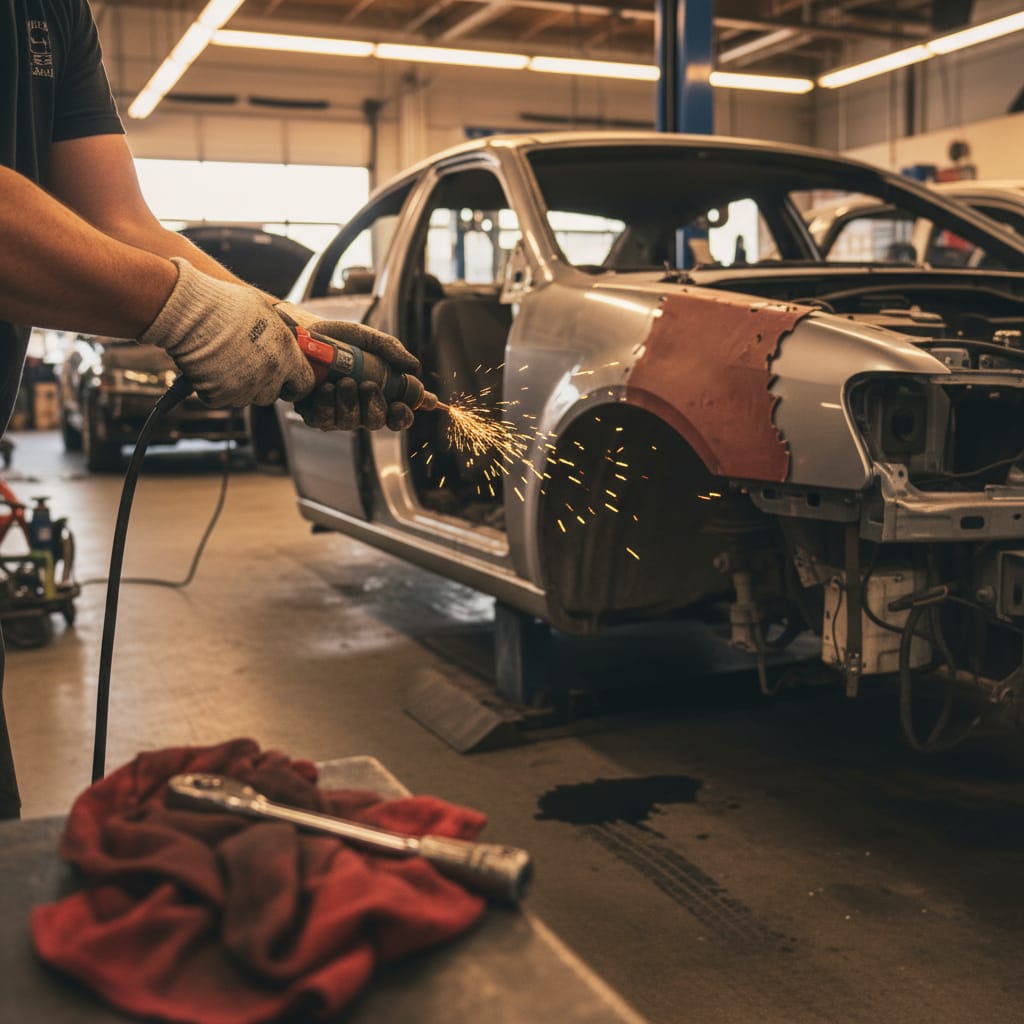
Not every quarter panel impact stays on the outer skin. Hard rear corner hits often push the quarter panel inward far enough to reach the rear frame rail, the structural tube that runs along the floor toward the back of the car.
When the frame rail is involved, the repair becomes a frame damage repair job in addition to a body repair job. The car goes on the frame machine. Technicians take measurements against factory tolerances to confirm the rail is straight before any panel work begins. Doing the panel work first and then discovering frame displacement is a costly mistake.
Rear impacts that damage the quarter panel also frequently crack or shift the tail light housing mount, the plastic and metal bracket that the tail light assembly clips into. If you notice your tail light is sitting at a slight angle or has a gap on one side, the housing mount behind the quarter panel may have moved. This is a separate repair item, but it shows up in the same estimate.
Paint Matching on a Quarter Panel
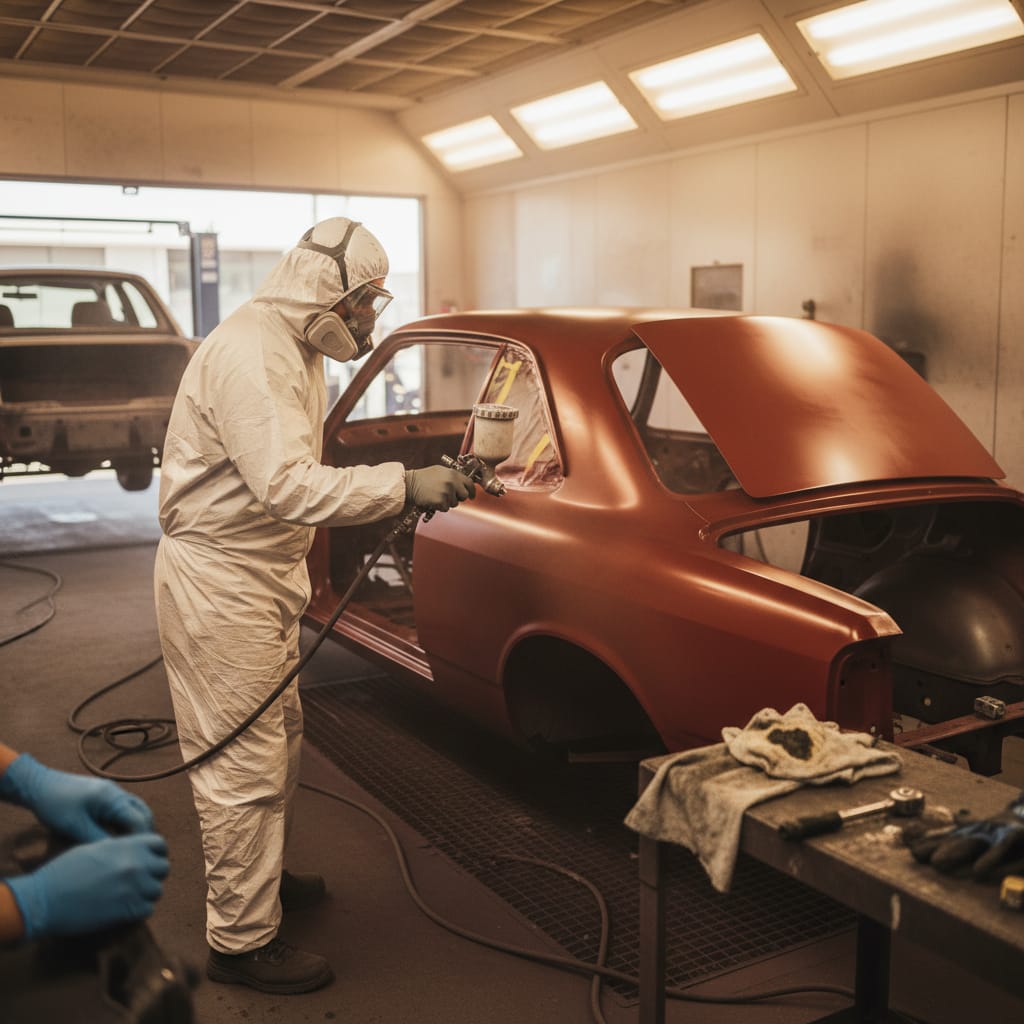
Quarter panels are large. That makes paint matching harder than on a small part like a mirror cap.
Every car has a paint code. The shop mixes a batch of color-matched paint using that code. But paint fades over time from sun exposure. A fresh mix on the repaired section will look slightly different from the original panels around it, even if the code is correct. This is especially true for metallic and pearl finishes.
To handle this, a skilled painter blends the new paint: he sprays the repaired panel, then feathers paint across the edge into the adjacent panels, the trunk lid and the rear bumper cover. This transitions the slight color difference so the eye cannot see a sharp line.
A quarter panel blend typically involves painting the repair area plus part of the adjacent panels. Ask your shop to walk you through their blending plan before work starts. A shop that skips blending on a large quarter panel will produce a visible color difference.
We match paint at our Spring Valley shop using a spectrophotometer (a device that reads the exact color values of the existing paint) alongside the factory code. This gives us the closest possible match before we spray.
Insurance Claims for Quarter Panel Damage
California Insurance Code section 758.5 gives you the right to choose your own repair shop. Your insurer can suggest a preferred shop, but they cannot require you to use it.
Here is what to watch for on a quarter panel claim:
Aftermarket parts. Some insurers write estimates that call for aftermarket quarter panel sections to reduce cost. You can ask for OEM parts. The insurer may not fully cover the price difference, but you have the right to request them and pay the gap yourself if needed.
Incomplete scope. If the initial estimate covers only the outer skin but your frame rail is also displaced, the estimate is incomplete. Supplements are normal in collision repair. A shop that finds additional damage during teardown submits a supplement to the insurer. Do not be alarmed by this. It is the standard process.
Total loss threshold. California uses an actual cash value formula. If the repair cost approaches the car's pre-damage value, the insurer may total it. For older vehicles, a full quarter panel replacement sometimes pushes past that threshold.
For any questions about your rights in a California collision repair claim, the Bureau of Automotive Repair (BAR) at bar.ca.gov is the enforcement agency.
We work with all major insurers and can explain what your estimate covers before work begins. See more about our collision repair services here.
Get an Honest Assessment in Spring Valley
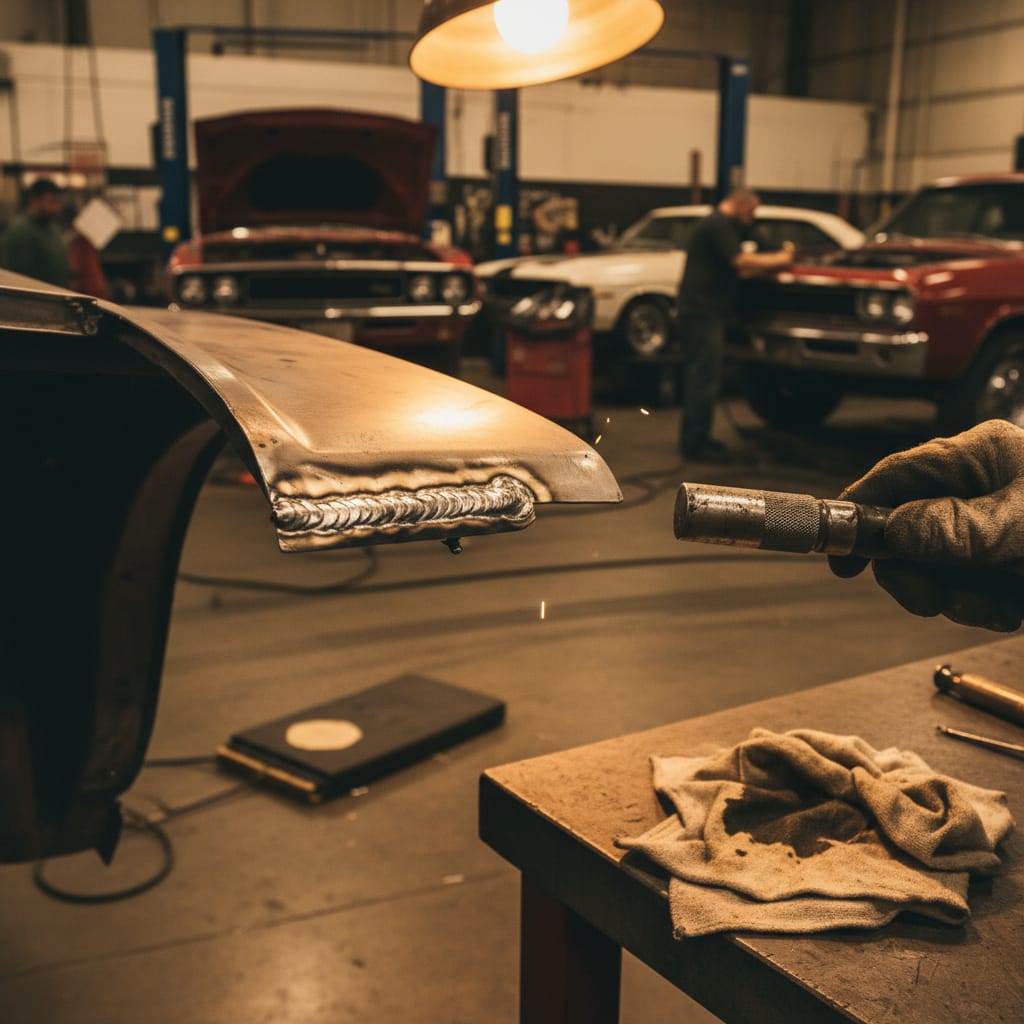
If your rear corner is damaged, the first step is a proper teardown estimate. We need to see what is behind the outer skin before we can tell you which repair path fits your car. That means looking at the rocker, the trunk floor connection, and the rear frame rail.
For quarter panel repair Spring Valley CA, we give you a straight answer. Pull and repair if the metal supports it. Sectioning if it does not. Full replacement only when sectioning is not enough. We tell you why we recommend one path over another and what it means for your car's structure.
Call or text Sam at (619) 466-3296 whenever you are ready. We are at 628 Grand Ave, Spring Valley, CA 91977.
Frequently Asked Questions
How long does quarter panel repair take?
Pull and repair typically takes two to four days, including paint and dry time. Partial sectioning runs three to five days. Full panel replacement can take a week or more depending on parts availability and weld curing time.
Can a quarter panel be repaired without replacing it?
Yes, in many cases. If the metal is dented but not torn or stretched past its limit, a technician can pull it back to shape on a frame machine. The decision depends on how deep and wide the damage runs.
Is a quarter panel repair covered by insurance?
Most collision policies cover quarter panel repairs. If another driver caused the damage, their liability policy covers it. You choose the shop under California Insurance Code section 758.5. Confirm your deductible and ask your adjuster whether they allow OEM parts before you authorize work.
What is the difference between a quarter panel and a fender?
A fender covers the front wheel well. A quarter panel covers the rear wheel well and extends to the back of the car. Both are body panels, but a fender is a bolt-on part. A quarter panel is welded to the unibody structure.
Will my car be as safe after a quarter panel repair?
If the repair is done correctly, yes. That means proper weld placement per I-CAR standards, correct heat settings for the steel grade, and a frame check if the impact reached the rear rail. A poorly welded section can weaken crash protection. Ask your shop about their welding certifications.
How do shops match paint on a large panel like a quarter panel?
A good shop reads the existing paint color with a spectrophotometer, then blends the fresh paint into the trunk lid and rear bumper. This hides the slight color shift between new and faded paint. Skipping the blend leaves a visible line where the new paint ends.
What happens if the quarter panel repair also involves the trunk?
Damage that reaches the trunk floor or the trunk lid mount expands the repair scope. The trunk lid may not close properly until the opening is squared up. In some cases the trunk hinge mounts also need alignment. A complete estimate should cover all of these items together.