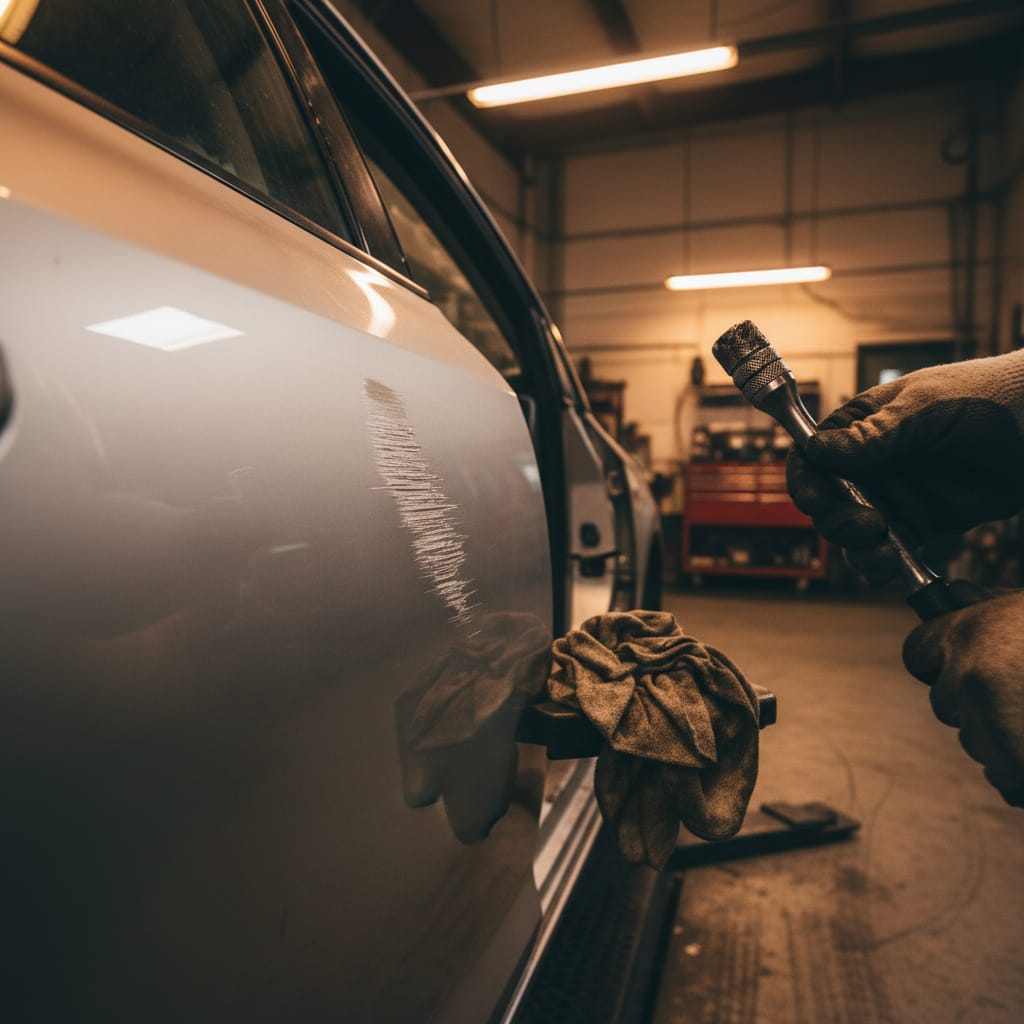
Not every scratch needs a body shop. That is the most honest thing we can tell you upfront.
Some scratches you can fix at home on a Saturday afternoon. Others need professional work before the weather gets to the bare metal. And a few can wait until you are ready to deal with them.
The difference is not how deep the scratch looks. The difference is which layer of paint it reaches. Once you know that, the right call becomes obvious.
This guide covers scratch and scuff repair Spring Valley CA drivers deal with every day. We will walk through the paint layer system, show you how to identify your scratch type in five minutes, and give you a clear framework for what to do next.
The Four Paint Layers on Your Car
Your car did not leave the factory with one coat of paint. It left with four distinct layers. Each one has a job. Understanding them is the whole key to reading a scratch correctly.
Metal. The base is steel or aluminum. It holds everything together. Metal does not care about appearance, but it cares a lot about moisture. Bare metal exposed to air and water will rust.
Electro-coat primer (e-coat). This is the first layer applied at the factory. The body is dipped in an electrically charged bath that bonds a thin primer to every surface, including inner cavities. E-coat is the rust barrier. You rarely see it, but it is the reason a factory car resists rust for years.
Primer. On top of the e-coat comes a build primer. This layer smooths the surface and gives the color coat something to grip. Primer is not designed to be waterproof on its own.
Base coat. This is the color you see. The base coat is pigmented paint that gives your car its color. It is not hard. It needs the clear coat above it to protect it from UV, washing, and abrasion.
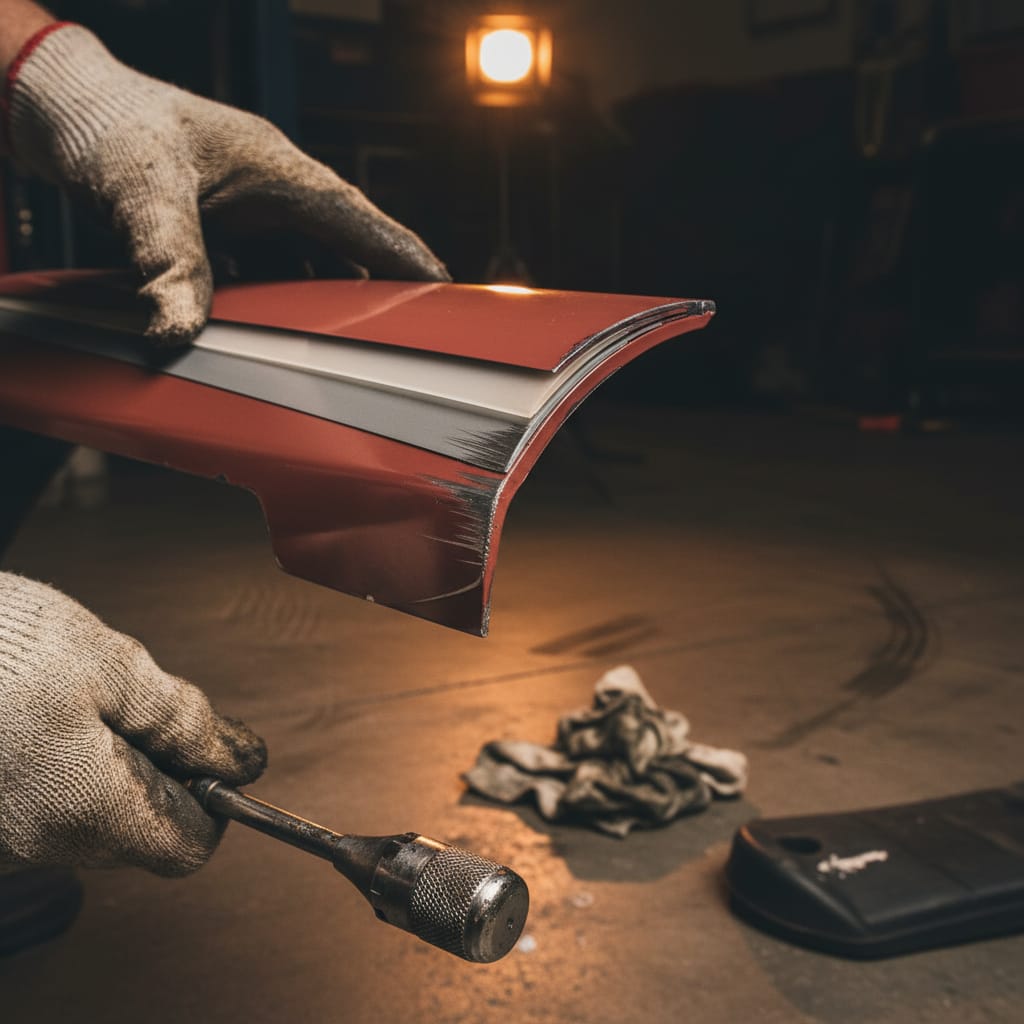
Clear coat. The top layer is a transparent coating 2 to 4 mil thick (one mil equals one-thousandth of an inch). Total paint thickness on a modern car runs 4 to 7 mil. The clear coat takes the daily abuse: UV, washing, keys, grocery carts, tree sap, and bird droppings. It is what gives paint its gloss.
When something scratches your car, it cuts down through these layers one at a time. The layer it stops at tells you everything.
How to Identify Your Scratch Type
You can test a scratch in less than five minutes. You need nothing more than your fingernail and decent lighting.
The fingernail test. Run your fingernail slowly across the scratch. If your nail glides over the surface without catching, the scratch is in the clear coat only. The clear coat has a groove, but the surface is still continuous. If your nail catches and drops into the scratch, the clear coat is cut through and you are looking at base coat or deeper.
The color test. Look at the scratch from about three feet away in sunlight. If the scratch looks white or silvery but you still see the car's body color in and around it, that is a clear coat scratch. The white residue is abraded clear coat. If you see a different color entirely (lighter, chalky, or dull), that is primer showing. If you see shiny grey or silver metal, you have reached bare metal.
The white residue test. Wipe a clean cloth lightly across the scratch. If white or clear powder transfers to the cloth, that is clear coat residue. This confirms a surface-level scratch.
These two tests together let you place any scratch in one of three categories: clear coat only, into the base coat or primer, or down to bare metal.
Clear Coat Scratches
Clear coat scratches are the most common type, and the most forgiving.
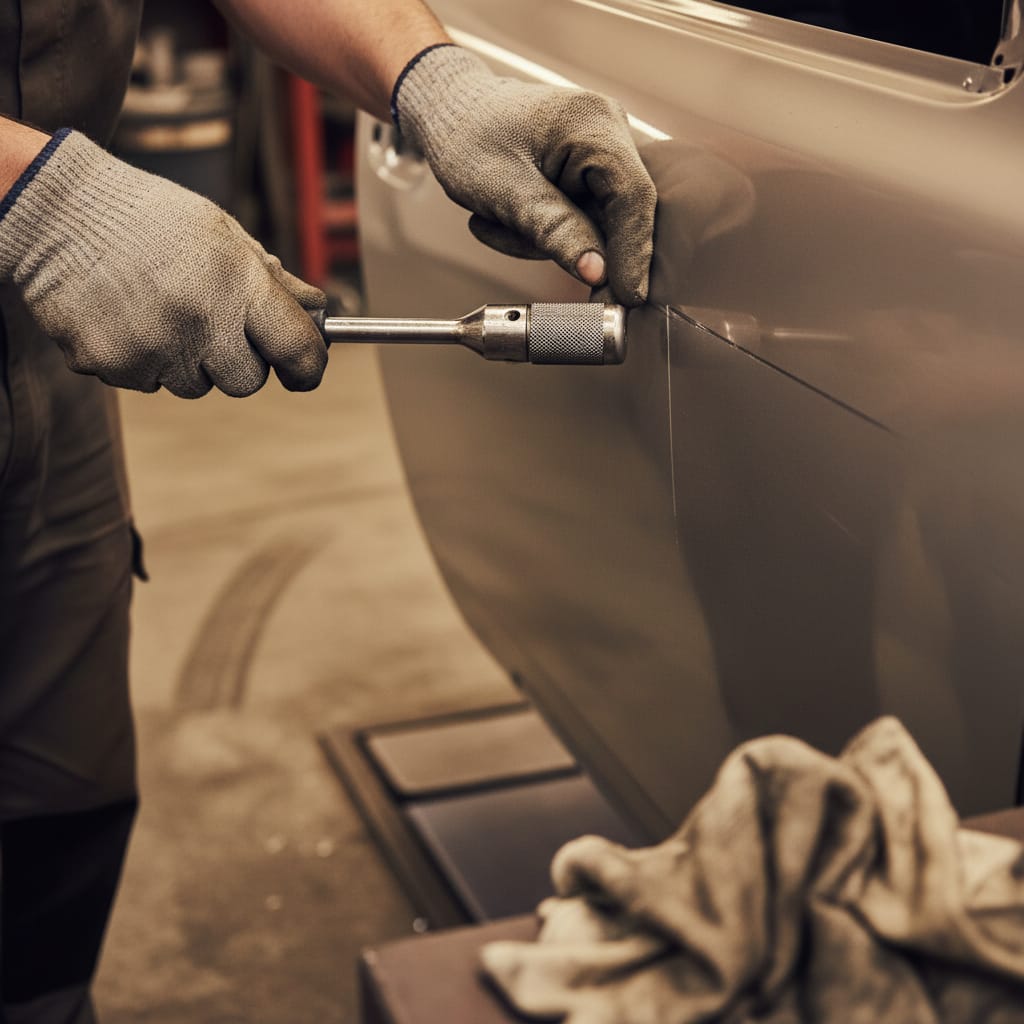
The scratch cuts into the clear coat layer but does not reach the base coat underneath. You still see your car's color. The scratch looks white or hazy in bright light because the abraded clear coat scatters light instead of reflecting it cleanly.
What you can do yourself. A machine polisher and a cutting compound can remove light clear coat scratches entirely. The compound abrades the clear coat down to below the scratch, then the polish smooths and re-levels the surface. Done right, the scratch disappears. You need the scratch to be shallow enough that clear coat remains below it after you cut. If you remove more clear coat than what was scratched, the surface looks dull and will not polish back.
For very fine swirl marks and surface haze, a hand-applied polish is enough. For deeper clear coat scratches, a machine polisher with a cutting pad gives better results.
When a clear coat scratch needs a shop. If the scratch covers a large area, crosses a body line, or the clear coat is thin from sun exposure, DIY polishing can go through to the base coat accidentally. A shop has paint thickness gauges that measure how much clear coat remains. If there is not enough left to cut safely, the panel needs a respray. Our auto body paint service handles color-matched resprays for panels with depleted clear coat.
Base Coat and Primer Scratches
When a scratch goes through the clear coat and into the base coat, the repair conversation changes.
You see the car's color fade or disappear in the scratch. Underneath is a lighter, chalky color. That is primer. Primer is not decorative. It is a bonding layer. It is also not waterproof.
Why timing matters. Bare primer absorbs moisture. In Spring Valley, the marine layer rolls in from the coast regularly. We are only about 15 miles inland, but that is close enough to get meaningful salt-air exposure. Primer that stays wet repeatedly begins to break down its bond to the e-coat beneath. Once that bond weakens, the next layer of the paint stack lifts.
At that point you are not repairing a scratch. You are repairing the rust and lifting paint that followed from waiting.
What a shop does. A scratch through the base coat needs the area cleaned, primed, and repainted with color-matched base coat and clear coat. The shop feathers the edges so the new paint blends with the surrounding finish. This is not a DIY-friendly repair. Touch-up pens can fill the scratch to prevent rust, but they do not blend. The touch-up paint sits above the surface and looks like a different material under any decent light.
Use a touch-up pen as a temporary rust barrier if you cannot get to the shop right away. Then get it properly repainted when you are ready. Our collision repair service covers base coat scratches from parking lot incidents, keying, and road debris.
Deep Scratches to Bare Metal
If you can see shiny silver or grey metal in the scratch, the clock has started.
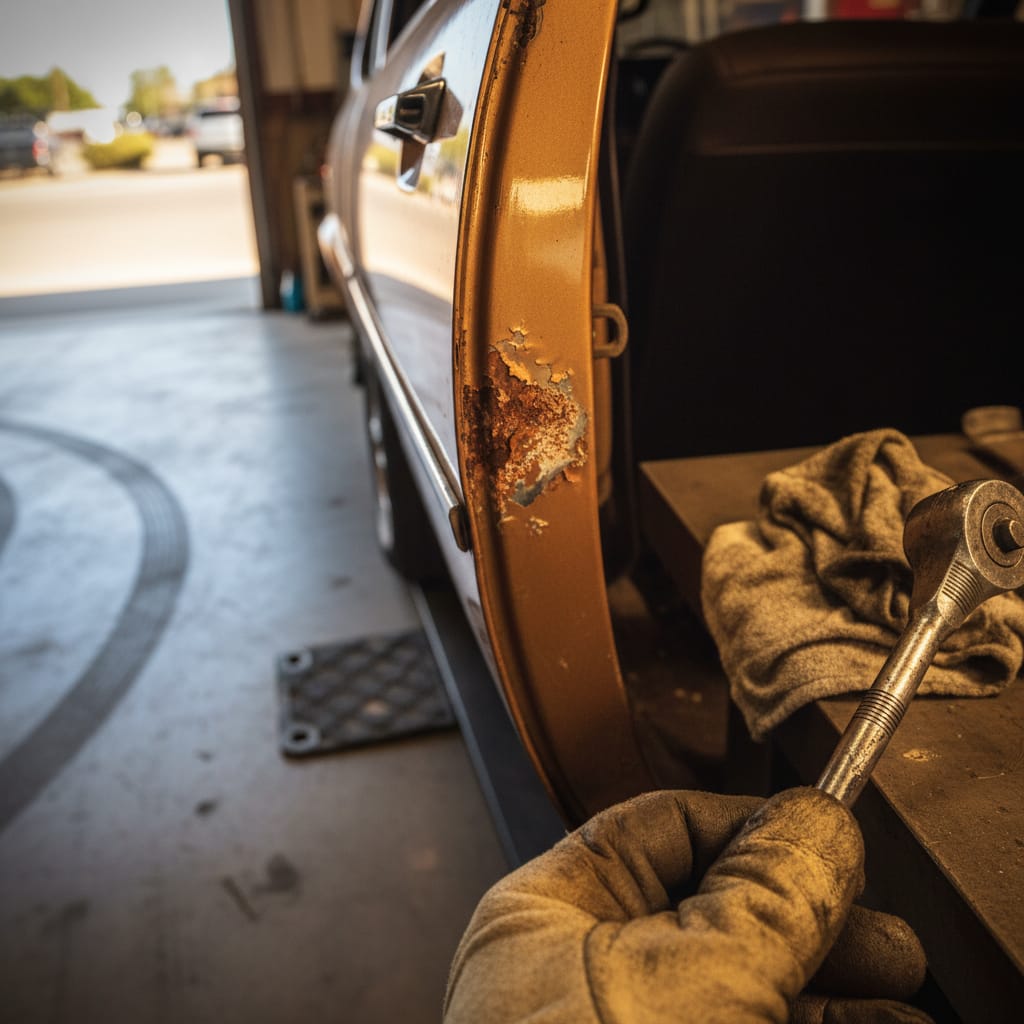
Rust can begin on bare steel within 48 to 72 hours in conditions with humidity or salt air. San Diego County's coastal climate means even a sunny day in Spring Valley carries enough ambient moisture to start oxidation on exposed metal. The first sign is a faint orange tinge in the scratch. That is iron oxide forming.
What rust does next. Surface rust starts in the scratch, but it does not stay there. Rust expands outward and inward simultaneously. It grows under the surrounding paint and creates a bubble that lifts the paint from below. You have probably seen this on older cars: a small blister near a scratch that keeps growing. That bubble is rust pushing the paint off the metal from underneath.
Catching a metal scratch early means cleaning the metal, applying a rust inhibitor, priming, and painting. That is a manageable job. Waiting until the rust bubble forms means the technician has to remove all the lifted paint, treat the rust, and then repaint a larger area than the original scratch. The repair cost is higher because the damage is larger.
Aluminum panels. If your car uses aluminum panels (many newer trucks, hoods, and doors are aluminum), there is no iron rust risk. But aluminum oxidizes too, and the oxidation creates a white chalky layer that interferes with paint adhesion. The repair process is different but still time-sensitive.
Scuffs vs. Scratches
These two words get used interchangeably. They should not.
A scuff on a plastic bumper cover is often paint transfer from another car. When a grocery cart or another bumper contacts your plastic bumper, it leaves behind some of its color. Your car's plastic is not scratched. It is just wearing someone else's paint.
Test it this way: look closely at the scuffed area. If you can see your car's original color underneath the mark, you are looking at transfer paint, not a scratch. A plastic-safe rubbing compound or a heat gun carefully applied can remove transfer paint without touching your car's surface. This is the one repair in this whole article that sometimes requires no paint work at all.
A scuff on a metal panel is a different story. On metal, a scuff usually means the clear coat has been abraded. Run the fingernail test. If the nail catches, treat it like a clear coat scratch and follow that path.
The distinction matters because plastic bumper covers and metal body panels do not use the same repair materials. A repair product designed for metal can lift or crack a plastic bumper. A shop doing scratch and scuff repair Spring Valley CA owners bring in will assess whether they are working on plastic or metal before they pick up a compound.
FAQ: Scratch and Scuff Repair in Spring Valley, CA
Q: My scratch has a faint orange tinge. Is that rust already?
A: Yes. A faint orange or reddish color in a scratch on a steel panel is iron oxide forming. Get it looked at soon. Surface rust treated early is a minor repair. Left alone, it spreads under the paint and becomes a much larger job.
Q: Can I use a touch-up pen to fix a scratch properly?
A: Touch-up pens are good for one thing: sealing bare metal to prevent rust while you wait for a proper repair. They do not blend with the surrounding paint. The touch-up paint sits above the surface and is usually visible up close. Use it as a temporary barrier, not a finished repair.
Q: How long can I wait before repairing a scratch through the base coat?
A: The sooner the better in San Diego County. The marine layer brings enough moisture to begin primer breakdown. If you can see primer in the scratch, apply a touch-up pen within a day or two and get a proper repaint scheduled within a few weeks.
Q: Does insurance cover a parking lot scratch in Spring Valley, CA?
A: Most parking lot scratches fall under comprehensive or collision coverage, depending on circumstances. Filing a claim for a minor scratch is often not worth it. The cost of the repair may be close to or less than your deductible. It is worth calling your insurer to ask before you decide. Under California Insurance Code Section 758.5, you choose the repair shop regardless of who is paying.
Q: Can I polish out a scratch at home without a machine polisher?
A: You can, for very light clear coat marks. A hand-applied polish works on fine swirl marks and surface haze. For a scratch with depth, a machine polisher gives much better results and is less likely to leave a dull patch from uneven hand pressure.
Q: What does it mean when a scratch shows a different color than my car?
A: If the scratch exposes a color much lighter than your car (off-white, beige, or flat grey), you are seeing primer. That means the clear coat and base coat are both cut through. Primer showing means the repair needs paint work, not just polishing.
Q: How do I tell a plastic bumper scuff from a metal panel scratch?
A: Knock lightly on the surface with your knuckle. Plastic has a hollow thud. Metal has a solid, dense knock. Plastic bumper covers flex slightly when you press them. Metal panels do not. This matters because the repair materials and compounds differ between plastic and metal.
Get Your Scratch Assessed at All Auto Repair in Spring Valley
Knowing which layer your scratch reaches changes everything about how to handle it. A clear coat scratch gets polished. A base coat scratch gets repainted before the primer fails. A metal scratch gets treated before rust starts.
We have been doing scratch and scuff repair Spring Valley CA drivers count on since 1989. We are a family shop. We will tell you honestly if a scratch is something you can handle yourself or if it needs professional work. We do not upsell repairs you do not need.
Call or text Sam at (619) 466-3296 whenever you are ready. We are at 628 Grand Ave, Spring Valley, CA 91977.
No pressure. Just a straight look and an honest answer.