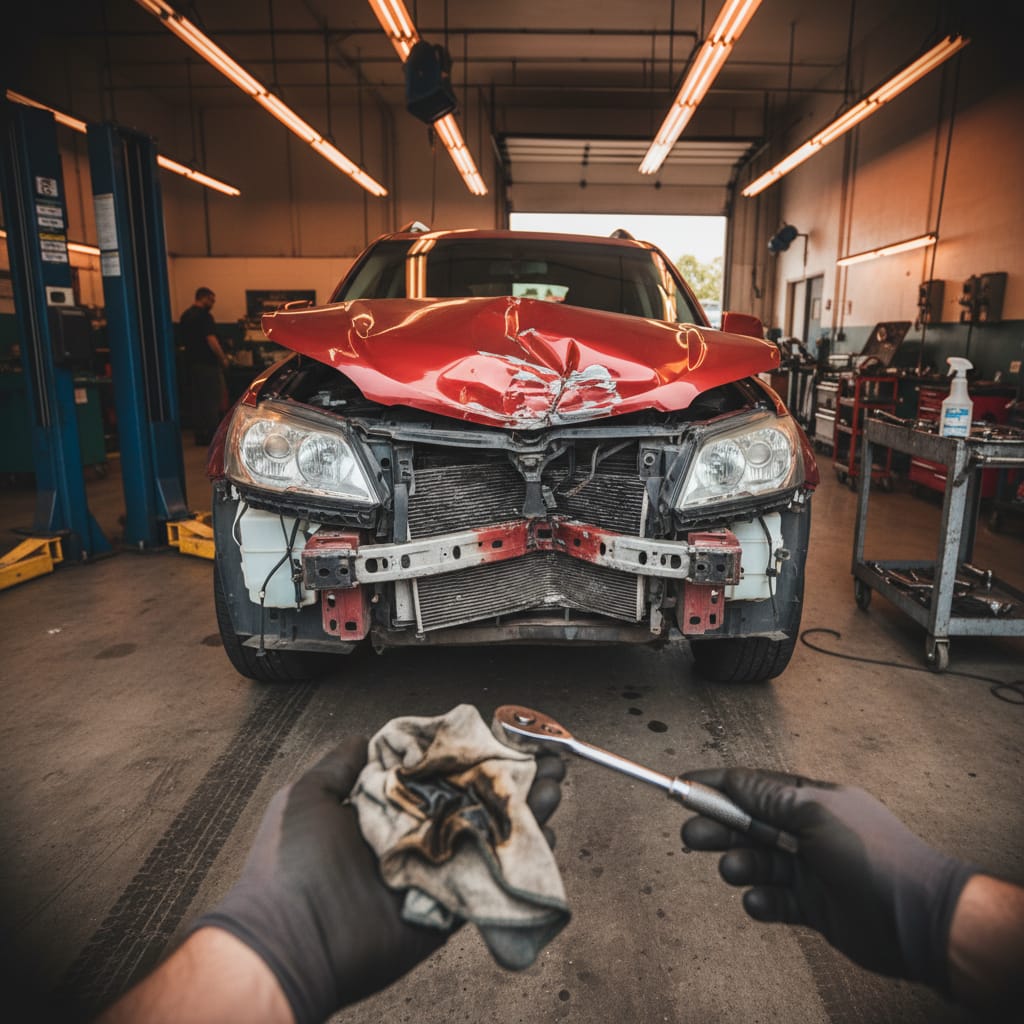
You drive a crossover or mid-size SUV. You get rear-ended at a light. The back looks bad. Hatch is buckled. Tail lights are cracked. You assume it is a straightforward repair.
It may be. But SUVs carry more sensors than sedans. Their rear hatches are larger and harder to blend paint across. And their height means forces hit the structure differently than on a smaller car.
SUV collision repair Spring Valley CA is not complicated if you know what to look for. This article covers the structure, the physics, the common damage patterns, and what to expect from the repair process.
SUV Structure: Unibody, Not Body-on-Frame
Most people think SUVs share the same truck-style frame as a Chevy Tahoe or Ford Expedition. That is not true for most crossovers on the road today.
The Toyota RAV4, Honda CR-V, Toyota Highlander, and Honda Pilot all use unibody construction. That means the body and frame are one welded piece, exactly like a sedan. There is no separate steel ladder frame underneath.
True body-on-frame SUVs do exist: the Chevy Tahoe, Ford Expedition, Toyota 4Runner, and GMC Yukon all sit on a separate frame. But most family crossovers do not. If you drive a compact or mid-size crossover, your vehicle is structurally closer to a Camry than to a Tahoe.
That matters for repair. Unibody vehicles absorb collision energy through designed crumple zones. The front and rear sections crush on purpose to protect the cabin. The shop reads how those zones absorbed the hit and works from there.
So why is SUV repair different from sedan repair if the structure is similar? The answer is in the physics.
Learn more about collision repair services at our Spring Valley shop.
How Height and Weight Change the Physics
SUVs ride higher than sedans. They weigh more. Those two facts change how collision forces move through the vehicle.
Override happens when a tall vehicle hits a shorter one from behind. The SUV's bumper rides over the smaller car's bumper instead of meeting it. The energy transfer skips the crumple zone and goes straight into the structure behind it. The SUV's bumper may take little visible damage while the structural components behind it absorbed a serious hit.
Underride is the reverse. When an SUV is hit from behind by a lower sedan, the sedan's hood can slide under the SUV's rear bumper. The bumper takes a glancing hit rather than a direct one. Damage may be higher on the hatch and lower on the bumper than you would expect.
Higher center of gravity also changes how lateral forces move. In a T-bone collision, the top of the SUV continues moving after the bottom is stopped. That twisting load stresses the A-pillar and B-pillar more than it would on a lower car. Both pillars are structural. Damage there is serious.
Heavier vehicles also carry more kinetic energy at the same speed. More energy means more work for the crumple zones. A collision that dents a sedan may deform an SUV's structure further back because there was more energy to absorb.
Common SUV Collision Damage Patterns
Front fascia and hood: Front-end hits damage the fascia, grille, hood, and the components immediately behind them. On an SUV, the hood is larger and heavier than on a sedan. Hood hinge and latch alignment matters after any front hit.
A-pillar involvement: T-bone accidents at intersections often catch the front door and A-pillar. SUVs have taller A-pillars than sedans. Damage to the A-pillar is structural and cannot be ignored. It affects door alignment, cabin integrity, and airbag deployment paths.
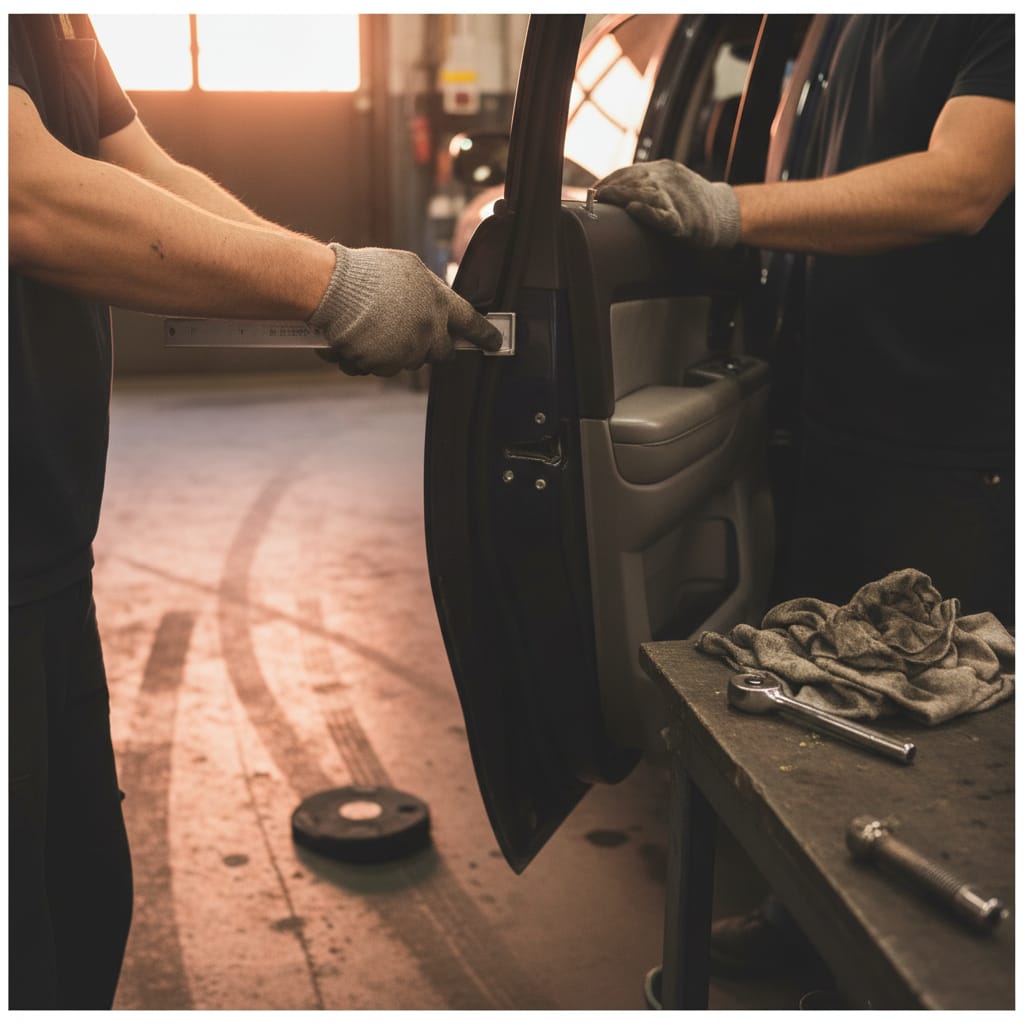
Side doors: SUV doors are longer and taller than sedan doors. A side swipe across a long door requires more panel work and more paint to blend. The body line must match across the door, and the gap between the door and the adjacent panels must return to factory spec.
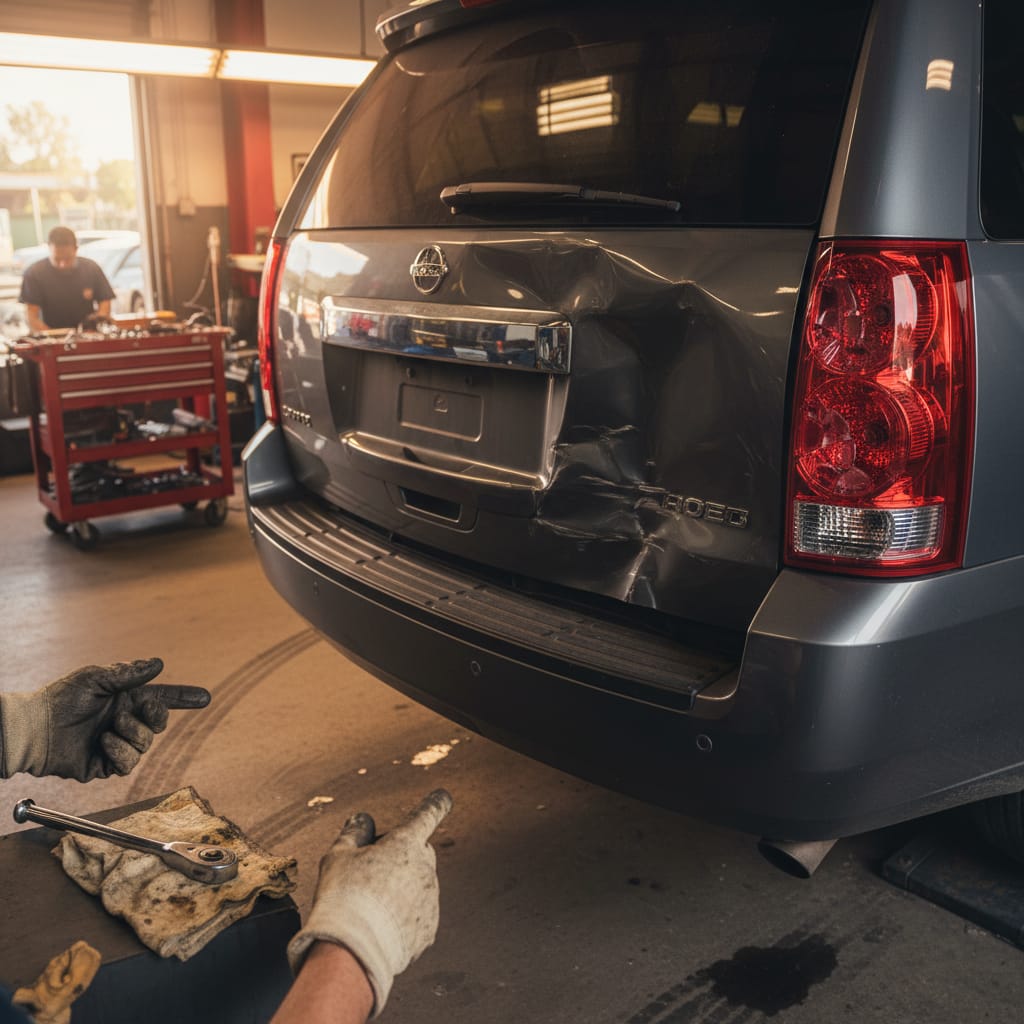
Rear hatch: A rear-end collision on an SUV almost always involves the hatch, both tail lights, and the rear bumper together. The hatch on a crossover is a large single panel. It takes up most of the rear. Even a moderate hit can buckle the hatch, spring the hinges, and crack the tail light housings. Replacing just the bumper cover and calling it done often misses hatch and hinge damage.
ADAS in SUVs: More Sensors, More Calibration
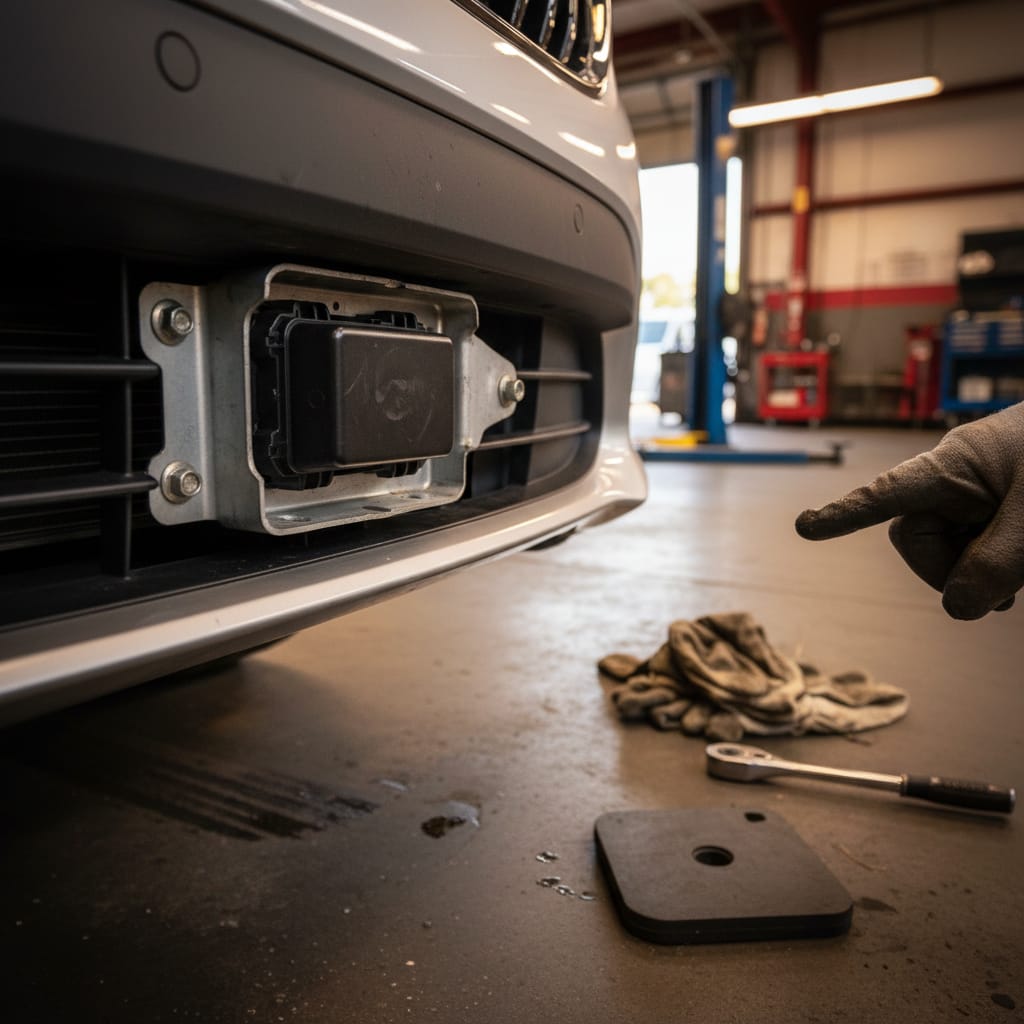
Modern SUVs carry more driver assist sensors than most sedans. A mid-size crossover from 2020 or newer may have all of these:
- Front radar (adaptive cruise control, automatic emergency braking)
- Front camera (lane keep assist, forward collision warning)
- Rear radar (rear cross-traffic alert, rear automatic braking)
- Rear camera (backup camera, parking assist)
- Side cameras (blind spot monitoring, 360-degree view)
- Parking sensors (front and rear ultrasonic)
Every one of those sensors sits behind a body panel. Any collision that shifts a panel, moves a bumper, or bends a bracket can move the sensor off its calibrated angle. A sensor that is off by a few degrees may still function. But its detection zone shifts. It may no longer catch a vehicle in your blind spot at the right distance.
Calibration is required after any front, rear, or side collision that involves sensor-bearing panels. Some calibrations can be done in-shop with a target board (static calibration). Others require a test drive at highway speed (dynamic calibration). Your shop should know which your vehicle needs.
This is one reason SUV repairs sometimes cost more than equivalent sedan repairs. The sensor density is higher, and calibration adds time and equipment cost. But skipping it leaves driver assist systems that do not work as designed.
Large Panel Paint Matching
SUV body panels are bigger. That is obvious. What is less obvious is what that means for paint.
A sedan door is roughly four feet wide. An SUV door may be five feet or longer. A larger panel holds more paint, and the color must match across the whole surface. If the blend does not reach the natural break point (a gap, a crease, a trim edge), the color difference is visible in certain lighting.
Modern paint uses tri-stage or quad-stage systems with metallic flakes that orient differently depending on spray angle and distance. A painter spraying a long SUV door has to keep consistent technique across more surface area. Any inconsistency in spray pattern shows up in how the metallic flakes catch light.
Factory paint also fades over years of California sun. A fresh panel next to a faded neighbor will look different even if the color code matches. A good shop blends into adjacent panels to hide that transition.
The rear hatch on a crossover is often the hardest panel to blend. It is a large surface with no natural break point except the tail light housings. Blending paint here requires time and experience.
Read more about frame damage signs that are easy to miss after a collision.
Insurance for SUV Repairs
SUVs have higher actual cash values (ACV) than equivalent sedans. A 2021 Toyota Highlander is worth more than a 2021 Toyota Camry. That higher ACV affects how insurance handles major collision damage.
Most insurers declare a total loss when repair cost reaches 70 to 75 percent of ACV. Because an SUV's ACV is higher, more repair cost is covered before a total loss is declared. A $22,000 repair on a $35,000 SUV is 63 percent of ACV. The same repair on a $25,000 sedan is 88 percent of ACV. The sedan gets totaled. The SUV gets repaired.
This means SUV owners often stay in the repair process longer. More repairs get approved. But it also means larger estimates and more line items, especially when ADAS calibration and large panel work are included.
California Insurance Code section 758.5 gives you the right to choose your own repair shop. Your insurer cannot require you to use their preferred network. If you want a shop that has experience with your crossover's sensors and paint system, you can choose that shop. The insurer must pay reasonable repair costs.
If your SUV is totaled and you think the value is too low, ask for the written valuation basis. Check that the comparable vehicles your insurer used match your SUV's year, trim, mileage, and condition. If there is a real gap, invoke the appraisal clause in your policy. A neutral appraiser reviews the value without going to court.
FAQ: SUV Collision Repair in Spring Valley CA
Does SUV collision repair cost more than sedan collision repair?
Often yes. SUVs have larger panels that take more time to repair and paint. They carry more ADAS sensors that need calibration. Rear hatch damage typically involves the hatch, hinges, and both tail lights together. Those factors push the average repair cost above a comparable sedan repair.
My crossover hit a smaller car from behind. Why does my front end look fine?
Override. Your SUV's bumper rode over the smaller car's bumper rather than meeting it directly. That means your bumper absorbed less of the impact than it was designed to. Damage may be in the structure behind the bumper. A shop needs to inspect the front end fully, not just look at the fascia.
Does every collision require sensor recalibration on my SUV?
Any collision that involved a panel, bumper, or bracket that holds a sensor needs a calibration check. That covers most front, rear, and significant side collisions. Some sensors are unaffected by minor hits. But the only way to know is to inspect and test. Skipping recalibration leaves driver assist systems that may not perform correctly.
What is the A-pillar, and why does it matter?
The A-pillar is the structural post on either side of the windshield. It connects the roof to the front of the body and supports the windshield frame. It is also part of the airbag deployment path on many vehicles. A-pillar damage is serious. It cannot be ignored or patched over. Repair or replacement of the A-pillar is structural work.
Can I choose my own shop for SUV collision repair in Spring Valley?
Yes. California Insurance Code section 758.5 is clear. Your insurer cannot force you to use their preferred shop. You choose the shop. If the shop you choose is licensed and performs the work correctly, your insurer must pay reasonable costs.
My SUV was totaled. Is the insurance offer fair?
Check the valuation basis your insurer provides in writing. Look at the comparable vehicles they used. Trim level, mileage, and condition all affect ACV. If their comparables are lower-trim or higher-mileage than your vehicle, the offer may be too low. Use the appraisal clause in your policy to bring in a neutral appraiser if you disagree.
Ready for SUV Collision Repair in Spring Valley CA?
All Auto Repair & Auto Glass has been part of San Diego County since 1989. We are family-owned. We work on crossovers and SUVs every week. We check sensors, measure panel gaps, and blend paint the right way.
When you need SUV collision repair Spring Valley CA, call or text Sam at (619) 466-3296 whenever you're ready. We are at 628 Grand Ave, Spring Valley, CA 91977.