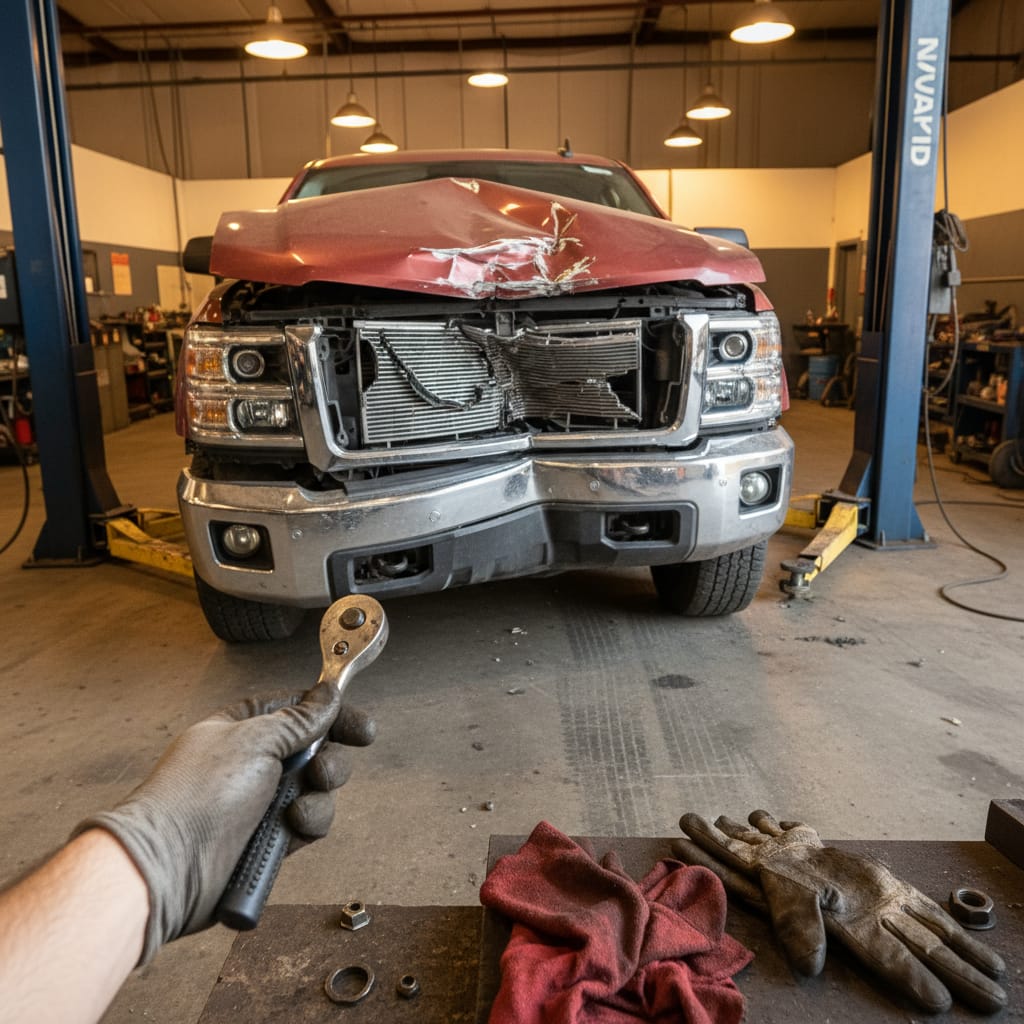
You drive a full-size pickup. You back into a concrete pillar at the grocery store. The tailgate dents and the bumper cracks. Nothing looks catastrophic. You drive away and figure you will get an estimate next week.
That reaction makes sense for a passenger car. For a truck, it may miss something important.
Trucks and passenger cars are built on different foundations. That difference changes what gets damaged, where damage hides, and how a shop repairs it. Most Spring Valley truck owners learn this the hard way: truck collision repair Spring Valley CA is not the same process as fixing a sedan. Understanding the structure first saves you from surprises later.
This article covers the structural difference, where trucks get hit hardest, what accessories add to the repair bill, why towing matters after a crash, your insurance rights, and common questions.
Body-on-Frame vs. Unibody: The Key Structural Difference
Most passenger cars use unibody construction. The body and frame are one welded piece. When a unibody car takes a hit, the whole structure absorbs it together. Crumple zones in the front and rear crush on purpose to protect the cabin.
Full-size trucks work differently. They use body-on-frame construction. The truck sits on a separate steel ladder frame. The cab and bed bolt onto that frame. The body and the frame are two distinct structures.
Here is why that matters after a collision. The frame can bend, twist, or crack while the body above it looks mostly fine. You can have significant frame damage with no visible body panels telling the story. You would not know unless the shop put the truck on a frame machine.
The most common full-size trucks on Spring Valley roads all use body-on-frame: Ford F-150, Ram 1500, Chevy Silverado 1500, GMC Sierra 1500, and Toyota Tundra. One note on the F-150: since 2015, Ford uses an aluminum body on a high-strength steel frame. Aluminum body panels repair differently than steel. They dent without cracking and cannot be straightened the same way. A shop that works only on steel bodies needs proper training before touching an aluminum-bodied F-150.
How Frame Damage Shows Up in a Truck
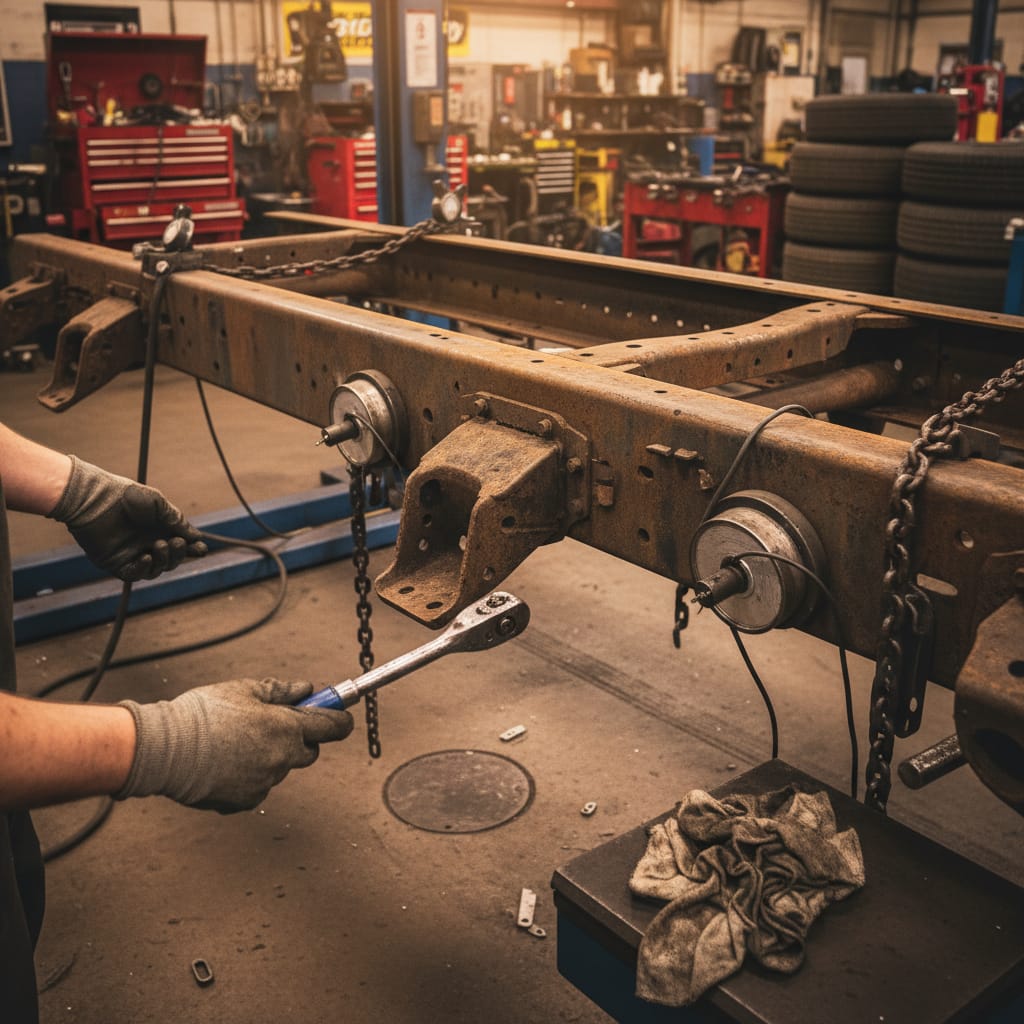
In a unibody car, frame damage usually means bent frame rails or shifted crumple zones. In a truck, the ladder frame has two long rails running front-to-back, connected by cross-members. Any of those pieces can bend or twist independently.
A front-end hit can push the front crossmember back. A rear hit can bow the rear frame rails up or inward. A side impact can crack a cross-member or rack the frame so it no longer sits flat.
A technician checks truck frame damage the same way as unibody repair: they clamp the truck to a frame machine and attach measuring targets to the reference points on the frame rails. The machine compares every measurement to factory spec for that exact year, make, and model. Any deviation shows in millimeters.
The repair process is called frame straightening. The shop anchors the frame and uses hydraulic pull towers to push or pull the bent sections back to spec. The machine runs the measurements live while the pull happens. The tech stops when all measurements land within the manufacturer's tolerance.
If a section is too damaged to straighten, it gets cut out and replaced with a new OEM section. Frame rail repair on a truck requires the right welder settings and the right technique. High-strength steel rails cannot be treated like mild steel.
After any frame work, the truck needs a four-wheel alignment. Frame position and alignment are directly connected. Skipping alignment after frame work leaves the truck pulling and wearing tires unevenly.
See how we approach frame damage and collision repair in Spring Valley.
Bed, Cab, and Cab Corners: Common Truck Damage Areas
Trucks have some damage areas that sedans never deal with.
Truck beds take hits from other vehicles, loading docks, and backing accidents. Steel beds dent and crease. Deep creases near the wheel wells may need panel replacement. Aluminum beds on late-model F-150s dent without cracking and require different repair tools than steel.
Cab corners are among the most commonly damaged areas in truck collisions. The rear corner of the cab, right at the junction of the cab and the bed, sticks out and takes hits easily. Parking lot collisions and side swipes all land on that corner. Cab corner repair means cutting out the damaged section and welding in a new panel. It is a structural repair.
Running boards and nerf bars hang low on the truck's sides. In a side swipe, they are often the first contact point. Bent or broken boards are one thing. The bigger concern is the mounting brackets: they can get pushed into the rocker panel underneath, creating hidden rocker damage that is easy to miss.
Tonneau Covers, Running Boards, and Accessories
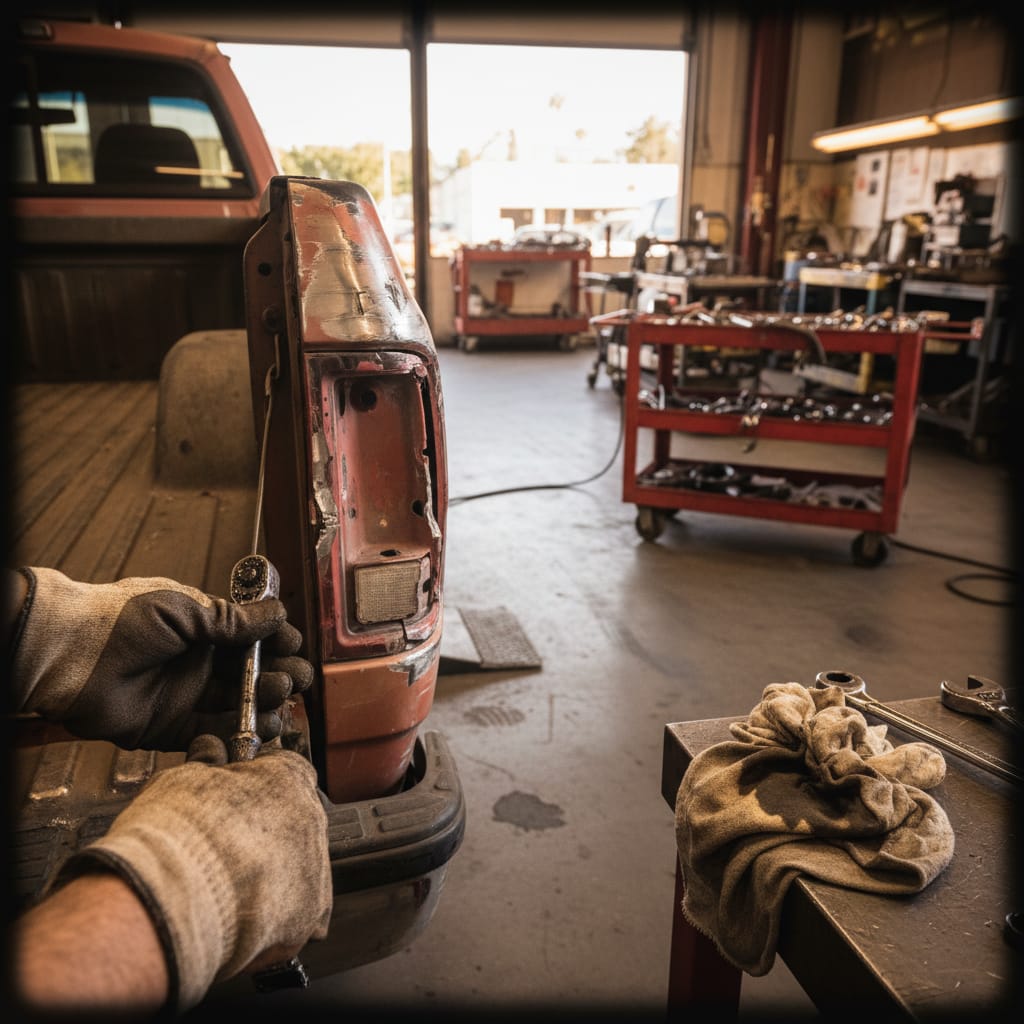
Most Spring Valley trucks carry aftermarket accessories. Tonneau covers, running boards, bed liners, and tow mirrors all add up. When a collision hits an accessory, the claim gets complicated.
Insurance covers OEM parts and sometimes aftermarket parts. A factory running board may be covered as a body part. A custom tube step you added later may fall under a different category. Before you talk to your adjuster, list every accessory and take photos. That documentation matters if coverage becomes a question.
Tonneau covers attach to the bed rails. A tailgate hit often damages the cover too. It may not appear in the initial estimate unless the shop inspects the bed area carefully.
Spray-in bed liners can hide damage. The liner may look intact while the bed steel underneath is cracked. Ask the shop to check under the liner.
Towing Capacity and Alignment After a Collision
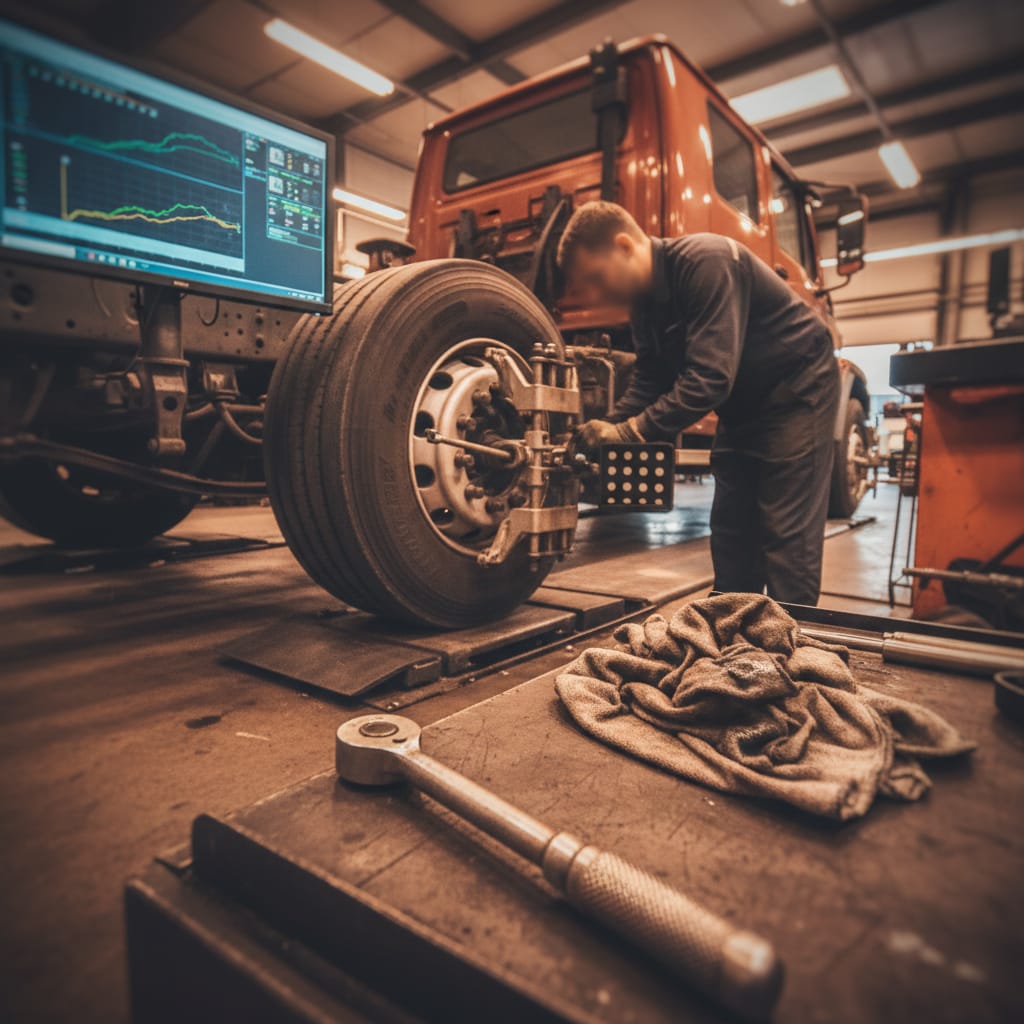
Trucks are work vehicles. Many Spring Valley truck owners tow trailers, boats, or equipment regularly. A collision changes things in ways that matter for towing.
Frame straightness affects how a trailer tracks. If the truck's frame is even slightly racked after a repair, the trailer may pull to one side. That stress transfers to the hitch and safety chains. At highway speed with a loaded trailer, a few millimeters of frame deviation becomes a safety problem.
Alignment after a collision also affects trailer sway. The rear axle angles (rear toe and camber) control straight tracking. A rear-end hit that goes unfixed can leave the rear axle pointing slightly sideways. With a 5,000-pound trailer behind you, that same deviation amplifies into unsafe sway.
ADAS recalibration matters for trucks with driver assist features. Many full-size trucks carry radar-based blind spot monitoring and backup cameras near the tailgate. A collision that shifts those sensor mounts means factory calibration is off. After any repair that touches sensor mounts, a calibration check is required.
Learn about frame damage signs and repair from our Spring Valley team.
Insurance and Repair Rights for Truck Owners
California gives you the right to choose your own repair shop. California Insurance Code section 758.5 says your insurer cannot force you to use their preferred shop network. You pick the shop. If you choose your own shop, the insurer must pay reasonable repair costs.
This matters for trucks with specialty needs. If your F-150 has an aluminum body, you want a shop with aluminum repair certification. Your insurer's preferred network may not include that shop. Use your right to choose.
The California Bureau of Automotive Repair offers free post-repair inspections. A BAR inspector verifies that repairs listed on your invoice were actually completed. Call (866) 799-3811 or visit bar.ca.gov/collision-inspection to schedule.
If your truck was totaled and you disagree with the value, ask your insurer for the written valuation basis. Check that the comparable vehicles they used actually match your truck's year, trim, and mileage. If there is a real gap, invoke the appraisal clause in your policy. This brings in a neutral appraiser without going to court.
FAQ: Truck Collision Repair in Spring Valley CA
Does truck collision repair cost more than car collision repair?
Often yes. Trucks are larger and heavier. Frame sections take longer to straighten. Aluminum body trucks need specialized methods. Accessories add line items. All of that pushes the average cost above a comparable sedan repair.
Can a shop that fixes cars also fix my truck?
A shop with a large enough frame machine and body-on-frame training can work on trucks. If you drive a 2015 or newer Ford F-150, ask whether the shop has aluminum repair certification. Not all shops do.
What is the difference between a bent frame and a cracked frame?
A bent frame rail has deformed under load but stays in one piece. Frame straightening can often bring it back to spec. A cracked rail has a fracture in the steel. Cracks cannot be straightened. The damaged section must be cut out and replaced with a new OEM section. A frame machine measurement catches both.
My truck drove fine after the collision. Does it still need a frame check?
Yes. Body-on-frame trucks can have significant frame deviation with no immediate driveability symptoms. The cab and body bolt onto the frame. If only the frame bent, the body may still feel normal at first. Driving with an undetected bent frame stresses suspension components, misaligns tires, and creates unsafe towing conditions.
Will my truck pull to the right after a collision repair?
It should not. Any collision repair that involved frame straightening must be followed by a four-wheel alignment. If the truck still pulls after the shop says the repair is done, go back and ask for an alignment printout. The numbers will show if alignment was completed correctly.
Do I have to get three estimates before filing a claim?
No. California law does not require multiple estimates. Your insurer may ask for their own estimate, and you may want an independent estimate for comparison. But there is no legal minimum number. You can file your claim, choose your shop under California Insurance Code section 758.5, and proceed.
Ready for Truck Collision Repair in Spring Valley CA?
All Auto Repair & Auto Glass has been part of San Diego County since 1989. We are family-owned. We work on full-size trucks every week. We use frame machines and measuring equipment, not guesswork. And we explain what we find before we touch anything.
When you need truck collision repair Spring Valley CA, call or text Sam at (619) 466-3296 whenever you're ready. We are at 628 Grand Ave, Spring Valley, CA 91977.